Checking Access…
Unlock this activity and turn family time into progress, stories, points, and real rewards your child can celebrate.
- Complete guided activities together
- Earn points toward real rewards
- Unlock new books and adventures

 Category
Behavior & Discipline
Category
Behavior & Discipline
 Age Range
Ages 2–6
Age Range
Ages 2–6
 Time
10–20 minutes
Time
10–20 minutes
 Your Fuzziland Adventure Awaits
Unlock this activity and turn family time into progress, stories, points, and real rewards your child can celebrate.
You can play with no supplies at all, but a few simple items can make the missions feel more official and exciting.
Subscribe to Fuzzigram to complete this activity, unlock new books, create magical puppet videos, earn points, and redeem real rewards your child will love.
Complete all 7 steps to finish.
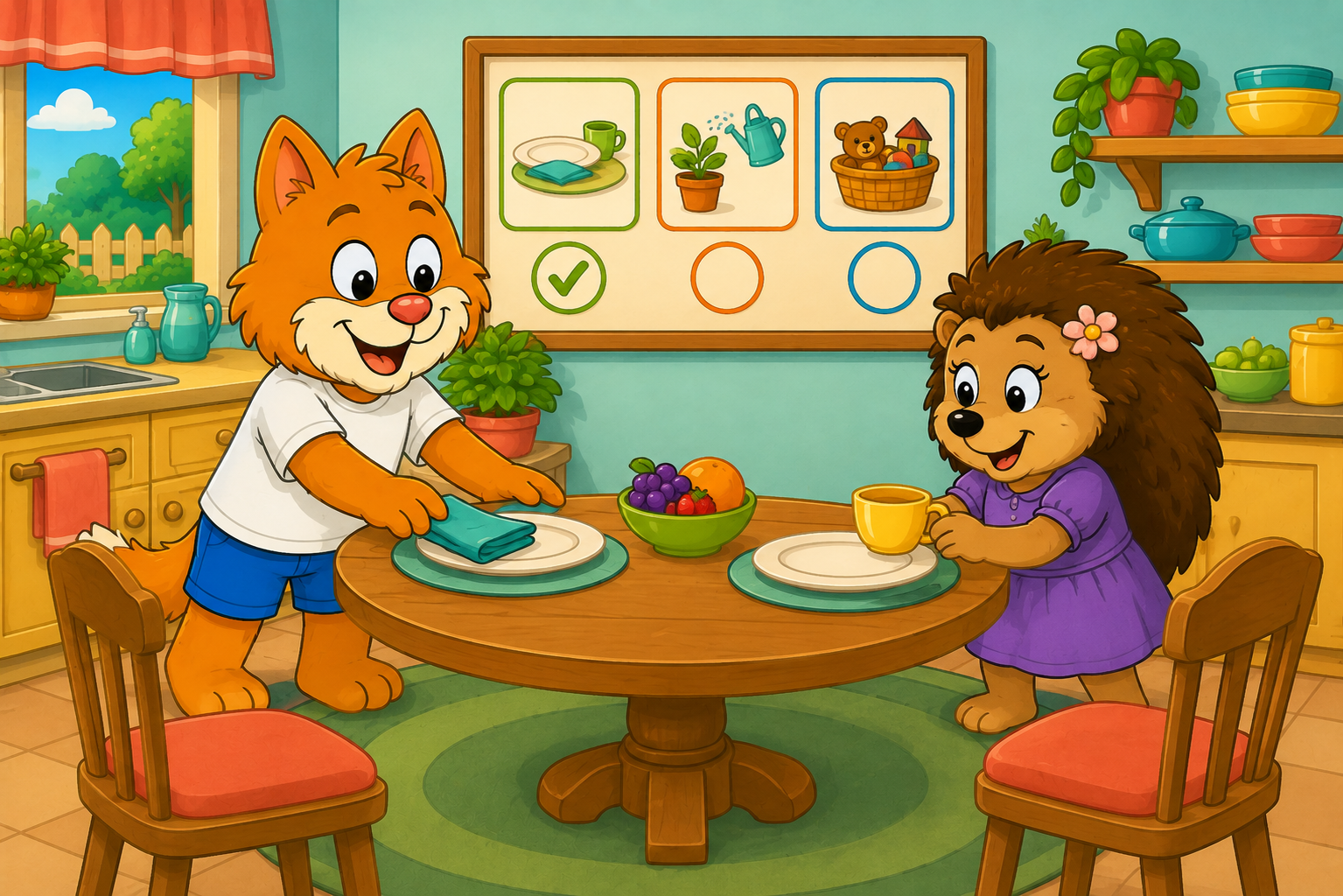
Helping Hands Missions makes cooperation feel playful instead of forced. Rather than turning small chores into power struggles, this activity frames helpful behavior as a special mission children can complete with pride.
Young children often want to help, but they need simple directions, clear expectations, and quick success. When a task feels too big or too vague, children may resist, wander away, or become frustrated. Missions make the job small, specific, and achievable.
This activity also gives parents a positive way to practice responsibility. Children learn that helping is part of belonging to a family, not a punishment. They practice listening, completing one step at a time, and noticing how their actions support others.
Helping Hands Missions supports behavior skills by giving children repeated practice with small, successful acts of cooperation.
Use playful language and specific praise to help your child feel capable. The goal is to make helping feel connected, not pressured.
Ask your child to rescue stuffed animals, blocks, cars, or puzzle pieces and return them to their home.
Let your child place napkins, spoons, cups, or placemats on the table before a meal.
Invite your child to match socks, carry soft clothes, or place shirts in a basket.
Ask your child to deliver a blanket, book, toy, or kind note to another family member.
Work together to clean one small area while your child completes one clear role.
This activity works well for ages 2–6. Younger toddlers can complete very small one-step missions, while older preschoolers can handle longer tasks with two or three steps.
Yes. Helping Hands Missions supports positive behavior by practicing cooperation, listening, follow-through, responsibility, and family teamwork in a playful, low-pressure way.
Keep the mission small, playful, and optional at first. Offer a choice between two simple missions, model the task, and praise any attempt to participate.
Most children do well with 10–20 minutes, but younger toddlers may only need one or two short missions. Stop while the activity still feels successful.
Helping Hands Missions is a simple responsibility-building activity for toddlers and preschoolers. Children complete small helping tasks, practice cooperation, follow directions, and learn that positive behavior can support the whole family.

Great job completing Helping Hands Missions. Your child practiced letter recognition, alphabet order, gross motor skills, listening, and early reading readiness.
View ProgressSomething went wrong. Please try again.
