Checking Access…
Unlock this activity and turn family time into progress, stories, points, and real rewards your child can celebrate.
- Complete guided activities together
- Earn points toward real rewards
- Unlock new books and adventures

 Category
Health, Nutrition & Safety
Category
Health, Nutrition & Safety
 Age Range
Ages 2–6
Age Range
Ages 2–6
 Time
5–10 minutes
Time
5–10 minutes
 Your Fuzziland Adventure Awaits
Unlock this activity and turn family time into progress, stories, points, and real rewards your child can celebrate.
You can play this game with no supplies, but a few simple items can help create pretend safety paths at home.
Subscribe to Fuzzigram to complete this activity, unlock new books, create magical puppet videos, earn points, and redeem real rewards your child will love.
Complete all 7 steps to finish.
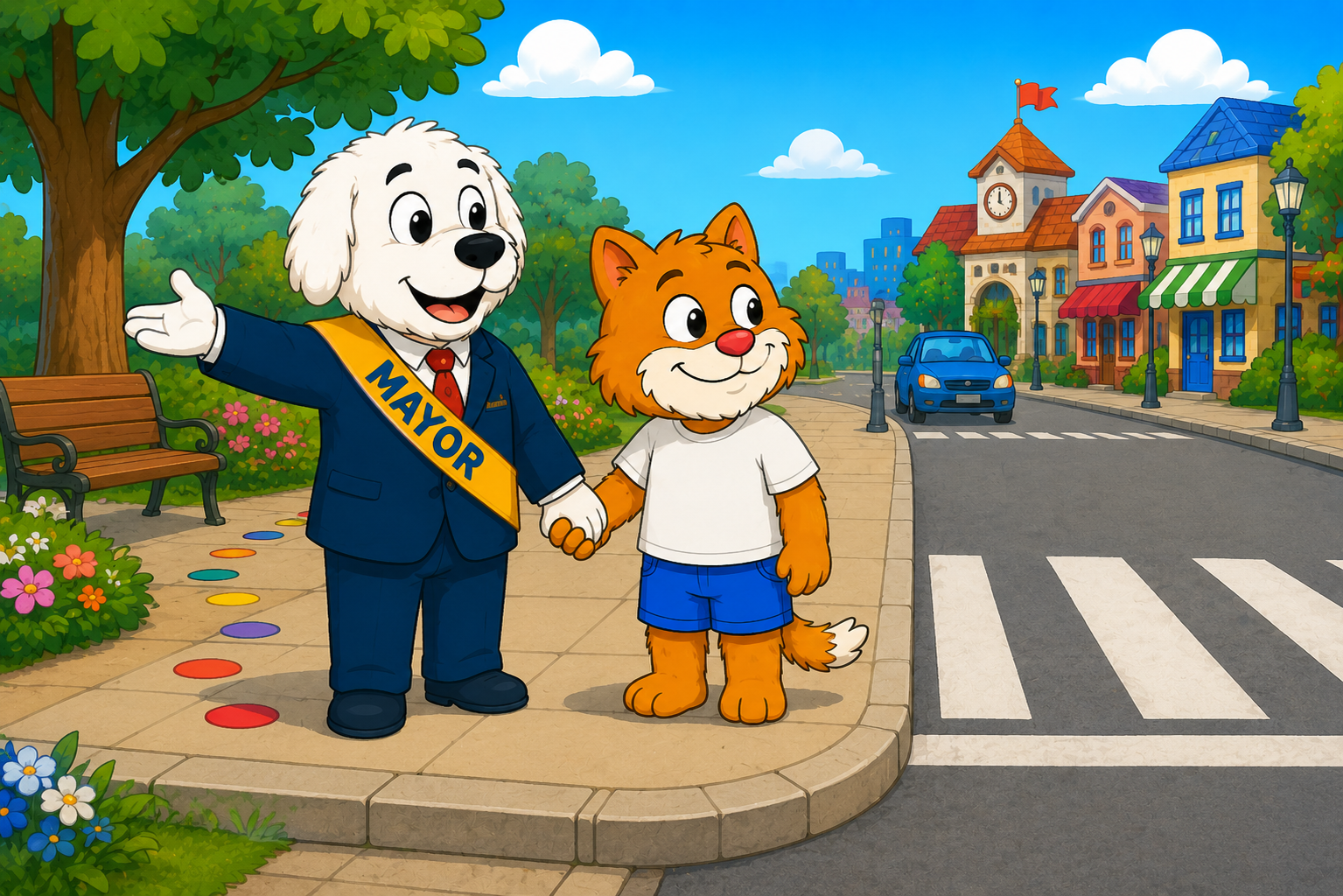
Hold My Hand Game turns an important safety rule into something children can practice before they are in a busy or high-pressure situation. Instead of only saying “Hold my hand” in a parking lot, near water, or beside a street, this activity gives children a calm, playful way to learn what the rule means.
Young children often understand rules better when they can act them out. Practicing hand-holding, stopping, waiting, walking together, and listening for simple safety words helps the behavior feel familiar.
The game also builds body awareness, listening, impulse control, and trust. Children learn that holding hands is not a punishment or restriction. It is a teamwork habit that helps everyone move safely together.
This activity supports practical safety habits that children can use in everyday routines.
Keep the language simple, calm, and consistent so your child knows exactly what to do.
Pretend the hallway or driveway is a parking lot. Practice holding hands from the “car” to the “store.”
Practice holding hands while walking near pretend waves, towels, shells, or busy beach paths.
Walk together while you call out “stop,” “wait,” and “go.” Keep the focus on staying close, not speed.
Let your child help a stuffed animal practice holding hands, stopping, and waiting.
Offer two safe options: “Do you want to hold my left hand or my right hand?”
This activity works well for ages 2–6. Younger toddlers can practice staying close and holding hands, while older preschoolers can learn when and why hand-holding is needed.
Yes. Hold My Hand Game helps children rehearse a real safety habit before they need it in busy places like parking lots, sidewalks, stores, beaches, and crowds.
Absolutely. You only need a grown-up and a child. Paper signs, cones, or pretend paths can make the game more fun, but they are optional.
Most children do well with 5–10 minutes. Short, repeated practice is usually more effective than one long lesson.
Hold My Hand Game is a simple safety activity for toddlers and preschoolers. Children practice holding hands, staying close, stopping, waiting, and walking together so public safety routines feel familiar before real-life moments happen.

Great job completing Hold My Hand Game. Your child practiced letter recognition, alphabet order, gross motor skills, listening, and early reading readiness.
View ProgressSomething went wrong. Please try again.
