Exploring Nature to Teach Observation Skills
Exploring Nature to Teach Observation Skills
Why Observation Is the Heart of Early Learning
Every great scientist, artist, and problem-solver starts with one simple skill: the ability to notice. For young children, noticing the world—how things move, grow, and change—is the root of curiosity and lifelong learning.
Nature is the perfect classroom for teaching observation skills, because it offers endless opportunities to compare, describe, and investigate—all while building focus, vocabulary, and patience. This highly-rated, outdoor explorer kit is available on Amazon.


What Observation Skills Really Are
Observation is more than just “looking.” It’s the ability to use all five senses to gather information, make connections, and think critically.
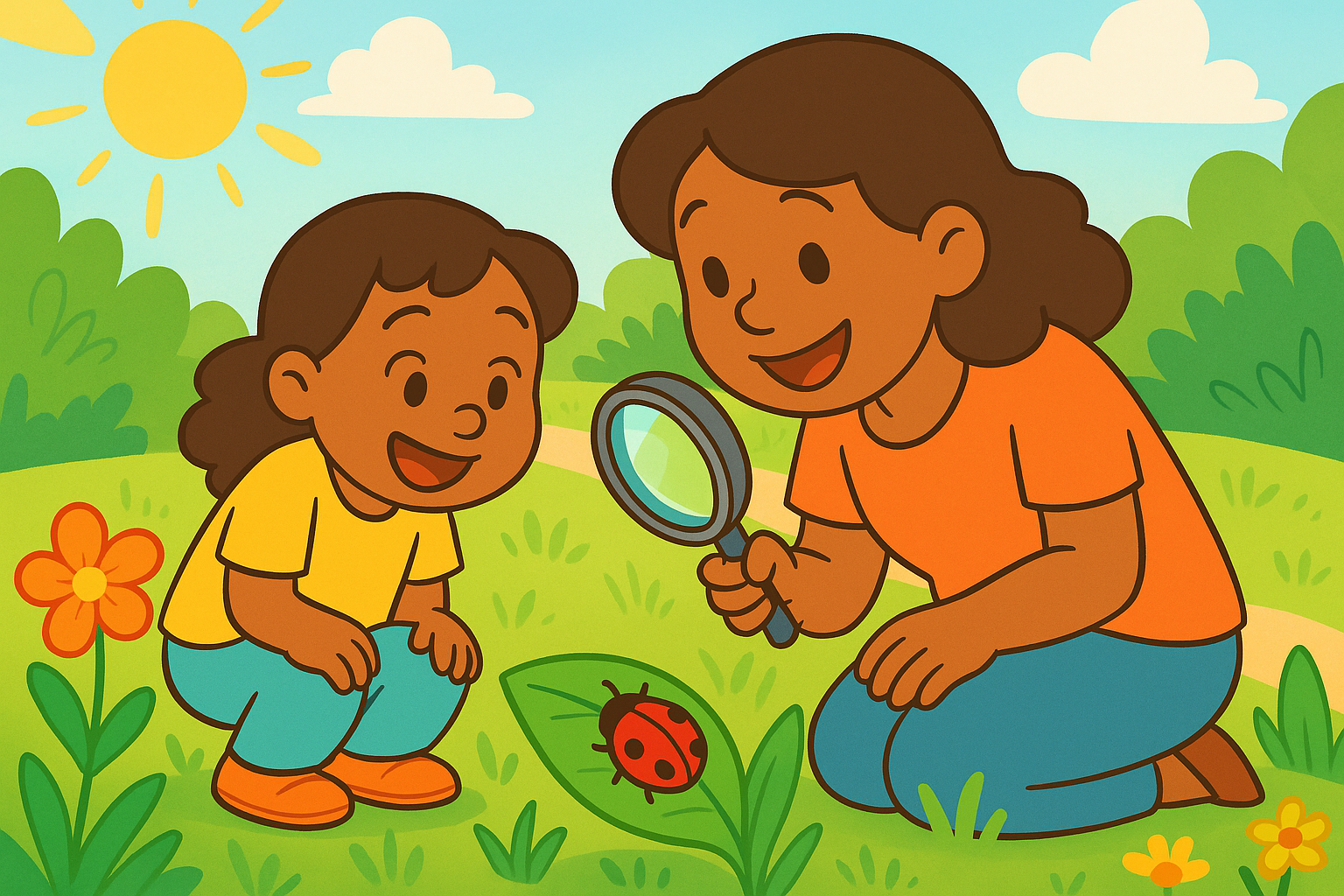
When your child notices the way a ladybug moves or how puddles shrink after rain, they’re building key foundations for scientific thinking, problem-solving, and attention regulation.
Observation skills support:
Language development – describing what they see, hear, or feel.
Memory – noticing patterns and recalling what they’ve experienced before.
Focus and patience – staying still long enough to truly notice details.
Curiosity and persistence – asking “why?” and “how?” after making a discovery.
(Also see: Encouraging Curiosity During Daily Routines and Building Cognitive Flexibility Through Pretend Play)
How Nature Strengthens Observation Naturally
The outdoors offers the most organic way for children to learn to pay attention. Unlike screens or structured lessons, nature invites slow noticing.
1. Variety Without Overload
Leaves rustle, birds chirp, and clouds drift—each moment provides new data points for young observers.
2. Built-in Sensory Learning
Nature is full of texture, scent, and sound. Touching bark, smelling flowers, and listening to birds all reinforce sensory integration and descriptive language.
3. Pattern Recognition
Children begin to notice recurring things—ants following lines, shadows changing, flowers closing at dusk. Recognizing patterns is the backbone of early math and logic.
4. Emotional Regulation
Quiet observation in nature promotes calm and mindfulness. This helps children practice self-control, patience, and reflection—skills essential for classroom success.
Everyday Ways to Teach Observation Through Nature
You don’t need a forest—just a bit of green space, curiosity, and time. Here are simple ways to nurture keen observation skills right where you are.
Go on “Noticing Walks”
Take slow strolls where the goal isn’t to reach a destination, but to notice. Ask:
“What sounds can we hear right now?”
“Do you see something moving?”
“How many colors can we find on this tree?”
Parent Tip: Keep a small notebook or use your phone’s voice recorder to capture what your child describes. Reviewing later helps strengthen memory and reflection.
Use the “I Notice, I Wonder, It Reminds Me Of” Routine
This simple framework turns observation into a habit of thought:
“I notice…” (fact)
“I wonder…” (question)
“It reminds me of…” (connection)
Example: “I notice the snail moves slowly. I wonder how it carries its shell. It reminds me of our backpack.”
This structure encourages deeper thinking, comparison, and curiosity.
Collect and Compare
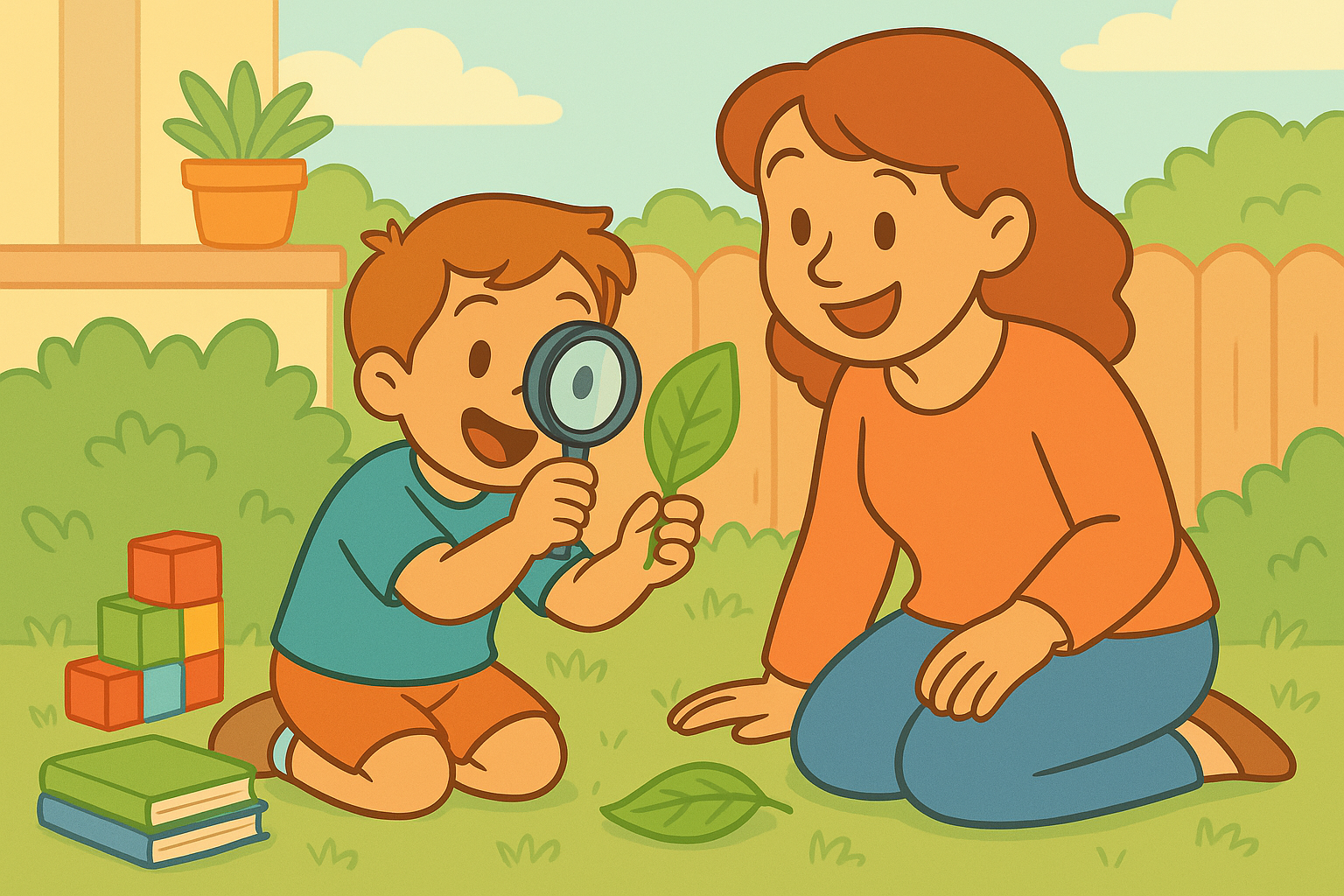
Gather leaves, rocks, or shells. Compare shapes, sizes, or textures.
“This leaf is smooth, but this one has bumps.”
Sorting and classifying builds both vocabulary and early math logic.
Draw or Photograph Nature
Ask your child to draw what they see or take photos of interesting details. You’ll be amazed how this slows them down to truly look.
(See also: Simple Sequencing Games That Build Pre-Reading Skills)
Observe Changes Over Time
Choose one plant, tree, or puddle to observe daily or weekly. Track how it changes with weather or light. This introduces time-based observation—the foundation of early science.
Turning Curiosity into Early Science Thinking
Observation naturally leads to investigation. When your child says “why?” after noticing something, that’s science in action.
Here’s how to build on it:
Encourage hypotheses: “Why do you think the worm likes shade?”
Test ideas: “Let’s see what happens if we pour a little water here.”
Reflect: “What did we learn from watching it?”
By scaffolding curiosity this way, you turn casual outdoor time into powerful STEM learning.
(Also see: Teaching Early Math Concepts with Everyday Objects)
Using Observation to Build Vocabulary
When kids describe what they see in nature, their vocabulary grows rapidly. Try introducing rich sensory words:
Instead of “wet,” say damp, soggy, or slippery.
Instead of “loud,” say rustling, chirping, or booming.
Instead of “pretty,” say speckled, shimmering, or delicate.
Encourage descriptive sentences:
“The orange butterfly has spots like freckles.”
These early language patterns strengthen storytelling, comprehension, and literacy.
(Also see: Developing Listening Skills Through Storytelling)
Make It Playful
Observation doesn’t have to feel serious. Kids remember more when learning feels like play.
Nature Bingo
Create a simple grid of items to spot: clouds, rocks, bugs, flowers, birds, sticks. Check them off as you go.
Sound Safari
Close your eyes and count how many different sounds you can hear in one minute.
Color Hunt
Challenge your child to find one object for every color of the rainbow.
Texture Treasure Hunt
Search for things that are smooth, rough, prickly, or soft.
These playful observation challenges build attention, focus, and excitement.
How Observation Skills Support School Readiness
Observation connects almost every early learning domain:
Science: noticing cause and effect, forming questions.
Math: recognizing patterns, shapes, and quantities.
Reading: identifying details, predicting what happens next.
Social skills: noticing facial cues and emotions in others.
Children who learn to observe are better at following directions, solving problems, and expressing ideas clearly—hallmarks of readiness for kindergarten and beyond.
Age-by-Age Observation Milestones

With time and consistency, these skills build into critical thinking, persistence, and attention to detail.
Common Questions from Parents
“We live in a city—can my child still learn observation outdoors?”
Absolutely. Observation happens anywhere—watching pigeons, counting cars, or feeling rain. The key is slowing down and asking questions.
“What if my child loses interest quickly?”
Keep observation bursts short and fun. Let your child lead. A 3-minute “noticing break” is better than a forced 15-minute walk.
“Should I correct their observations if they’re wrong?”
Not at first. Encourage curiosity: “That’s an interesting idea—let’s look closer.” Accuracy comes naturally through practice and modeling.
Key Takeaways
Observation builds the foundation for learning. It strengthens focus, memory, and curiosity.
Nature is the best classroom. It engages all the senses in real-world exploration.
Repetition and reflection deepen attention. Observing the same spot over time builds understanding.
Parents play the guide. You don’t need answers—just the willingness to look and wonder together.
When you slow down and see through your child’s eyes, every rock, leaf, and cloud becomes an invitation to learn.
This content is for educational purposes and is not a substitute for professional medical or psychological advice.