How to Encourage Turn-Taking During Learning Games
How to Encourage Turn-Taking During Learning Games

Why Turn-Taking Is More Than Just Manners
When your child shouts, “My turn!” during a game, it’s not just about fairness—it’s a big step in their social and cognitive development. Learning to wait, share, and take turns teaches kids patience, emotional control, and empathy—all vital skills for school readiness. Here’s a fun, cooperative game for kids that is available on Amazon.


What Turn-Taking Teaches the Developing Brain
Turn-taking may look simple, but it engages some of the most important brain systems for early learning.
1. Builds Self-Regulation
Waiting for a turn teaches kids how to pause impulses—a cornerstone of executive functioning. The ability to stop, wait, and respond appropriately supports focus and frustration tolerance later in school.
2. Strengthens Working Memory
When children keep track of whose turn it is, they’re practicing memory in real time—holding and updating information as rules or turns change.
3. Encourages Perspective-Taking
When kids learn to wait and watch others play, they begin to understand other people’s points of view and experiences—key for empathy and teamwork.
4. Promotes Fairness and Cooperation
Turn-taking shows children that shared play can still be fun and fair. This helps prevent meltdowns and encourages positive social habits that teachers deeply value.
(See also: Building Cognitive Flexibility Through Pretend Play and How Puppets Help Kids Build Vocabulary and Confidence)
Why Learning Games Are the Perfect Practice Ground
Learning games—whether with cards, blocks, songs, or puppets—naturally lend themselves to taking turns. They’re structured enough to guide behavior but playful enough to keep kids motivated.
When turn-taking is built into fun, low-pressure play, children internalize it faster and are more likely to carry it into group activities and classrooms.
How to Model and Teach Turn-Taking
You don’t need special materials—just a few intentional habits and a lot of encouragement.
Start Simple
Begin with two-person games or interactions where turns are short and predictable. Examples:
Rolling a ball back and forth
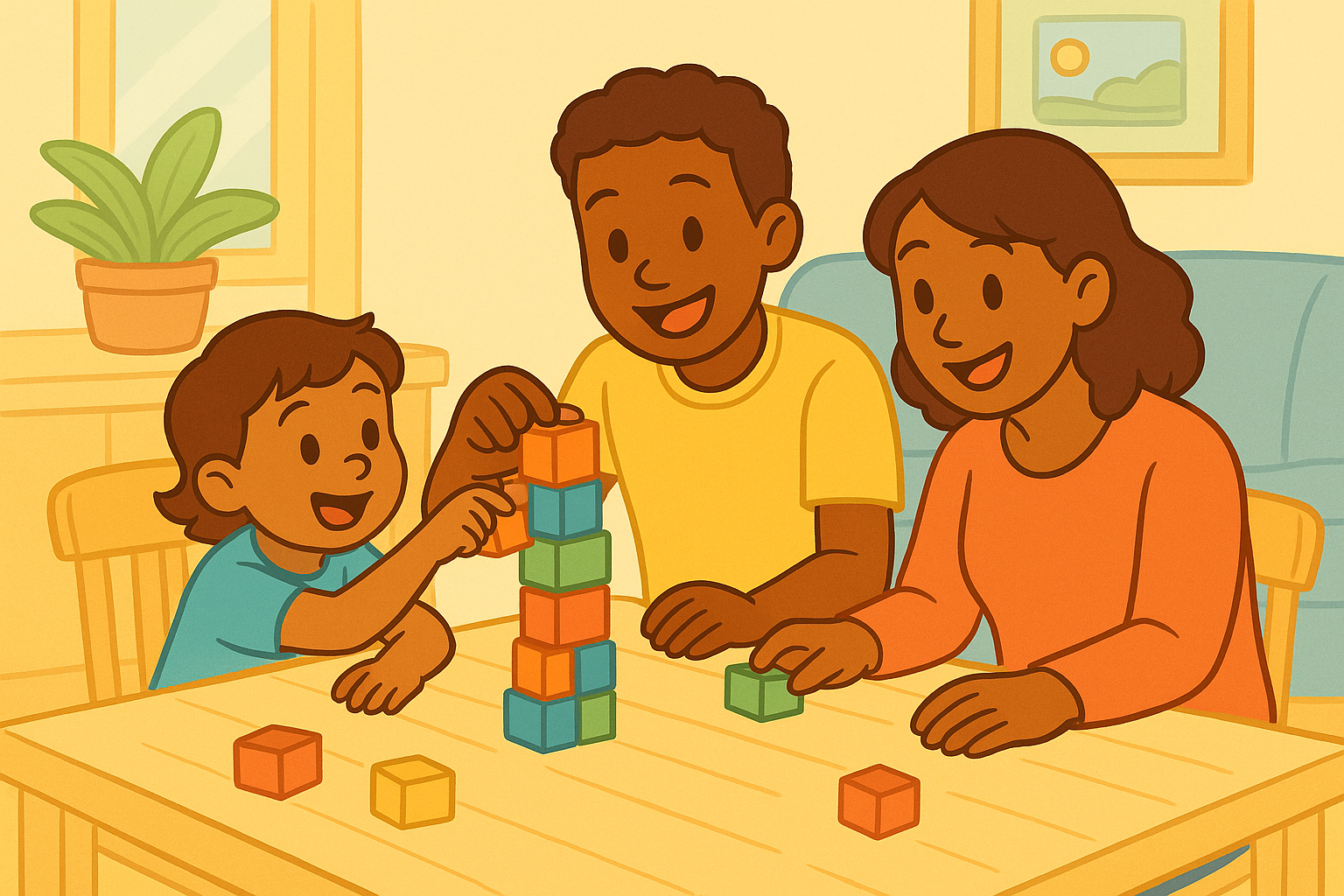
Stacking blocks one at a time
Taking turns naming animals or colors
Short, repetitive exchanges make it easier for your child to grasp the concept and feel success quickly.
Narrate the Turns
Use clear, calm language to highlight what’s happening:
“It’s Mommy’s turn to roll the ball… now it’s your turn!”
This repetition helps children link the words turn and wait to actions. Over time, they start saying it themselves.
Use Visual or Physical Cues
For some children, concrete signals make the abstract idea of “waiting” easier. Try:
A simple “turn card” that passes between players
A special object like a stuffed toy that shows whose turn it is
A gentle tap on the shoulder or a smile to hand over the turn
These physical reminders keep play structured and positive.
Praise the Effort, Not Just the Outcome
When your child successfully waits, notice it:
“You waited for your turn so patiently—that was kind!”
Specific praise reinforces the behavior and builds intrinsic motivation.
(Related reading: Encouraging Curiosity During Daily Routines)
Making Turn-Taking Part of Everyday Learning
Turn-taking doesn’t have to stay at the game table. You can build it into daily life:
At Mealtimes
“You stir, then I stir.”
“Let’s take turns naming foods that start with B!”
During Storytime
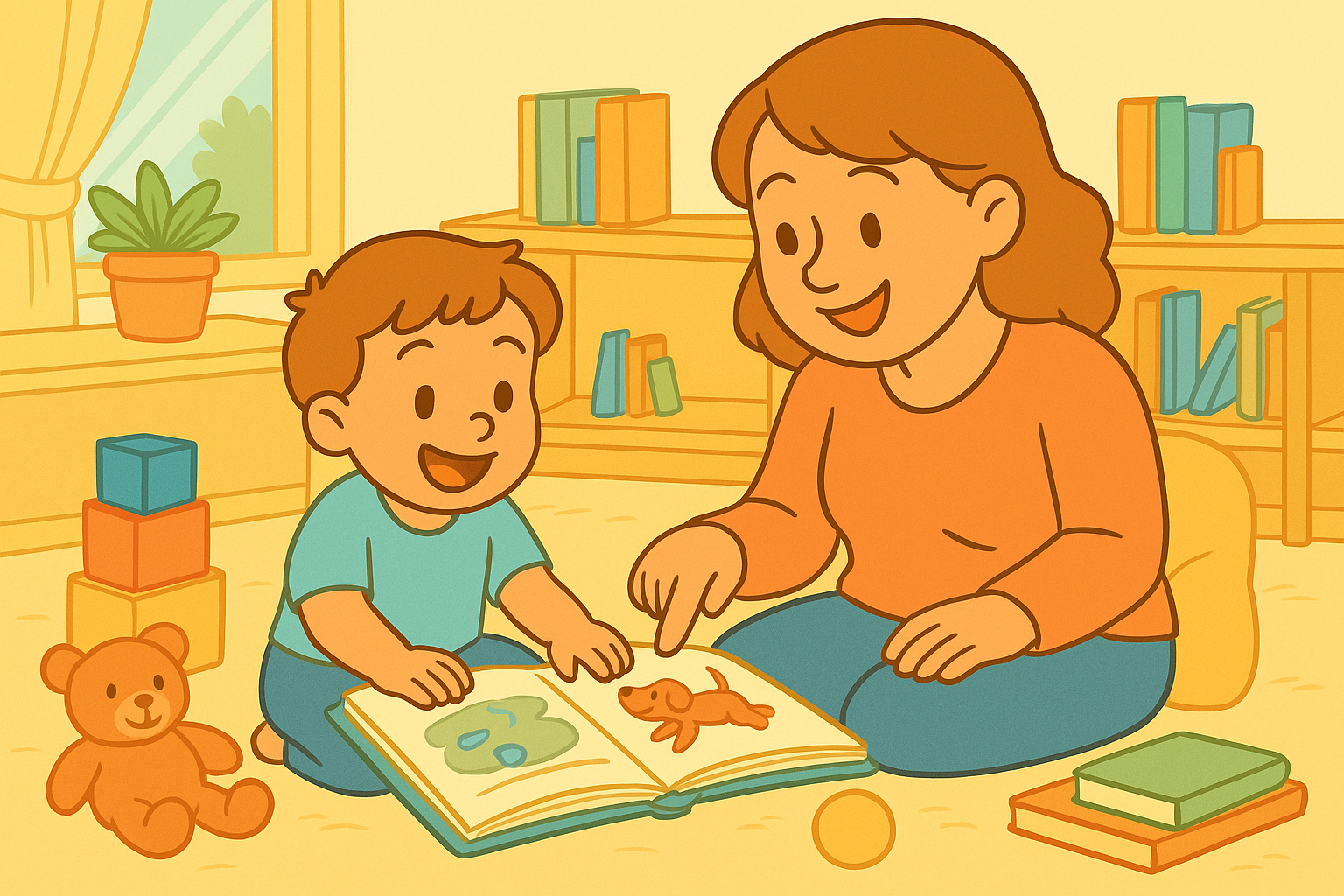
Alternate pages: “You read this one, I’ll read the next.”
Take turns guessing what might happen next in the story.
On the Playground
Count to five before switching who gets the slide or swing.
Play “follow the leader,” taking turns leading and following.
While Singing or Dancing
Use call-and-response songs like “Who Took the Cookie from the Cookie Jar?” to build listening and timing. (See also: Simple Counting Songs Kids Love)
These small rituals reinforce fairness and cooperation throughout the day—no special setup required.
Games That Naturally Teach Turn-Taking
Here are some Fuzzigram-approved activities that blend learning with social skill-building:
🎲 Board or Card Games
Simple options like Candy Land, Go Fish, or homemade matching games teach patience, memory, and turn-order awareness.
🧩 Building and Sorting Games
Take turns adding blocks to a tower or sorting shapes by color. Emphasize shared goals (“Let’s build it together!”) rather than competition.
🎨 Creative Play
Art activities—like taking turns adding to a group drawing or storytelling round (“You say one sentence, I say the next”)—build collaboration and flexible thinking.
🎭 Puppet or Pretend Play
Puppets make it easy to “wait” in character, showing that everyone gets a chance to speak. Kids often regulate themselves better when pretending through a character.
(See also: Using Puppets for Phonemic Awareness Practice)
When Waiting Is Hard: How to Coach Through Frustration
Even with gentle teaching, waiting can feel big for young kids. Here’s how to help them through tough moments.
Stay Calm and Predictable
Children take emotional cues from you. If you respond calmly when they get impatient, it signals that waiting is safe and manageable.
Use Short Waits and Build Up
Start with just a few seconds between turns, then gradually increase. You can even count together—“Let’s wait for three beats before your turn!”
Use Distraction or Engagement
While waiting, encourage your child to observe or prepare their next move:
“Watch what happens when I roll the ball this time!”
Validate Feelings
Acknowledge frustration:
“It’s hard to wait. I know you’re excited for your turn. You’re doing great staying calm!”
This emotional coaching helps kids label and manage their feelings—skills that carry over into friendships and classrooms.
Age-by-Age Turn-Taking Development

Each stage lays the groundwork for smoother group play, self-control, and empathy—all essential school readiness skills.
Why Turn-Taking Matters for School Readiness
Turn-taking is one of the most visible signs of social-emotional maturity in preschool and early elementary classrooms. Teachers look for it as evidence of readiness because it directly supports:
Listening and following directions
Sharing materials and space
Working in teams and partnerships
Managing frustration and disappointment
When kids master turn-taking, they transition into group learning with confidence, focus, and kindness.
Modeling Turn-Taking at Home
Parents are a child’s first teachers—and the most powerful role models for cooperation.
Use “turn talk” at home: “I’ll talk, then you talk.”
Model patience: Show what it looks like to wait calmly when interrupted.
Show excitement when others take their turn: “I love seeing what you do next!”
By demonstrating respect, flexibility, and enthusiasm, you teach that waiting isn’t punishment—it’s part of teamwork.
(Related reading: The Importance of Open-Ended Questions in Learning)
Common Parent Questions
“My child always wants to go first—what should I do?”
Acknowledge their enthusiasm, but set a fair system: “We’ll take turns going first. Today it’s your turn; next time it’s mine.” Predictability helps them feel secure in fairness.
“They get upset if someone changes the rules mid-game.”
Explain that sometimes rules can adapt. Use it as a learning opportunity: “You’re right, that’s new! Let’s see if we can both agree on how to play now.”
“How long does it take for turn-taking to stick?”
Consistency is key. With daily practice in short bursts, most preschoolers can reliably take turns within a few weeks.
Key Takeaways
Turn-taking builds self-control, empathy, and fairness—core school readiness skills.
Games are the perfect setting for practicing patience and cooperation.
Modeling and praising effort help children internalize these habits.
Waiting is hard at first, but short, structured experiences build confidence.
Through playful repetition, your child will learn that waiting isn’t losing—it’s part of learning, connecting, and growing.
This content is for educational purposes and is not a substitute for professional medical or psychological advice.