How to Stay Consistent Between Caregivers and Homes
How to Stay Consistent Between Caregivers and Homes

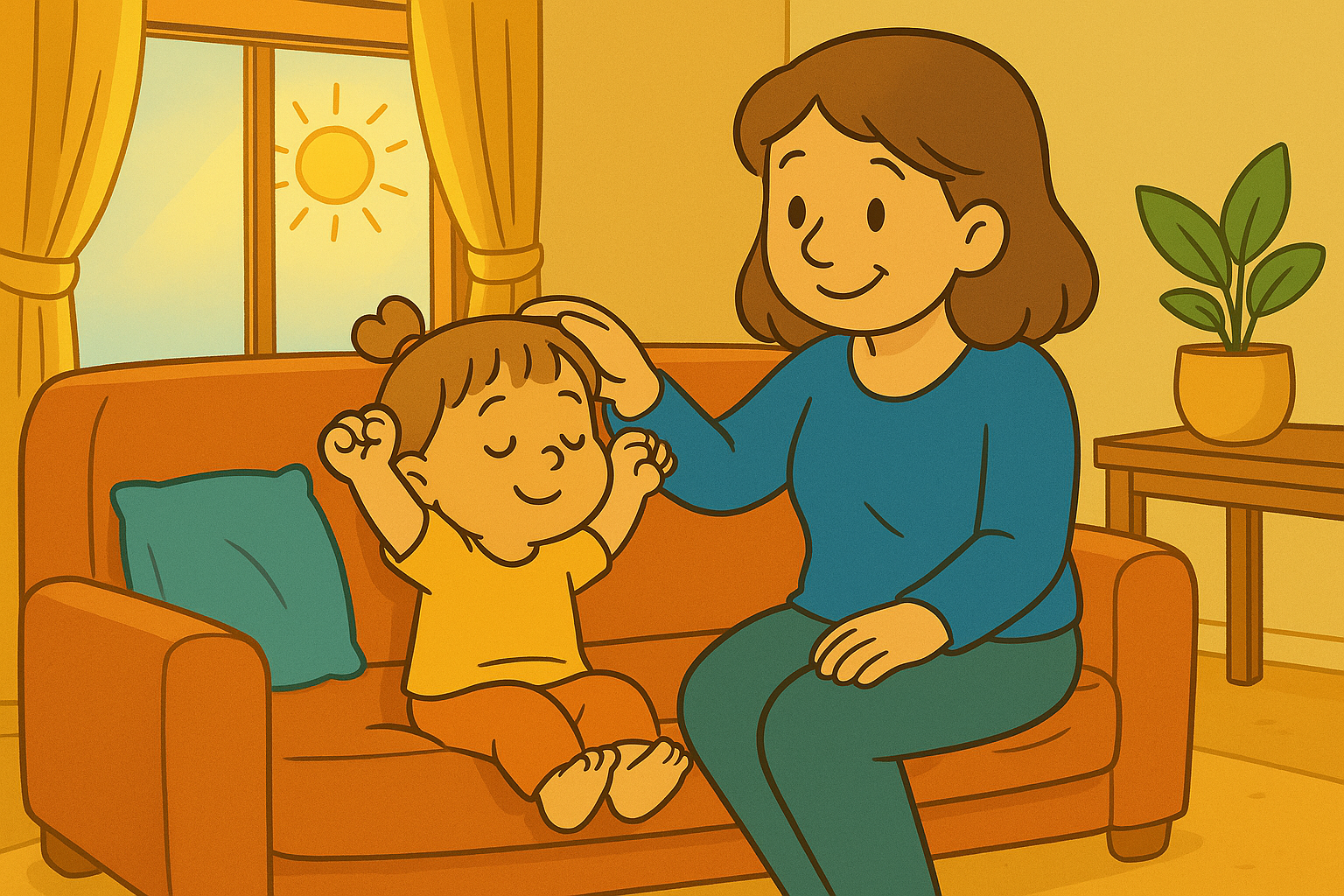
Children thrive on predictability — and when they spend time between multiple caregivers or homes, consistency becomes one of the most powerful forms of love.
Whether your child splits time between parents, spends days with grandparents, or has a nanny or daycare routine, the goal isn’t identical rules everywhere — it’s a shared rhythm that helps them feel safe, supported, and understood.
Here’s how to build consistency that travels with your child, no matter where they are.


Why Consistency Matters
Young children use daily patterns to make sense of their world. When expectations shift drastically between homes or caregivers, they can become confused or anxious.
Consistency helps them:
Feel safe and grounded 🏡
Transition smoothly between settings ✨
Develop self-regulation and confidence 💛
💡 Fuzzigram tip: Predictability is emotional safety in action.
You might also like Handling Routine Changes: Travel, Visitors, and Transitions.
Step 1: Focus on Core Routines, Not Exact Rules
Every home has its quirks — and that’s okay. What matters most is consistency in rhythm, not rigidity in details.
Core routines to align:
Morning and bedtime rituals
Mealtimes and snack expectations
Screen time boundaries
Discipline approach and tone
💡 Fuzzigram tip: Kids can handle small differences — they just need to know what to expect in each environment.
Step 2: Communicate Early and Often
Whether it’s with a co-parent, grandparent, or babysitter, open dialogue prevents mixed signals.
Share:
Daily rhythms (“We always do story before nap.”)
Language cues (“We say ‘calm down space,’ not timeout.”)
Comfort items or rituals that help your child reset
💡 Fuzzigram tip: Clear communication builds teamwork — and keeps kids from becoming the “messenger.”
See also Creating Emotional Check-Ins in Your Daily Routine.
Step 3: Share Visual Cues
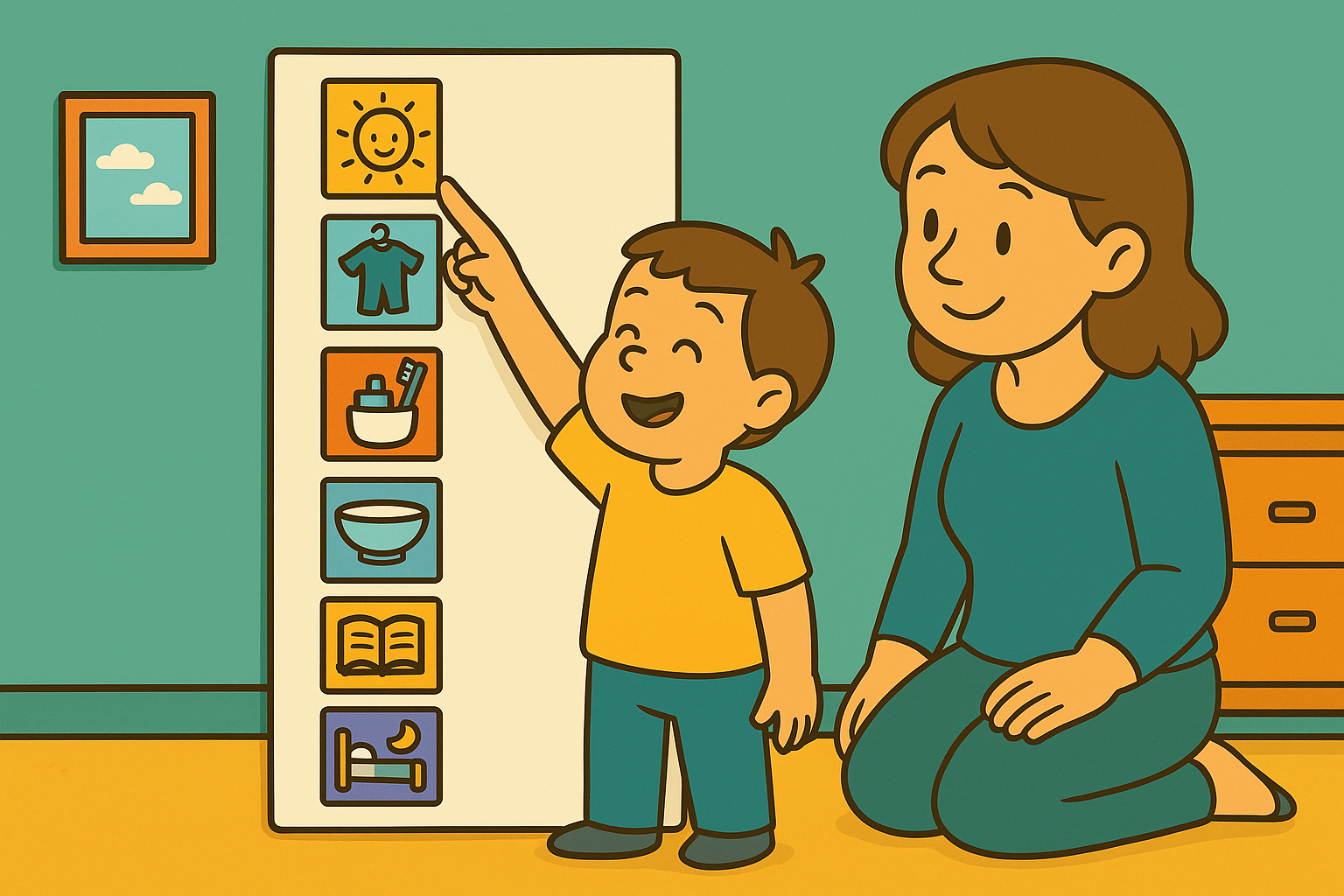
Kids don’t just listen — they see patterns. Post visual schedules or shared charts in both homes to reinforce continuity.
Ideas:
Simple picture routine cards
Shared reward chart or sticker system
Family calendar for school and special events
💡 Fuzzigram tip: Visuals give kids agency — they can anticipate, not just react.
Step 4: Keep Language Consistent
Even if routines differ slightly, similar language helps kids connect the dots.
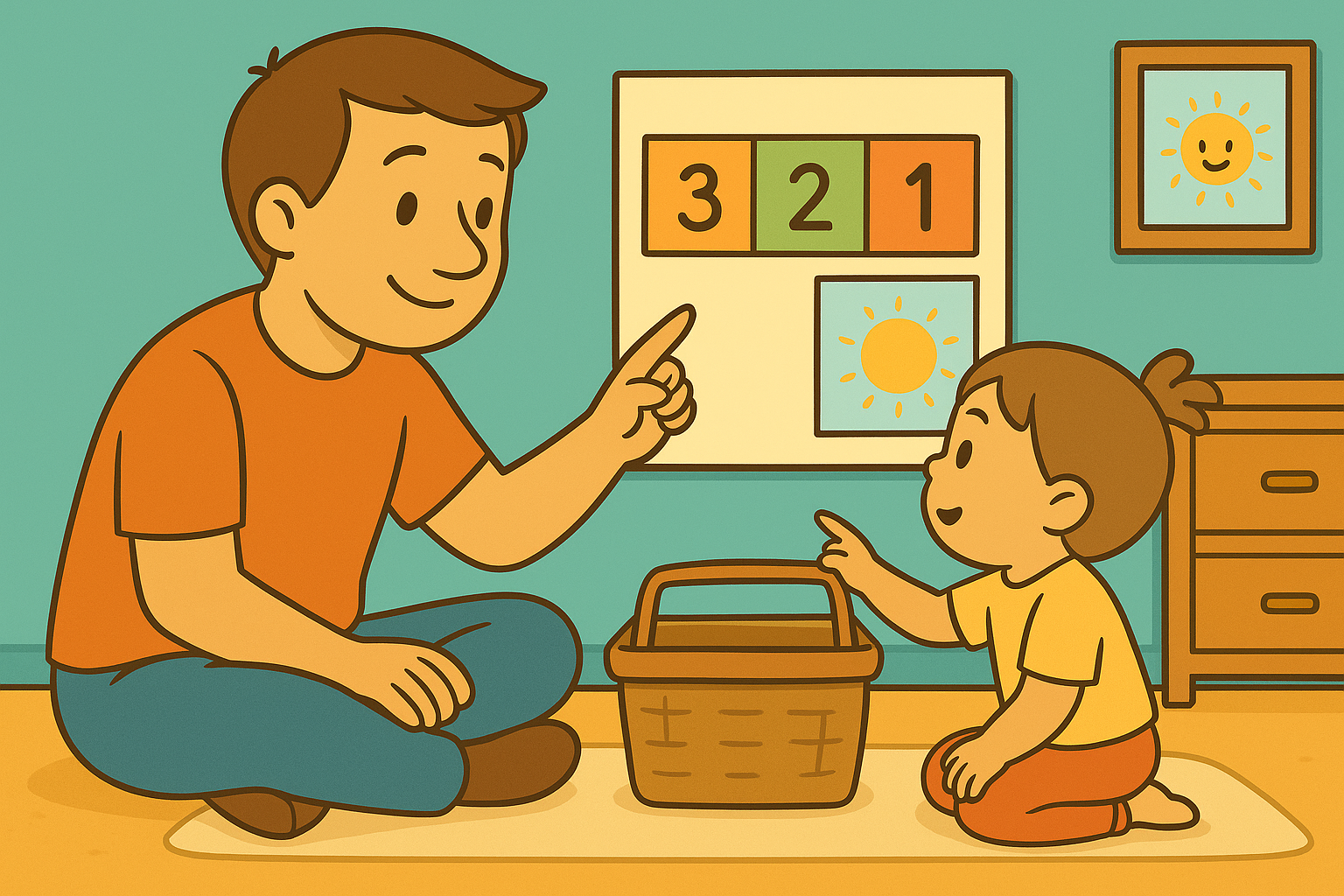
“It’s quiet time now.”
“We clean up before snack.”
💡 Fuzzigram tip: Repeating familiar phrases gives kids a sense of stability across spaces.
Step 5: Respect Each Caregiver’s Role
Every caregiver brings their own warmth, rhythm, and approach. Instead of striving for identical routines, focus on shared principles: kindness, respect, and calm correction.
💡 Fuzzigram tip: Kids benefit most when adults model cooperation — even when they do things differently.
Step 6: Handle Differences with Grace
Kids will notice differences — and test boundaries. That’s normal. Avoid criticizing other caregivers in front of them.
Instead, say:
“That’s how Grandma does it. At our house, we do it this way.”
💡 Fuzzigram tip: Respectful flexibility helps kids adapt without confusion.
You might also like Small Family Rituals That Build Lifelong Bonds.
Step 7: Revisit and Adjust Together
As kids grow, routines will evolve. Schedule regular caregiver check-ins to align and tweak what’s working.
💡 Fuzzigram tip: Consistency is ongoing communication — not a one-time setup.
Children feel secure not because every home is the same — but because the people around them are consistent, kind, and reliable.
When caregivers stay in sync, they send one powerful message: No matter where you are, you’re safe, loved, and understood.
This content is for educational purposes and is not a substitute for professional medical or psychological advice.