
Teaching Emotional Boundaries in Sibling Relationships
Teaching Emotional Boundaries in Sibling Relationships
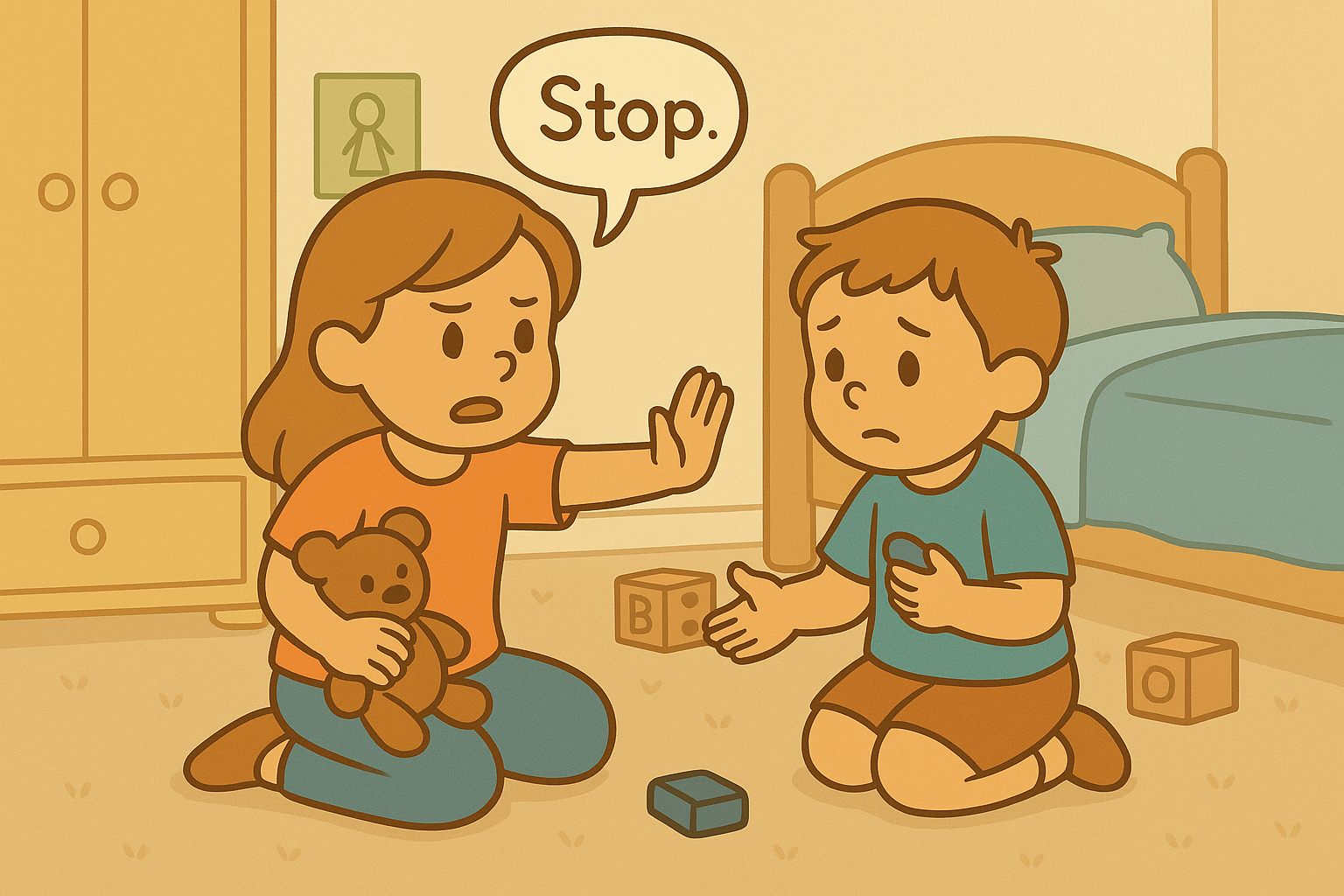
Sibling relationships are often a child’s first laboratory for emotional learning. Kids practice sharing, compromise, repair, empathy, and assertiveness with someone who is always nearby. Because siblings spend so much time together — especially in early childhood — emotional boundaries become crucial for protecting connection and building respect. Without guidance, small conflicts can spiral into resentment or habit-based teasing.
With coaching, boundaries become invisible guardrails that keep relationships safe, kind, and flexible.


What Emotional Boundaries Are (and Why They Matter)
For kids, emotional boundaries are the rules that protect:
how they feel,
what they need,
how they want to be treated.
Boundaries don’t block connection; they protect it. A simple explanation helps:
“A boundary is something that keeps your feelings safe.”
Children learn faster when boundaries are framed as kindness toward themselves and others — similar to the gentle framing in Helping Kids Express Sadness Without Shame, where feelings are separated from identity.
Normalize Wanting Space (Even From Loved Ones)
Children often don’t realize they’re allowed to take breaks from social contact. Normalize alone time:
Say:
“Everyone needs space sometimes — even from people they love.”
Kids can:
rest alone in their room,
read quietly,
draw by themselves.
Space prevents meltdowns and resentment. This emotional protection echoes regulation strategies from The Science of Emotional Regulation in Children.
Teach Clear but Kind “Stop” Language
Kids often try to communicate boundaries through shouting, pushing, or whining. Instead, rehearse short scripts they can use:
“Stop, I don’t like that.”
“I need space.”
“I’m not ready to play that way.”
Tone matters:
Firm ≠ rude.
Rehearsal scripts help children practice respect — similar to the tools offered in Using Puppet Skits to Explore Feelings and Friendship.
Respect Privacy and Personal Space
One of the earliest boundaries siblings learn is physical and environmental privacy. Teach:
knocking before entering bedrooms,
asking before joining a game,
leaving forts intact.
For younger siblings, visual cues help:
Red card = playing alone
Green card = welcome in!
This cue system pairs well with environmental visual supports from Creating “Calm Corners” in Classrooms or Homes.
Honor Special Items and “Ask-First” Toys
Sharing is helpful socially, but not everything must be shared. Distinguish:
community toys everyone can use,
special items only shared with permission,
personal comfort objects that are off-limits.
Teach:
“Sharing should feel kind — not required.”
This reduces sneaking, hiding, and resentment, and connects to emotional ownership explored in Teaching Kids How to Handle Disappointment Gracefully.
Coach Respectful Responses to Big Feelings
Siblings sometimes laugh, mimic, or tease when one is upset. This damages trust. Teach alternatives:
sitting quietly nearby,
offering a hug,
walking away respectfully.
Coach scripts:
“It looks like you’re upset. I’ll give you space.”
“Let me know if you want help.”
These actions support emotional safety, echoing techniques in How to Build Emotional Safety During Transitions.
Role-Play Boundary Moments Through Play
Kids learn emotional boundaries best when their nervous systems are calm. Role-play scenarios using puppets or toys:
Puppet grabs a toy without asking.
Doll follows too closely.
Action figure interrupts constantly.
Ask:
“What could they try instead?”
Play-based rehearsal increases empathy and flexibility, aligning with strategies in Teaching Patience Through Play.
Empower Kids to Walk Away Without Punishing the Relationship
Walking away doesn’t mean rejection; it means regulation. Teach phrases like:
“I need a break. I’ll come back later.”
“I’m calming my body.”
Kids learn they don’t have to stay in stressful interactions.
This helps prevent emotional spirals and complements repair strategies from Helping Kids Reconnect After Arguments.
Celebrate Boundary Repair (Not Just Calmness)
When siblings repair after crossing boundaries, spotlight:
courage,
empathy,
effort,
flexibility.
Say:
“You used kind words to reconnect. That takes practice.”
Praise identity traits:
“You were thoughtful.”
“You were brave to try again.”
This mirrors identity-focused praise in The Power of Praise: When and How to Use It.
Build Family Rules That Support Emotional Boundaries
Make these simple and predictable:
“We respond when someone says stop.”
“We don’t laugh at tears.”
“We knock before entering bedrooms.”
“We ask before using special items.”
Clear family expectations reduce emotional surprises, reinforcing predictability described in The Connection Between Routine and Emotional Security.
Sibling relationships offer daily opportunities to practice boundaries, consent, space, and repair. When you teach kids to speak up kindly, take breaks, ask before entering, and reconnect gently, you help them build empathy and relational confidence. Over time, emotional boundaries allow siblings to love each other safely — even through disagreements — laying the groundwork for respectful friendships and relationships throughout life.
This content is for educational purposes and is not a substitute for professional medical or psychological advice.


