The Hidden Benefits of Educational Podcasts for Kids
The Hidden Benefits of Educational Podcasts for Kids
Why Podcasts Are Becoming a Quiet Favorite for Families
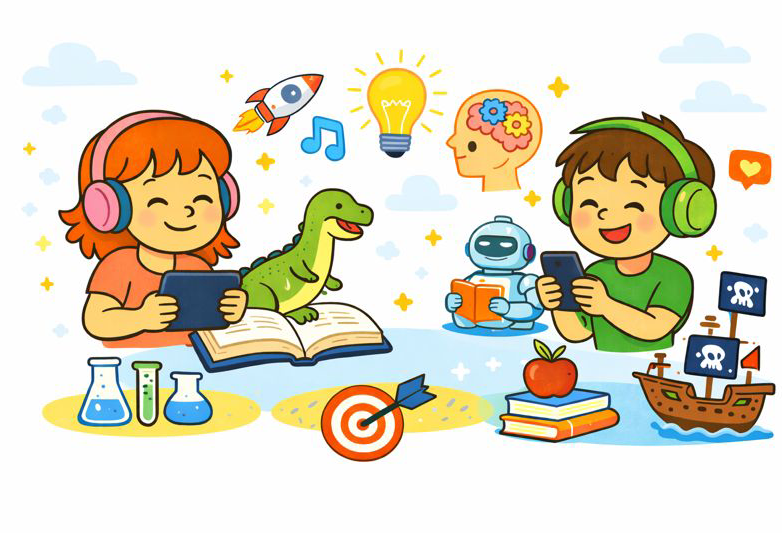
In a world filled with glowing screens and constant visual stimulation, educational podcasts have quietly earned a place in many family routines. They don’t flash, swipe, or demand interaction — instead, they invite children to slow down and listen.
Parents often discover podcasts almost by accident. A long drive, a restless afternoon, or a search for something calming before bed leads them to audio stories or kid-friendly shows. What starts as background sound often becomes something children actively request.
Podcasts feel different from other media. They allow learning to happen without pressure, entertainment without overstimulation, and engagement without fatigue. For families trying to be thoughtful about technology use, podcasts offer a gentle, balanced option.


How Podcasts Strengthen Listening Skills
Listening is a foundational skill that supports learning, communication, and emotional regulation. Educational podcasts give children repeated practice focusing on spoken language without visual cues.
Over time, regular listening helps children develop:
Greater ability to follow spoken directions
Longer attention spans during stories
Improved comprehension of explanations
Increased patience with longer narratives
Because children must track ideas using sound alone, their brains work a bit harder — in a healthy way. This strengthens focus and prepares them for classroom listening, group discussions, and everyday conversations.
Expanding Vocabulary Through Rich Language Exposure
Educational podcasts expose children to language that goes beyond everyday conversation. Hosts often use descriptive words, expressive phrasing, and varied sentence structures that enrich language development naturally.
Unlike passive background media, podcasts require children to actively process meaning. To understand what’s happening, they must listen closely — which helps new words stick. Hearing vocabulary used in context allows children to infer meaning without direct instruction.
This kind of language exposure fits well within the balance explored in The Role of Technology in Early Learning: Finding the Sweet Spot, where thoughtful media supports — rather than replaces — core developmental skills.
Encouraging Imagination Without Visual Overload
Without visuals guiding the experience, podcasts leave room for imagination to flourish. Children create their own mental pictures of characters, settings, and events as they listen.
This type of engagement supports:
Creative thinking
Visualization skills
Flexible problem-solving
Independent idea generation
Instead of being shown exactly what to imagine, children decide for themselves. This open-ended experience pairs naturally with the ideas in Encouraging Balance Between Tech and Real-World Play, where technology complements — rather than crowds out — imaginative exploration.
Supporting Emotional Awareness Through Stories
Many educational podcasts rely on storytelling to explore feelings, relationships, and everyday challenges. Through characters and relatable situations, children hear emotions named and modeled in ways that feel safe and approachable.
Listening to stories about frustration, excitement, kindness, or disappointment allows children to practice empathy without pressure. They learn that emotions are normal, manageable, and worth talking about.
This emotional learning aligns closely with The Emotional Side of Tech: Teaching Self-Regulation with Devices, where intentional media choices help children understand and manage their feelings.
Encouraging Curiosity and Deeper Thinking
Podcasts often plant ideas that grow well beyond the episode itself. A single question, mystery, or surprising fact can spark curiosity that carries into play, conversation, or reading later on.
Educational podcasts naturally encourage children to:
Ask thoughtful “why” and “how” questions
Explore new interests independently
Make connections between ideas
Share discoveries with others
Because podcasts focus on ideas rather than visuals, children tend to think more deeply about what they hear. Curiosity develops organically, without flashy hooks or constant stimulation.
Building Independence and Confidence
Once children find podcasts they enjoy, listening often becomes self-directed. They learn how to choose content, stay engaged, and explore topics on their own terms.
This independence helps children:
Feel capable managing their own learning
Build confidence in their interests
Develop intrinsic motivation
Practice sustained focus
For parents, podcasts offer a gentle step between guided activities and independent exploration — a balance many families value.
Creating Calm Moments Throughout the Day
Educational podcasts fit naturally into quiet moments and daily transitions. Unlike screens, they don’t demand full sensory attention, making them ideal for regulating energy and emotions.
Families often use podcasts during:
Morning routines
Car rides
Quiet playtime
Rest periods
Bedtime wind-downs
Replacing passive noise with intentional audio — as discussed in Replacing Background TV with Intentional Family Soundscapes — helps children feel calmer and more present throughout the day.
Strengthening Family Connection Through Shared Listening
Podcasts don’t have to be solitary experiences. Many families listen together, turning episodes into shared moments that spark connection.
Shared listening can:
Create natural conversation starters
Reveal children’s interests and thinking
Encourage turn-taking and reflection
Build shared memories
A short episode often leads to longer conversations, imaginative play, or thoughtful questions — all signs of meaningful engagement.
Learning Without Adding More Screen Time
One of the most appealing benefits of podcasts is that they offer educational enrichment without increasing screen exposure. Children can listen while drawing, building, or relaxing, giving their eyes a break while keeping their minds active.
For families trying to reduce visual overload while still supporting learning, podcasts feel like a sustainable, realistic solution — especially during busy or transition-heavy parts of the day.
Making Podcasts Part of Your Family’s Rhythm
Educational podcasts work best when they’re woven gently into daily life rather than treated as another task to complete. A consistent listening time or familiar routine helps children know what to expect.
Families often find success by:
Keeping listening pressure-free
Letting kids help choose episodes
Talking briefly after listening
Connecting stories to real-world play
This content is for educational purposes and is not a substitute for professional medical or psychological advice.