How to Build a Balanced Media Diet for the Family
How to Build a Balanced Media Diet for the Family

Why Families Need a Media Diet — Not Just Screen Limits
Most families don’t struggle with too much technology as much as they struggle with unbalanced technology. Screens sneak into mornings, fill quiet gaps, and linger late into the evening — often without intention. That’s where the idea of a “media diet” becomes helpful.
A balanced media diet isn’t about strict rules or eliminating screens altogether. It’s about variety, timing, and purpose. Just like food, media can nourish, overstimulate, connect, distract, or calm — depending on how and when it’s consumed.
When families shift from asking “How much screen time?” to “What kind of media, and why?”, everything changes. Media becomes something you use thoughtfully, not something that quietly takes over the day.


What a Balanced Media Diet Actually Looks Like
A healthy media diet includes a mix of digital and non-digital experiences that support development, connection, and rest. It also changes as children grow.
In practice, a balanced media diet often includes:
Educational media that sparks curiosity
Entertainment media used intentionally, not automatically
Screen-free time for play, movement, and creativity
Shared media experiences that invite conversation
Quiet media that supports rest and regulation
The goal isn’t perfection. Some days lean more digital, others less. Balance happens over time, not hour by hour.
Understanding Media “Nutrition”
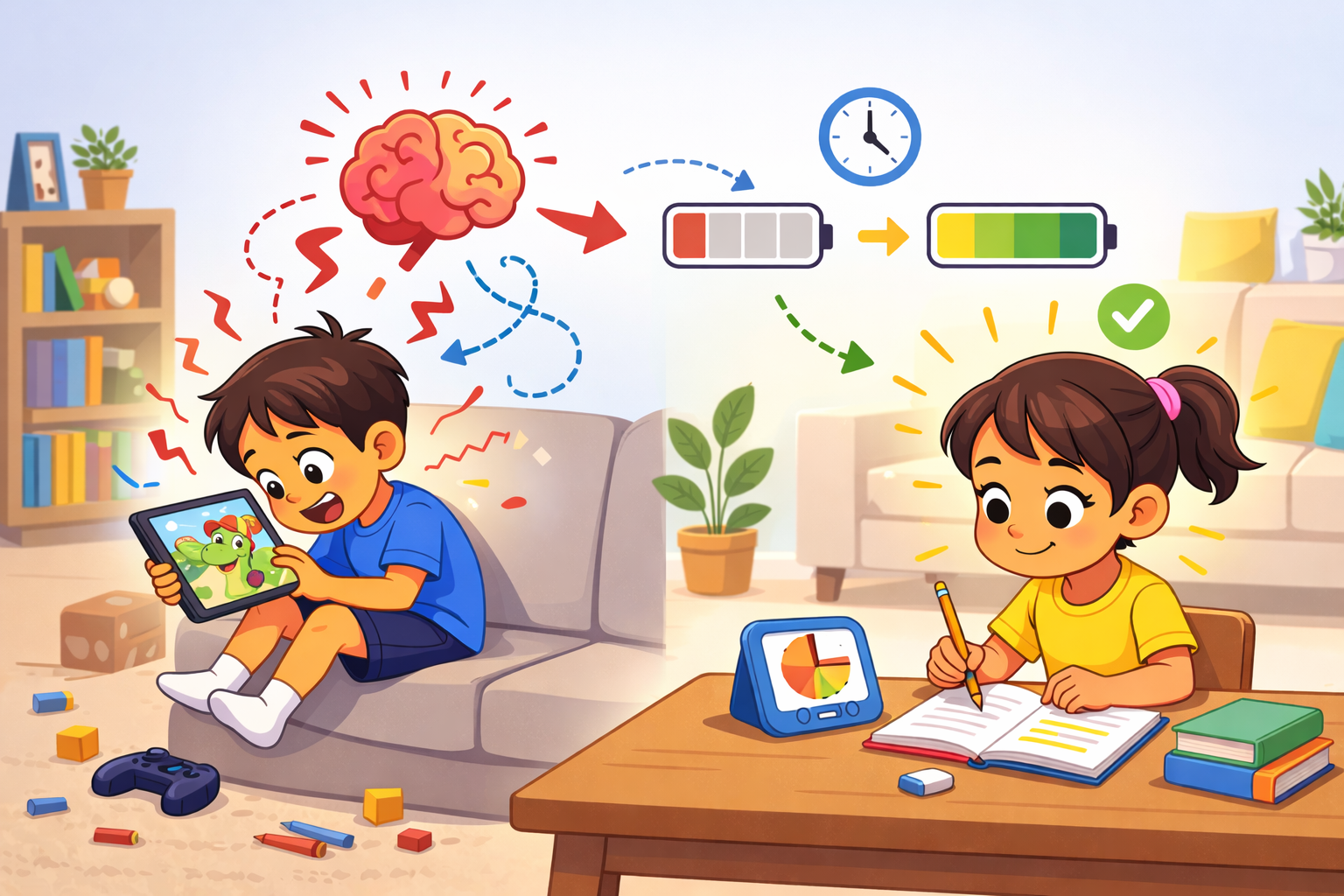
Not all media feeds children in the same way. Some content builds skills and connection, while other content drains attention or increases irritability.
When evaluating media choices, it helps to ask:
Does this content calm or rev up my child?
Does it encourage thinking, imagination, or empathy?
Is it age-appropriate and emotionally safe?
Does it support or replace real-world experiences?
These questions align closely with guidance in How to Choose Safe, Age-Appropriate Media for Kids, where quality matters far more than quantity.
Once parents start thinking about media in terms of “nutritional value,” decisions feel clearer and less emotionally charged.
Timing Matters More Than Total Minutes
One of the biggest misconceptions about screen time is that total minutes are the most important factor. In reality, when media is used often matters more than how long.
Media tends to work best when:
It’s not the first or last activity of the day
It follows connection, movement, or play
It doesn’t interrupt meals or sleep routines
It’s predictable rather than constant
Media used during high-stress transition points — like right before school or bedtime — can amplify dysregulation. Used intentionally, at calmer moments, it can support relaxation or learning instead.
Building in Digital “Downtime”
A balanced media diet includes intentional breaks — not just from screens, but from constant input. Downtime allows kids’ nervous systems to reset and creativity to reemerge.
Families who build downtime into daily life often notice:
Improved mood and flexibility
Easier transitions between activities
Better sleep quality
More independent play
This approach pairs naturally with How to Create Digital “Downtime” Routines That Stick, where predictable pauses help media fit into life instead of dominating it.
Downtime doesn’t have to be complicated. Even short, consistent screen-free pockets can make a noticeable difference.
Making Room for Screen-Free Experiences
A balanced media diet isn’t complete without meaningful offline experiences. These moments don’t need to be elaborate — they just need to exist.
Screen-free experiences might include:
Open-ended play
Reading or storytelling
Outdoor movement
Creative projects
Quiet rest
When these experiences are protected, media use naturally becomes more balanced. Screens stop competing with play — because play already has a place.
The Role of Parents in Shaping Media Balance
Children don’t just learn media habits from rules — they learn from what they see modeled every day. How adults use their own devices sends a powerful message.
When parents:
Put phones away during conversations
Choose media intentionally
Take breaks from screens themselves
Talk openly about media choices
…children learn that technology is a tool, not a constant companion.
This modeling doesn’t require perfection. It requires awareness — and a willingness to adjust when media starts to feel overwhelming.
Creating Physical Boundaries That Support Balance
Physical space plays a big role in media habits. Where screens live often determines how often they’re used.
Many families find success by:
Keeping screens out of bedrooms
Creating shared media spaces
Protecting mealtimes as screen-free
Designating specific areas for device use
These ideas align closely with Creating Screen-Free Zones at Home, where environment supports boundaries without constant enforcement.
When boundaries are built into the space itself, families spend less energy policing behavior and more time connecting.
Choosing Connection Over Convenience
Media often fills gaps because it’s convenient — not because it’s needed. Over time, those quick fixes can crowd out connection.
A balanced media diet leaves room for:
Conversation during quiet moments
Shared boredom that sparks creativity
Family rituals without screens
Co-regulation instead of distraction
This doesn’t mean media is the enemy. It simply means connection stays the priority — and media supports it, rather than replacing it.
Evaluating Media’s Impact on Family Relationships
One of the clearest indicators of balance is how media affects family dynamics. When media use supports connection, families feel calmer and more aligned.
It may be time to rebalance if media:
Causes frequent power struggles
Interrupts conversations or routines
Leads to emotional meltdowns
Replaces shared experiences
Building a Media Diet That Evolves With Your Family
A balanced media diet isn’t static. It changes as children grow, schedules shift, and needs evolve. What works this year may need tweaking next year — and that’s normal.
Families often succeed by:
Revisiting media choices regularly
Staying flexible rather than rigid
Listening to children’s cues
Adjusting balance during busy seasons
At Fuzzigram, we believe the healthiest media habits grow from intention, not fear. When families approach technology with curiosity and care, media becomes one more tool for learning, connection, and joy — not something to battle against.
A balanced media diet doesn’t eliminate screens. It puts them in their place — alongside play, rest, creativity, and real-life connection.
This content is for educational purposes and is not a substitute for professional medical or psychological advice.