Winter Sensory Play Ideas for Indoors
Winter Sensory Play Ideas for Indoors
Why Winter Sensory Play Is So Powerful
When temperatures drop and outdoor time becomes limited, children still need ways to explore, move, and stimulate their senses. Winter sensory play is a warm, cozy solution that brings the magic of the season inside the home—without needing snow, perfect supplies, or long planning sessions.
Sensory play helps children regulate their emotions, develop creativity, build motor skills, and learn about the world through hands-on discovery. Indoors, it becomes a grounding force during the busyness of the holidays, offering calm amidst noise and structure amidst long days at home. Winter sensory bins, textures, sounds, and smells can turn any ordinary afternoon into a moment of wonder.


The Benefits of Sensory Play (Especially in Cold Months)
During winter, kids often experience cabin fever—or moods that shift quickly due to limited movement, overstimulation from holidays, or disrupted routines. Sensory play acts as a reset button for their minds and bodies. It supports:
Emotional regulation and calmness
Focus and attention stamina
Fine motor strength
Language and creative storytelling
Stress relief through repetitive play
Even five minutes of sensory exploration can help soothe big emotions and redirect restless energy.
Safety and Structure: Setting Expectations First
Before introducing any sensory play, even simple activities, it’s important to set gentle boundaries so kids feel safe to explore. Try a few starter statements:
“Everything stays in the bin.”
“This is for hands—not for eating.”
“Let’s explore slowly and see what this feels like.”
You can also provide visual cues like a towel on the floor, a tray for materials, or special “sensory play tongs” that signal the activity has rules—but still feels exciting and open-ended.
Winter-Themed Sensory Materials to Try
You don’t need snow or expensive items. Everyday materials can create wintry surprises:
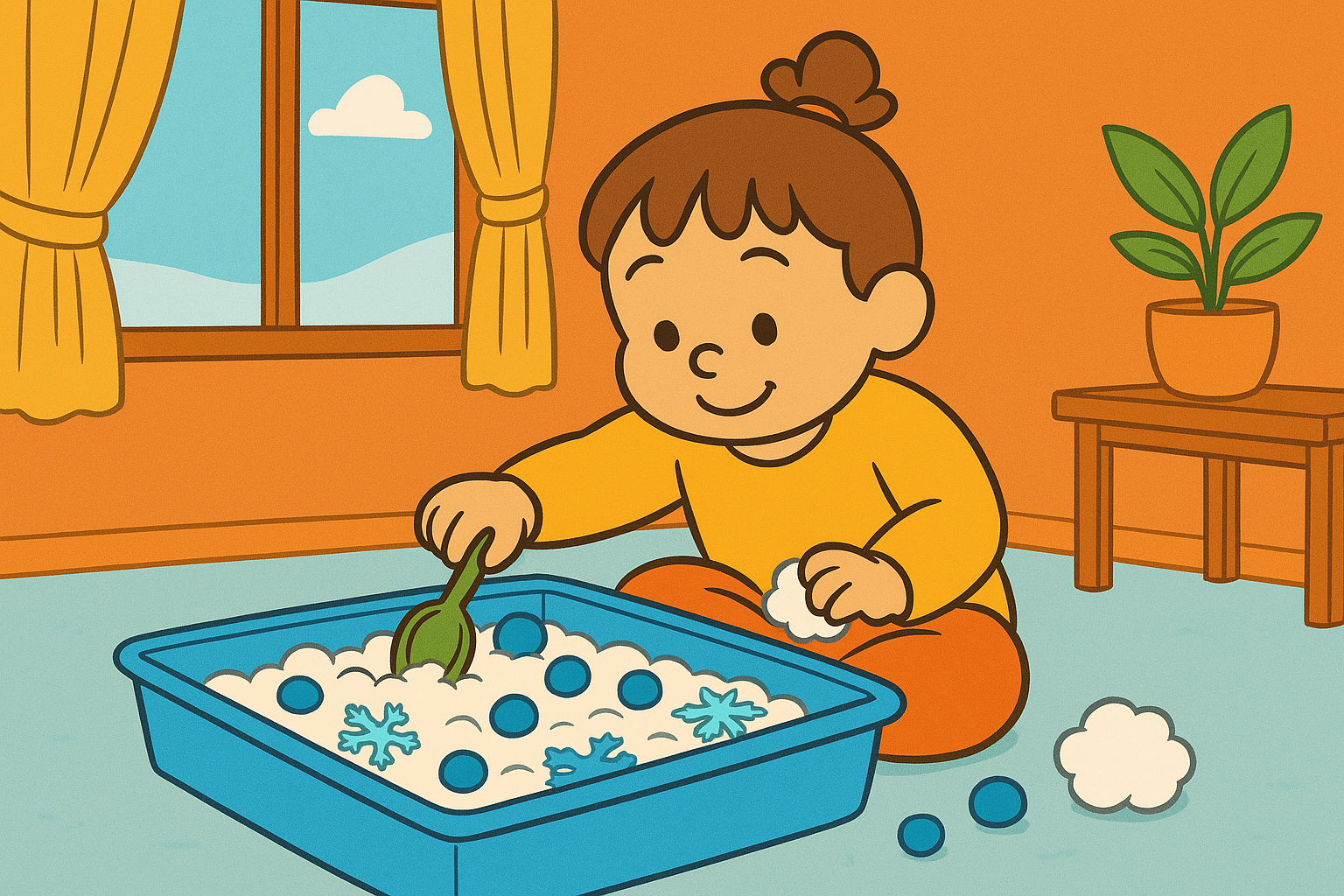
Cotton balls as “snowballs”
Ice cubes with food coloring
White rice or dried beans as snow
Sparkly sequins or confetti
Blue gelatin as icy water
Pom-poms in winter colors
Pinecones, cinnamon sticks, and dry leaves
To elevate the sense experience, invite children to smell (cinnamon), squeeze (playdough), sort (beads), or hide mini figurines to discover.
Sensory Bins That Feel Like Winter
Here are themed sensory bins kids can explore again and again:
1. Arctic Dig Bin
White rice + mini animals + plastic cups as “ice blocks.”
2. Hidden Mitten Bin
Cotton balls + plastic mittens or gloves to hunt for.
3. Ice Treasure Hunt
Freeze small toys in ice cubes. Kids chip or melt them out slowly.
4. Cinnamon Snow Bin
Flour + cinnamon + scoops + cookie cutters = scented snow!
These bins work beautifully as calming transition activities—especially before bedtime or after school. For guidance on peaceful communication during play, Teaching Respectful Communication During Conflict offers wording to support cooperation.
Winter Sensory Play Without a Bin
Sensory play doesn’t always require containers! Try:
Window Drawing: Use shaving cream or washable paint for “frosty windows.”
Sensory Pathways: Tape shapes on the floor for kids to step, hop, and march through.
Winter Water Play: Add blue food coloring to water and provide spoons, tongs, and pouring cups.
Texture Boards: Glue materials to cardboard—foil for ice, cotton for snow, sandpaper for frost.
These activities build body awareness and coordination—especially valuable during days with less outdoor movement.
Supporting Emotional Expression Through Texture
Sensory play can be a safe space to express feelings indirectly. If your child feels frustrated or restless, ask:
“Which texture feels grumpy?”
“Which texture helps you calm your body?”
“Can your puppet show me how snow feels?”
When emotions rise, puppets can be powerful—especially during winter restlessness. For creative emotional tools, The Best Puppet Skits for Christmas and Winter Fun connects play with storytelling and regulation.
Winter Sensory Kits Kids Can Create Themselves
Kids love ownership. Invite them to design a “Winter Discovery Box” with items they choose:
Crinkled paper
Ribbon pieces
Beads or buttons
Snowflake stickers
Fabric scraps
Mini pinecones
They can return to this box any time they want sensory play. Even toddlers benefit from choosing their tools—younger children feel more cooperative when they have a role in gathering materials.
Using Winter Scents, Sounds & Music
Sensory play thrives when more than one sense is engaged. Try incorporating:
Scents: vanilla, cinnamon, mint, cocoa powder (in sealed containers for sniffing)
Sounds: snow crunch recorded on your phone, wind sounds, chimes
Music: soft instrumental holiday or winter background
Invite kids to describe feelings with sound or scent:
“This smells like joy to me.”
“This sound feels like a cold morning.”
“This texture makes me want to read a book.”
Sound and smell can spark imagination faster than visuals—especially during cozy winter evenings.
Helping Kids Wind Down After Sensory Play
Sensory play can be invigorating, so calming closure helps transition. Try:
A warm blanket afterward
One deep breath per activity
A “I noticed…” sentence about their exploration
A cup of water or snack to reset their body
You can even pair it with reflection time. The article The Power of Shared Family Reflections Before Bed offers gentle ways to end sensory play with thoughtful conversation and emotional connection.
A Season of Discovery—Right at Home
Winter doesn’t have to feel confined. With sensory play, it becomes rich with textures, sounds, smells, and learning moments that help young children feel centered, creative, and engaged—without leaving the house.
These activities don’t require perfection. They simply need time, presence, and curiosity. A sensory bin is not just an activity—it’s an invitation to pause, explore, and discover. And sometimes, on the coldest days, that is exactly what a child needs most.
Let the season be felt—not rushed. Let your home become a winter world of wonder.
This content is for educational purposes and is not a substitute for professional medical or psychological advice.