Teaching Gratitude With a Family “Thankful Tree”
Teaching Gratitude With a Family “Thankful Tree”
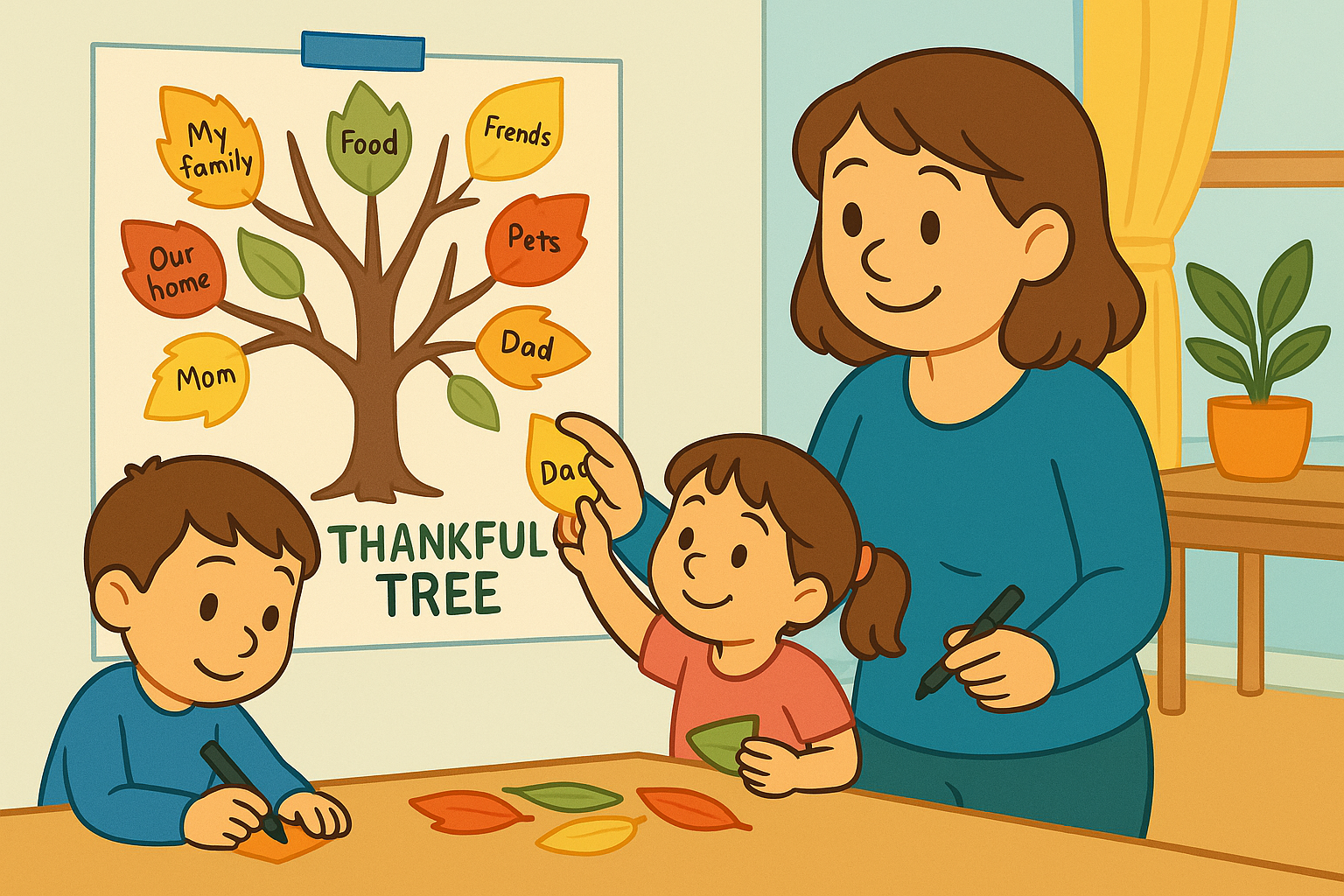
Why Gratitude Needs Practice, Not Pressure
The holiday season can bring joy—but also overstimulation, wish lists, and impatience. Gratitude doesn’t naturally appear just because it’s “the right time of year.” It grows slowly, through repetition, modeling, and meaningful conversation. A Family Thankful Tree creates a visual way for kids to reflect on kindness, appreciate the everyday moments, and remember that special doesn’t always mean expensive.
Unlike forced “say thank you” moments, a Thankful Tree offers space. Children can observe their emotions, choose their own words, and celebrate the small things that make them feel safe, happy, and connected. This turns gratitude into something powerful—not pressured.


The Benefits of Making Gratitude Visible
Children (especially younger ones) learn best when they can see ideas grow. A Thankful Tree does exactly that. Each day, leaf by leaf, kids watch thankfulness appear—even on difficult days. This teaches them:
That gratitude builds over time
That small joys matter
That feelings change—and that’s okay
That family appreciation can be shared, not just spoken
When children place their own leaf on the tree, gratitude becomes an action—not just a word adults use.
Creating Your Family’s Thankful Tree
Your tree can be homemade and simple—or decorative and artistic. What matters most is participation and joy. Some easy setups include:
Poster board tree taped to the wall
Construction paper tree made together with kids
Paper branches in a vase with leaves on string
Chalkboard or whiteboard tree that resets daily
Bare branches from outdoors with clothespin leaves
Keep a bucket of paper leaves nearby so kids can add gratitude anytime—not just during a designated family moment. For help building a daily rhythm for reflection, The Power of Shared Family Reflections Before Bed pairs beautifully with this project.
Prompts That Get Kids Thinking
Sometimes gratitude doesn’t come easily—not because children are ungrateful, but because they simply haven’t practiced yet. Thoughtful prompts can help open their hearts:
“What made you smile today?”
“What felt cozy today?”
“Who helped you this week?”
“What made your body feel calm?”
“What’s something you don’t want to forget?”
“What do you love about our home?”
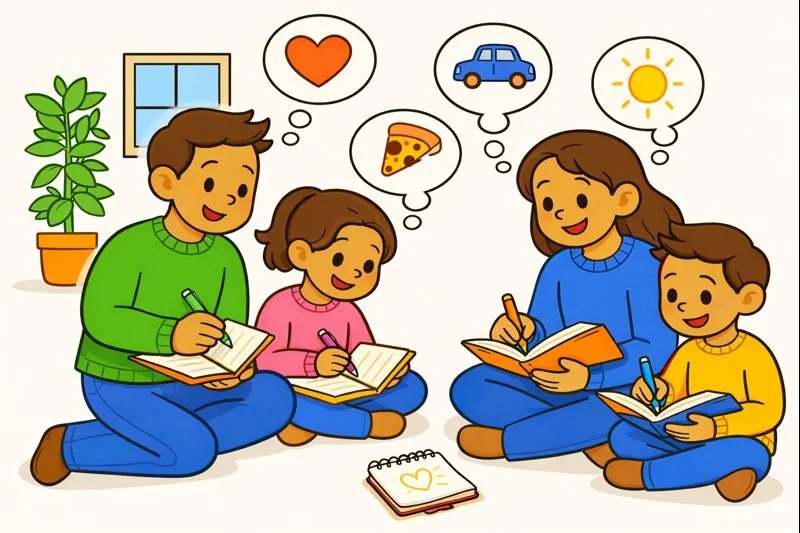
Give children freedom to draw, dictate, or write their responses. That ownership helps gratitude feel personal—rather than something they’re “supposed” to say.
Helping Toddlers and Young Children Participate
Toddlers may not yet understand gratitude—but they feel it deeply. You can help them participate through:
Stickers or fingerpaint “leaves”
Photo cutouts of people they love
Handprint leaves on colored paper
Point-and-choose options (two leaves at a time)
“Tell me something that made you giggle” moments
Let toddlers use their bodies—taping leaves, pressing them on, watching you celebrate their choices. They learn thankfulness through joyful repetition.
For Older Kids: Turning Gratitude Into Storytelling
As children grow, the Thankful Tree can become a storytelling tool. Kids might:
Write full sentences
Add funny memories
Share anonymous thank-yous
Create categories (home, school, friends, nature)
Record conversations about each leaf
Some families take a photo of each fully decorated tree at the end of the season—building a “gratitude album” year after year. This helps older kids see how their appreciation has matured over time.
Supporting Gratitude During Tough Emotions
Not every day feels joyful—and that’s okay. Gratitude can still exist alongside sadness or frustration. You might try:
“Is there a tiny leaf of thankfulness for today?”
“Can we make a leaf for something that helped us get through today?”
“What helped your body feel better?”
“Do you want me to write it for you?”
When difficulty is allowed, kids learn that gratitude isn’t only for good times. It is also a tool for resilience and healing. Articles like Teaching Respectful Communication During Conflict offer language families can use when tension appears—and gratitude feels further away.
Turning the Tree Into a Daily Ritual
Instead of being a one-time craft, the Thankful Tree can become a calming seasonal routine. Choose a time of day—during breakfast, before bed, or after dinner—and give everyone a leaf to fill out.
Tips for making it special:
Dim lights and use a single candle
Play soft instrumental music
Let kids choose where each leaf belongs
Read a few leaves aloud together
Combining the Thankful Tree With Other Holiday Traditions
This project pairs beautifully with other seasonal activities:
A Kindness Countdown or advent-style calendar
A memory jar for special moments
A homemade gift exchange inspired by gratitude
Puppet skits retelling the leaf stories
A family meal where everyone shares a favorite leaf
You might even create a second tree—called the Giving Tree—where kids write one way they want to help someone this season. To spark creativity, Simple Homemade Gifts Kids Can Make and Give offers easy ways to turn gratitude into action.
What Happens to the Tree at the End of the Season?
There are many meaningful ways to close the tradition:
Take a photo before removing the leaves
Save special leaves in an envelope or album
Let kids pick one leaf to keep as a “wish for next year”
Turn the tree into a spring “hopes and goals” tree
Read every leaf aloud together before storing it away
The end of the season doesn’t erase the gratitude—it just transforms it. Children learn that appreciation can evolve, just like seasons change.
Gratitude That Grows With Your Family
Your Family Thankful Tree doesn’t have to be perfect. It simply needs to remind every person in your home that they are seen, valued, and surrounded by hundreds of small reasons to feel thankful.
Gratitude is less about saying the right words—and more about creating moments where the heart has space to speak. Leaf by leaf, your family can build that space. And over time, your children will grow up with strong roots—grounded in appreciation, connection, and love.
This content is for educational purposes and is not a substitute for professional medical or psychological advice.