How to Manage Busy Holiday Schedules Without Meltdowns
How to Manage Busy Holiday Schedules Without Meltdowns
Why Holiday Schedules Feel So Hard for Kids
Holidays often bring a rapid shift in pace. Extra outings, visitors, late nights, travel, and unpredictable routines can overwhelm children who rely on consistency to feel safe. While adults may view holiday busyness as temporary or exciting, children experience it as a constant stream of transitions with little recovery time.
Meltdowns during busy holiday schedules are not signs of bad behavior. They are signs that a child’s nervous system is overloaded. Understanding this reframes the goal: instead of “getting through” the schedule, families can focus on supporting regulation and emotional balance throughout the season.


Understanding the Emotional Cost of Overpacked Days
Children don’t have the same capacity as adults to move quickly from one activity to another. Each transition requires emotional energy — even positive ones.
Busy holiday schedules often include:
Frequent changes in environment
Increased social interaction
Later bedtimes
Irregular meals
Heightened sensory input
When these pile up, children may struggle to cope. Recognizing the emotional cost of busyness helps parents respond with compassion instead of urgency.
Choosing Fewer Commitments With Intention
One of the most effective ways to reduce meltdowns is to do less — on purpose. Families are often invited to many events, but not all of them need to be attended.
Helpful questions include:
Which events are most meaningful for our family?
Which activities bring connection rather than stress?
What can we skip this year without guilt?
This intentional simplification aligns naturally with How to Teach Kids to Appreciate Simplicity During Holidays, where fewer commitments create more room for calm and connection.
Anchoring Each Day With Predictable Routines
Even during busy seasons, small routines act as emotional anchors. Children don’t need full schedules — they need familiar touchpoints that signal safety.
Helpful anchors include:
Consistent wake-up routines
Regular meal and snack times
Familiar bedtime rituals
Quiet moments before or after outings
Maintaining these anchors reduces the emotional load of change and helps children recover more quickly from stimulation.
Preparing Kids for the Day Ahead
Uncertainty often fuels anxiety and frustration. Preparing children for what’s coming helps them feel more in control and less reactive.
Preparation might include:
Explaining plans in simple, concrete terms
Naming transitions ahead of time
Letting kids know when plans might change
Talking about who they’ll see and where they’ll go
This kind of preparation mirrors the emotional grounding families practice in Family Gratitude Circles During Dinner, where reflection and clarity help children feel secure.
Building Recovery Time Into the Schedule
Busy schedules often fail not because of the events themselves, but because there’s no recovery time in between.
Children need space to decompress. Without it, emotions build until they spill over.
Recovery time might look like:
Quiet play after outings
Reading together
Drawing or coloring
Listening to calm music
Cuddling or resting
Scheduling recovery time is not wasted time — it’s what allows children to participate calmly in the next activity.
Using Visual Schedules to Reduce Anxiety
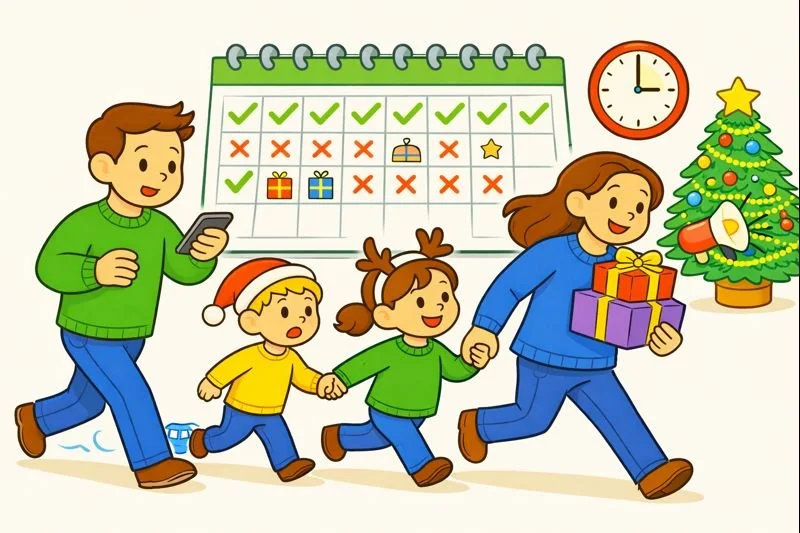
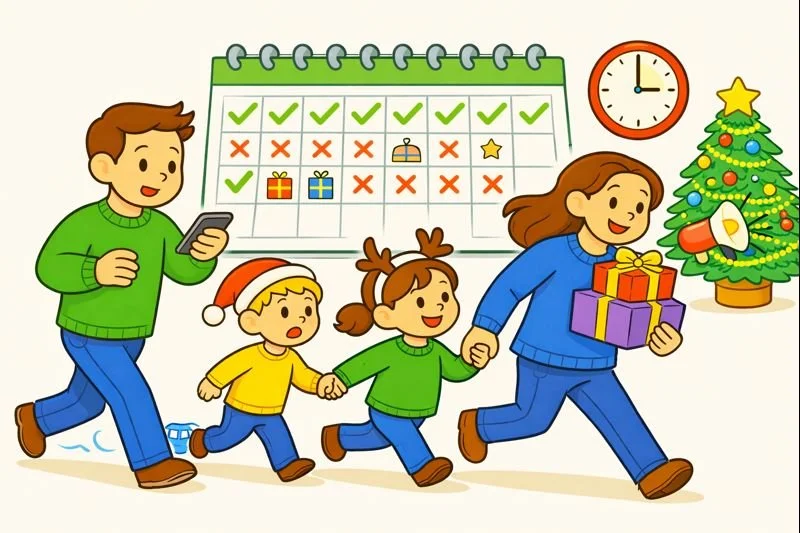
Visual schedules help children understand what’s happening and what’s coming next. Seeing the flow of the day makes transitions feel predictable rather than abrupt.
Simple visual tools include:
A short list of daily activities
Picture cards showing the sequence of events
A simple “now / next” board
Crossing off completed activities
Visual schedules reduce repeated questions and help children mentally prepare for transitions.
Allowing Choice to Reduce Resistance
Busy schedules often remove children’s sense of control. Offering small choices helps restore it.
Helpful choices include:
Choosing which clothes to wear
Picking a snack
Deciding the order of tasks
Choosing a quiet activity
This sense of agency reduces power struggles and aligns with the child-led approach encouraged in Teaching Patience During Holiday Wait Times, where autonomy supports emotional regulation.
Recognizing Early Signs of Overwhelm
Meltdowns rarely come out of nowhere. They build over time. Learning to recognize early signals allows parents to intervene gently.
Early signs may include:
Increased irritability
Clinginess
Withdrawal
Difficulty listening
Physical restlessness
When these signs appear, slowing down early can prevent a full emotional collapse later.
Modeling Calm Flexibility as a Parent
Children learn how to handle stress by watching adults. During busy holidays, parents often feel pressured to stick to schedules — but flexibility models resilience.
Ways to model calm include:
Speaking slowly even when plans change
Naming your own feelings calmly
Letting go of perfection
Adjusting plans when needed
Creating Holidays That Feel Manageable and Meaningful
Managing busy holiday schedules isn’t about eliminating excitement — it’s about balancing it with care. When families prioritize regulation, connection, and flexibility, children learn that busy seasons don’t have to feel chaotic.
Over time, kids who experience well-managed holiday schedules develop:
Stronger emotional regulation
Greater flexibility
Trust in caregivers
Confidence navigating change
Holidays will always bring some level of busyness. But with intention and empathy, families can create seasons that feel joyful instead of overwhelming — and memories that are rooted in calm connection rather than stress.
This content is for educational purposes and is not a substitute for professional medical or psychological advice.