Setting Up Device-Free Bedrooms for Better Sleep
Setting Up Device-Free Bedrooms for Better Sleep
Why Bedrooms Matter So Much for Sleep
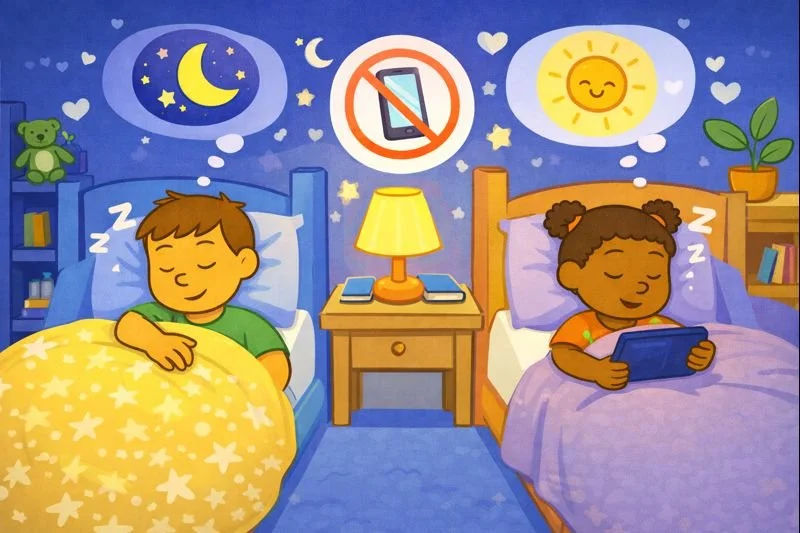
Sleep doesn’t start when children close their eyes — it starts with the environment that surrounds them. Bedrooms are more than places to rest; they signal safety, calm, and routine. When devices enter that space, they can quietly interfere with all three.
Screens bring light, stimulation, and unpredictability into a room meant for slowing down. Even when devices are “off,” their presence can affect expectations and habits. Children may think about what they’re missing, anticipate notifications, or struggle to mentally power down.
Creating a device-free bedroom isn’t about punishment or restriction. It’s about protecting sleep as a biological need and giving children a space that supports rest, regulation, and security.


How Screens Disrupt Sleep — Even When Used Earlier
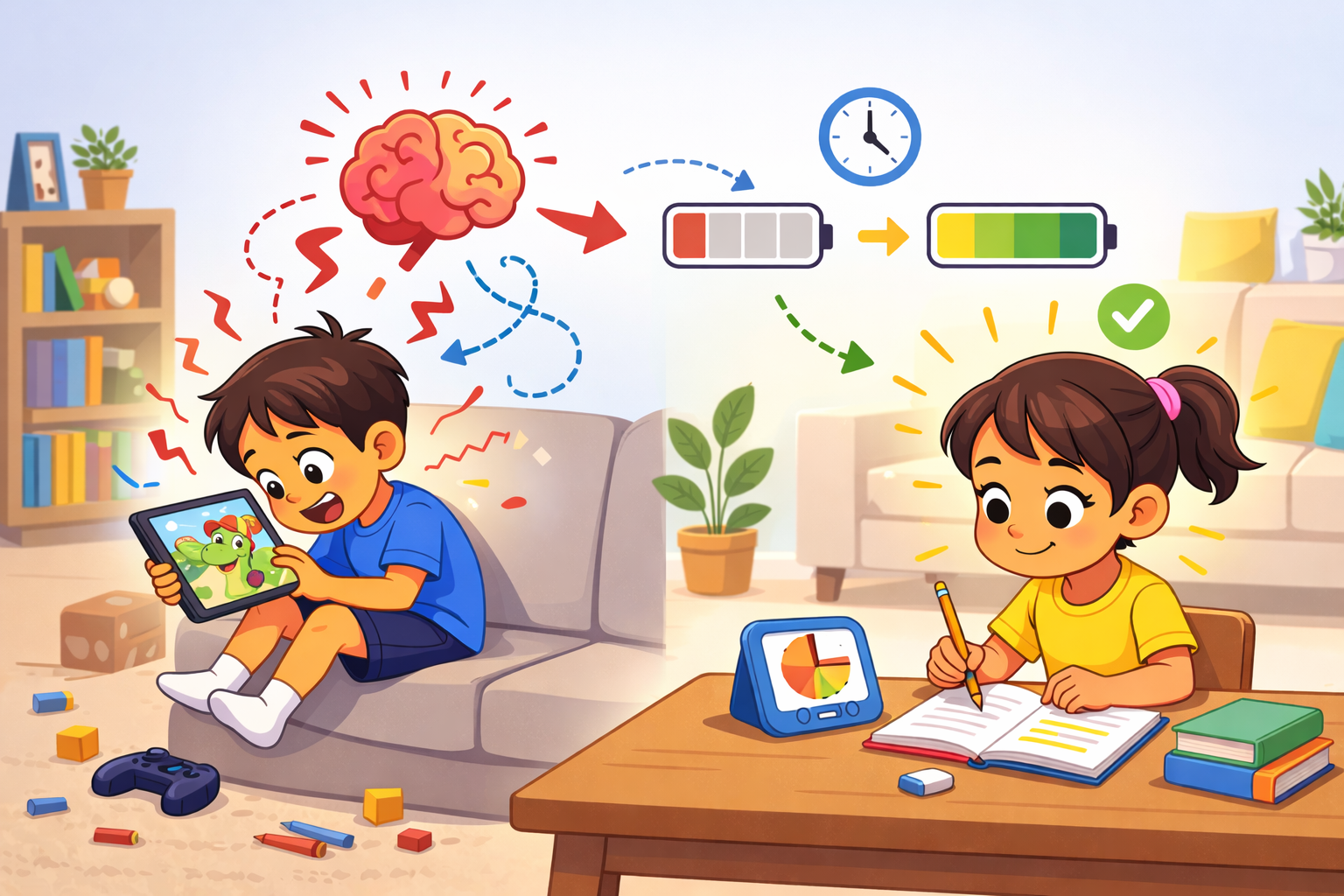
Many parents assume screens only affect sleep if used right before bed. In reality, their impact often begins much earlier in the evening.
Screens can interfere with sleep by:
Increasing mental alertness late in the day
Disrupting natural melatonin production
Making transitions to calm activities harder
Encouraging “just one more” behavior
When devices live in bedrooms, these effects linger. Children may sneak usage, struggle with self-regulation, or associate their bed with stimulation instead of rest.
Understanding these patterns helps families shift the focus from rules to sleep support.
Reframing Device-Free Bedrooms as a Sleep Support
Children are more receptive to boundaries when they understand the reason behind them. Framing device-free bedrooms as a way to help sleep — rather than control behavior — changes the tone of the conversation.
Helpful language includes:
“Your room is for resting your brain.”
“Sleep helps your body grow and feel good.”
“We want your room to feel calm and safe.”
This approach aligns with Sleep and Screens: What Parents Need to Know, where sleep quality — not screen morality — stays at the center of the discussion.
When kids see the boundary as supportive, resistance often softens.
Deciding Which Devices Stay Out
Not all devices feel equally disruptive, which is why clarity matters. Families benefit from deciding ahead of time which items stay out of bedrooms — and why.
Common bedroom-free devices include:
Tablets and phones
Gaming systems
Laptops
Televisions
Some families also choose to keep smart speakers or glowing alarm clocks out of bedrooms, replacing them with simple, non-stimulating alternatives.
Consistency matters more than perfection. Clear expectations reduce nightly negotiations and help children know what to expect.
Creating a Calming Bedroom Environment
Removing devices is only part of the equation. A bedroom that truly supports sleep also feels inviting and calm.
Sleep-supportive bedrooms often include:
Soft, dim lighting
Comfortable bedding
Familiar objects or stuffed animals
Minimal visual clutter
These elements signal safety and predictability — two key ingredients for restful sleep. When the room itself promotes calm, children rely less on screens for comfort.
Replacing Screens with Sleep-Friendly Rituals
One reason screens creep into bedrooms is because they fill a need — connection, distraction, or relaxation. Replacing that need with intentional rituals makes the transition smoother.
Many families use:
Reading together
Quiet conversation
Gentle music or audiobooks
Breathing or stretching routines
These alternatives support wind-down without visual stimulation. This shift pairs naturally with ideas in Replacing Background TV with Intentional Family Soundscapes, where sound supports calm rather than distraction.
When rituals feel comforting, screens lose their appeal at bedtime.
Handling Pushback and Resistance
It’s normal for children to resist changes that affect their routines. Pushback doesn’t mean the boundary is wrong — it means adjustment is happening.
Helpful responses include:
Acknowledging disappointment without changing the rule
Staying calm and consistent
Offering reassurance and connection
Giving the change time to settle
These strategies echo approaches in Helping Kids Transition Away from Screens Peacefully, where empathy and predictability reduce emotional escalation.
Most families notice resistance fade as sleep improves.
Adjusting for Different Ages and Needs
Device-free bedrooms don’t look the same for every age. Younger children may need more support and reassurance, while older kids may need collaboration and autonomy.
Age-appropriate adjustments might include:
Extra check-ins for younger children
Clear charging stations outside bedrooms for teens
Gradual transitions rather than sudden changes
Opportunities for kids to personalize their sleep routines
Flexibility within firm boundaries helps families meet individual needs without sacrificing sleep quality.
Modeling Device-Free Sleep as Adults
Children pay close attention to adult habits — especially around rest. If parents bring devices into bed, kids notice the inconsistency.
Modeling supportive habits includes:
Charging phones outside bedrooms
Avoiding late-night scrolling
Talking openly about sleep priorities
Treating rest as valuable, not optional
This modeling reinforces ideas explored in Digital Role Modeling: How Your Own Habits Shape Theirs, where children learn by watching daily behavior.
When adults model boundaries, kids feel less singled out.
Connecting Bedroom Boundaries to Overall Media Balance
Device-free bedrooms work best as part of a broader media approach. When screens are balanced throughout the day, nighttime boundaries feel less restrictive.
Families often see better results when:
Screen time ends well before bed
Media use is predictable
Offline activities are prioritized in the evening
Downtime is built into routines
Sleep becomes one piece of a healthier rhythm — not an isolated rule.
Letting Sleep Be the Priority
At its core, setting up device-free bedrooms is about choosing sleep — again and again — even when it’s inconvenient. Well-rested children are more emotionally regulated, focused, and resilient.
Over time, families who protect sleep often notice:
Easier bedtimes
Fewer nighttime disruptions
Improved mood and focus
More peaceful mornings
At Fuzzigram, we believe healthy tech habits start with honoring basic needs. When bedrooms are reserved for rest, children learn that sleep matters — and that their well-being comes first.
Device-free bedrooms aren’t about removing comfort. They’re about creating it.
This content is for educational purposes and is not a substitute for professional medical or psychological advice.