When Screens Help: The Upside of Digital Storytime
When Screens Help: The Upside of Digital Storytime

Rethinking Screens as Storytelling Tools
For many parents, screens and stories feel like opposites. Screens are often associated with distraction, while stories are linked to imagination, language, and connection. But digital storytime sits right at the intersection of those two worlds — and when used thoughtfully, it can offer real benefits.
Digital storytime doesn’t replace books, lap reading, or oral storytelling. Instead, it adds another format for stories to reach children. Animated read-alouds, interactive story apps, and narrated videos can introduce stories in ways that feel engaging and accessible, especially for young learners.
The key isn’t whether screens are involved — it’s how they’re used. When storytime remains relational, calm, and intentional, screens can actually support learning rather than undermine it.


Why Stories Matter So Much in Childhood
Stories are one of the most powerful tools for early learning. They help children make sense of the world, understand emotions, and build language.
Through stories, children:
Learn new words and sentence structures
Explore cause and effect
Practice empathy and perspective-taking
Understand routines and social expectations
Whether a story is read from a book or shared through a screen, its developmental impact comes from meaning and connection — not the medium alone.
What Makes Digital Storytime Different
Digital storytime offers experiences that traditional books sometimes can’t — especially when used intentionally.
Well-designed digital stories can:
Combine narration with visual cues
Support children who learn best through sound or movement
Replay favorite stories consistently
Introduce stories when books aren’t available
For some children, especially visual or auditory learners, digital storytelling can make stories more accessible and engaging without sacrificing comprehension.
When Digital Storytime Supports Learning
Screens help most when they serve the story — not distract from it. The best digital storytime experiences feel calm, focused, and purposeful.
Digital storytime tends to work well when:
The pacing is slow and predictable
Narration is clear and expressive
Visuals support the story instead of overwhelming it
Interactions are optional, not constant
These qualities align closely with principles in How to Choose Safe, Age-Appropriate Media for Kids, where design and intention matter more than format.
Language Development Through Digital Stories
Digital storytime can meaningfully support language development when children are actively engaged.
Children benefit when digital stories:
Use rich, descriptive language
Repeat key phrases or patterns
Highlight emotional vocabulary
Encourage listening rather than tapping
Hearing expressive narration helps children internalize rhythm, tone, and sentence flow — especially when stories are revisited multiple times.
The Power of Shared Digital Storytime
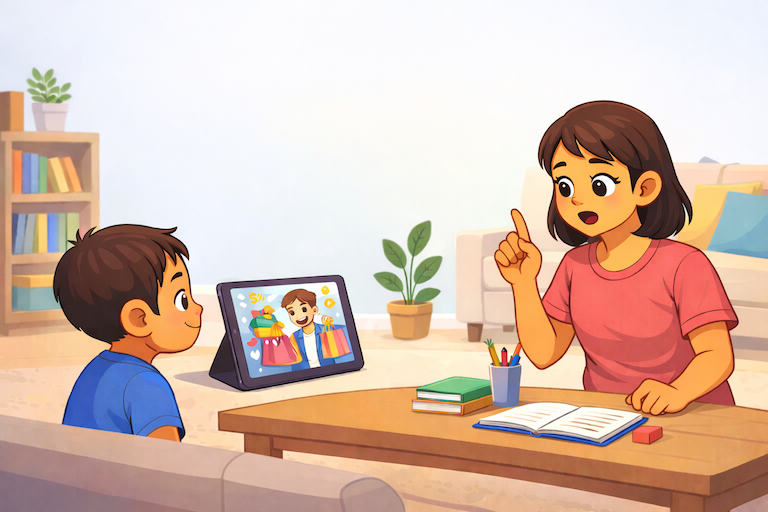
One of the most important factors in digital storytime is whether it’s shared. Children learn more when an adult is present — commenting, pausing, and connecting ideas.
Shared digital storytime allows adults to:
Ask gentle questions
Clarify confusing moments
Relate stories to real-life experiences
Respond to children’s emotional reactions
This relational approach mirrors ideas in The Hidden Power of Co-Viewing: Watching Together Builds Connection, where shared media becomes a bridge to conversation rather than a replacement for it.
Supporting Emotional Learning Through Stories
Stories — digital or not — help children explore emotions safely. Characters model feelings, mistakes, and problem-solving in ways kids can relate to.
Digital stories can support emotional learning by:
Naming feelings clearly
Showing characters working through challenges
Modeling empathy and kindness
Providing reassurance through familiar narratives
When children revisit favorite stories, they often process emotions differently each time — deepening understanding as they grow.
Digital Storytime as a Family Ritual
Digital storytime can become a meaningful family ritual when it’s used intentionally rather than spontaneously.
Some families use digital stories:
During evening wind-down routines
As a shared morning activity
While traveling or waiting
To spark conversations after busy days
These rituals can resemble traditions explored in Family Movie Nights That Spark Conversations (Not Just Screen Time), where shared viewing becomes about connection — not consumption.
Replacing Passive Viewing with Purposeful Stories
One of the biggest benefits of digital storytime is its ability to replace passive background media with intentional storytelling.
Compared to background TV, digital storytime:
Has a clear beginning and end
Encourages focused listening
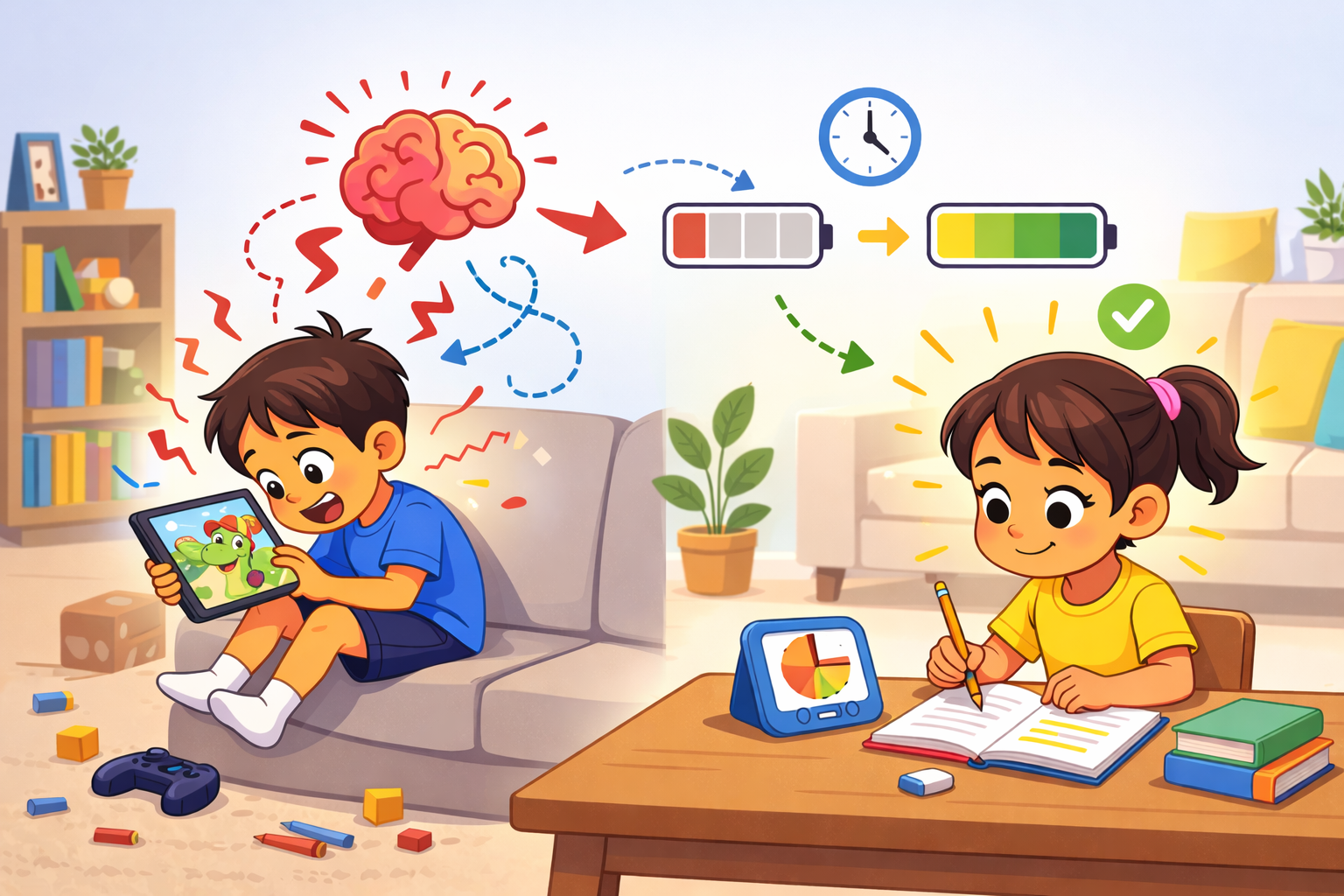
Reduces overstimulation
Invites conversation afterward
This shift aligns closely with ideas in Replacing Background TV with Intentional Family Soundscapes, where sound and story are used thoughtfully instead of filling silence automatically.
Knowing When Digital Storytime Isn’t Helping
Even helpful tools need boundaries. Digital storytime works best when it’s one part of a balanced media diet.
It may be time to adjust if:
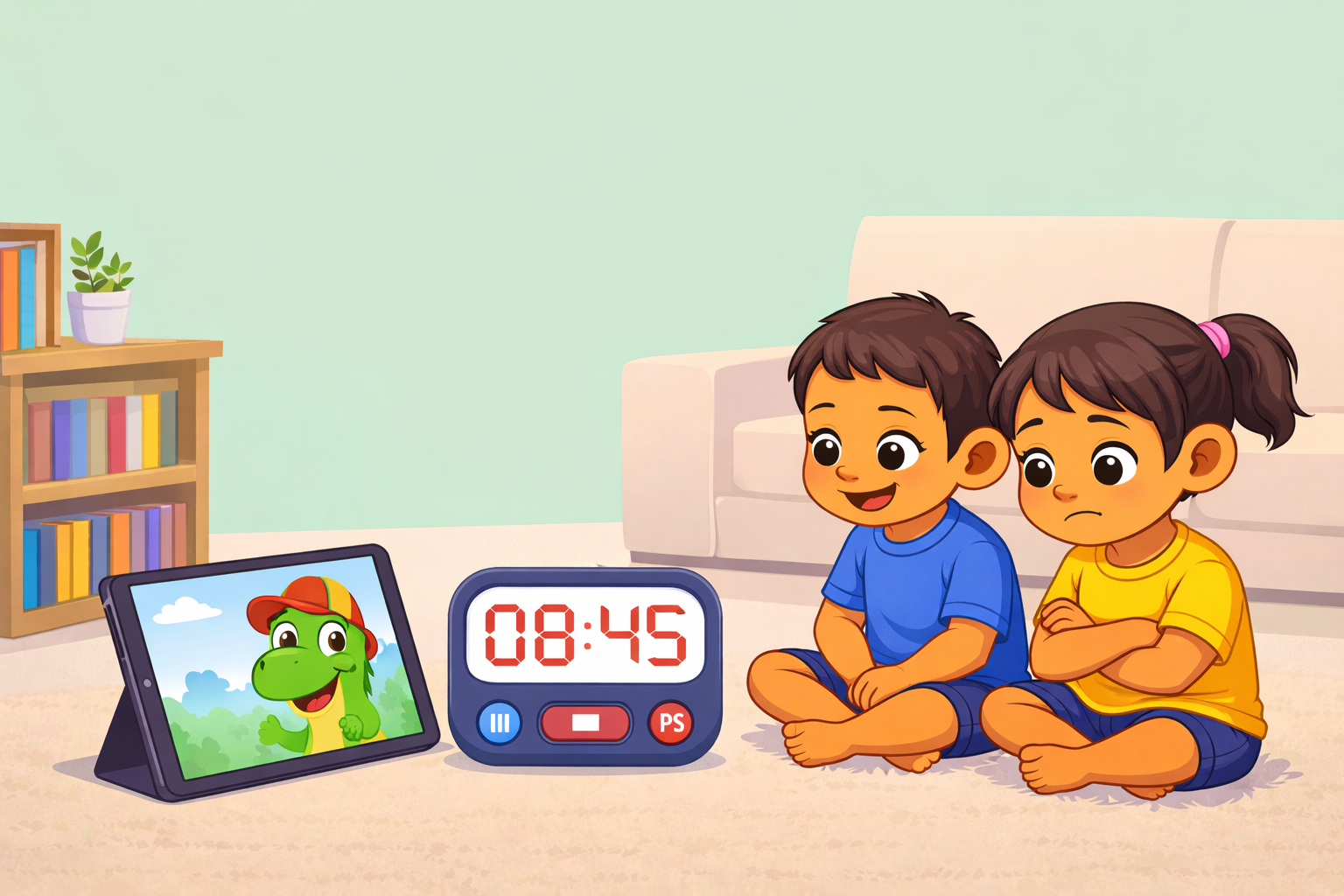
Children struggle to transition away afterward
Stories are used to avoid connection
Visual effects overshadow storytelling
Screens replace reading or play entirely
Watching children’s cues helps families decide when digital stories are serving their purpose — and when it’s time to pivot.
Letting Stories Lead — Not Screens
The heart of storytime has never been the format. It’s the shared experience, the emotions, and the meaning children draw from stories over time.
At Fuzzigram, we believe screens can help when they support what stories already do best:
build language, spark imagination, and strengthen connection.
When digital storytime is intentional, relational, and balanced, screens stop being the focus — and stories take center stage, right where they belong.
This content is for educational purposes and is not a substitute for professional medical or psychological advice.