Family Holiday Card Ideas With Puppets or Art
Family Holiday Card Ideas With Puppets or Art
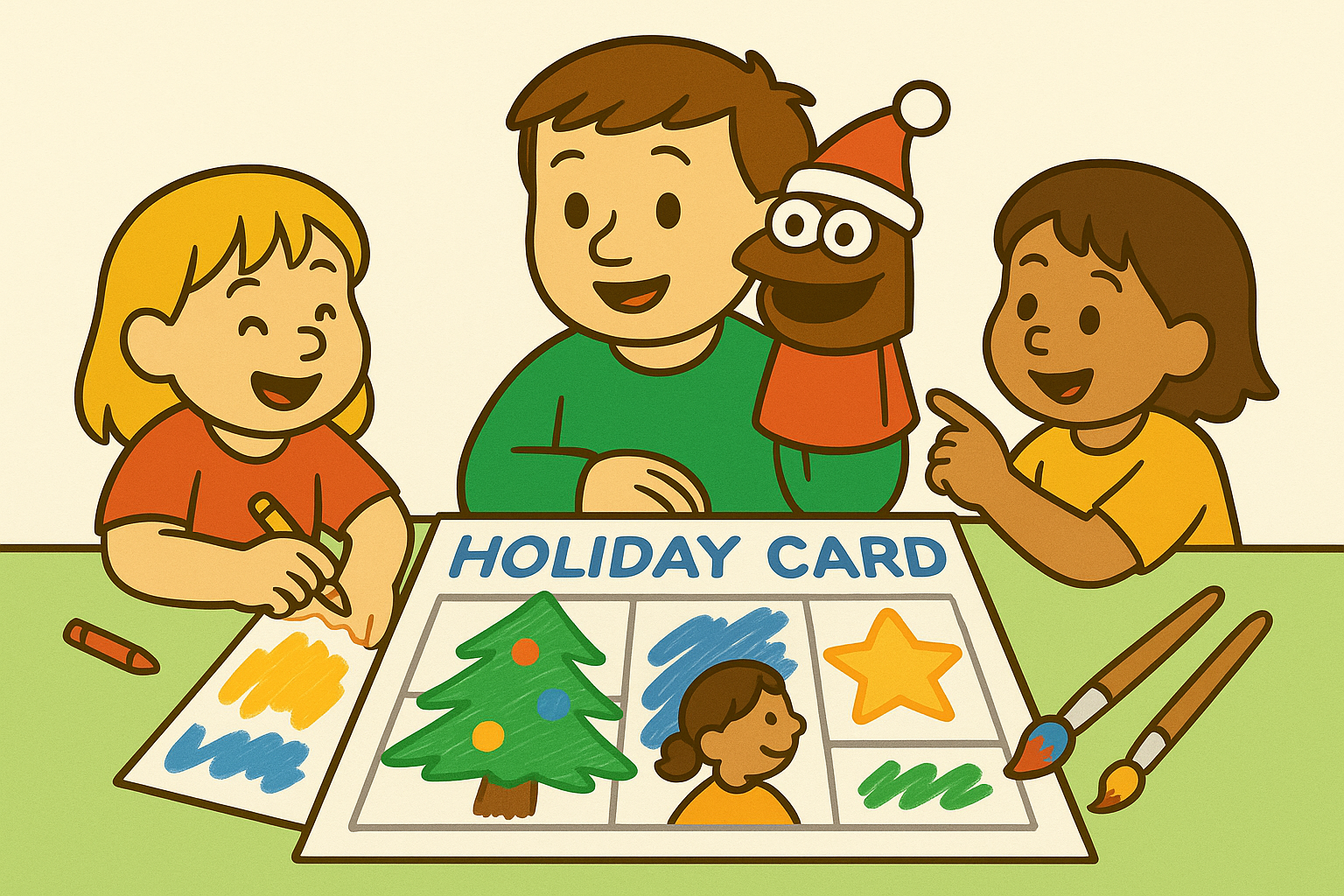
A More Playful Way to Share Holiday Cheer
Holiday cards are one of the sweetest ways families stay connected across distance, time, and busy schedules. But when you bring puppets or children’s artwork into the mix, those cards transform from simple greetings into keepsakes bursting with personality. Puppets bring storytelling and humor. Kid-made art adds warmth and authenticity. And together, they create holiday cards that feel joyful, imaginative, and unmistakably yours.
Instead of worrying about perfect lighting or coordinated outfits, your focus shifts toward creativity. Kids become collaborators, directors, and proud contributors. Puppets help spark ideas and make even the shyest children feel comfortable in front of the camera. Artwork, whether scribbles or detailed winter scenes, becomes something magical once it’s featured on a holiday card sent to loved ones.
In this guide, you'll explore simple ways to use puppets and art to design holiday cards that feel festive, heartfelt, and full of family charm.


Why Puppets Work So Well for Holiday Cards
Puppets add instant charm and relatability. They’re expressive, silly, comforting, and deeply connected to childhood imagination. When you include puppets in a holiday card, you automatically introduce a storytelling element—something that feels like a little holiday scene rather than a posed photo.
Children especially love incorporating their favorite characters. Whether it’s a puppet they've made themselves or one used in family videos, puppets give kids something to interact with, making natural smiles much easier. Puppets also help families create cozy or humorous scenes that would feel forced with adults alone.
You can build on techniques families often use in Encouraging Storytelling and Imagination Through Play, where puppets help kids express ideas, emotions, and humor. This same principle works beautifully in holiday cards—kids naturally perform, puppets naturally charm, and the final result feels alive.
Easy Puppet Poses That Look Great on Camera
You don’t need an elaborate setup to capture adorable puppet photos. Try these simple puppet-friendly ideas that photograph well every time:
The Side Peek - A puppet popping into the frame from the edge while your child waves or smiles.
Holiday Helpers - Puppets “helping” wrap gifts, decorate a tree, or stack pretend presents.
Story Time Scene - Your child reads a holiday book to the puppet, creating a cozy, relatable snapshot.
Winter Window - Puppets posed in front of a simple kid-painted snowy window background.
Puppet Portrait - All puppets posed together, acting as a “family photo” of your characters.
Let kids help choose the puppets, props, and expressions. When they feel ownership of the moment, the shoot becomes more like play than a photo session.
Making Kids’ Artwork the Centerpiece of Your Card
Sometimes the most meaningful holiday cards are the ones that highlight a child’s authentic artistic voice. Kids can create:
Painted snowy scenes
Torn-paper collages
Watercolor ornaments
Finger-painted backgrounds
Drawn self-portraits of the family
Patterns of stars, trees, arrows, or shapes
Photograph or scan the art, then build your card around it. Let the artwork be the front cover, or place it behind your photos as a whimsical background.
This approach pairs beautifully with themes explored in Teaching Kids to Express Emotions Through Art, where the goal is not perfection but expression. Your child’s artwork—messy, bold, colorful, surprising—is the heart of the holiday message.
Blending Puppets and Art for a Signature Style
A unique holiday card idea is combining 2D art with 3D puppets in the same scene. It’s visually striking and extremely fun for kids. Try:
Puppets “standing” inside a painted winter landscape
A puppet “holding” a child-drawn gift
Puppets placed in front of a cardboard fireplace created by your child
A child’s paper snowflakes arranged as a backdrop
A puppet family featured above a hand-painted holiday banner
To create this layered effect:
Have your child make the background artwork.
Print or mount it so it stands upright.
Add puppets and small props in front.
Photograph the scene as a complete miniature set.
The result? A holiday card that feels handcrafted, cinematic, and filled with childlike wonder.
Invite Kids to Direct Their Holiday Card Moment
Children love directing puppet scenes even more than participating in them. Give them simple responsibilities that make them feel like creators:
Choosing which puppets appear
Selecting the backdrop or artwork
Deciding the “story” of the card
Picking props or costumes
Suggesting facial expressions or poses
Drafting short messages or speech bubbles
When kids take the lead, the photos become filled with creative decisions only they could think of—puppets baking imaginary cookies, skating on foil, or decorating with pom-pom ornaments. The resulting card becomes a time capsule of your child’s imagination this year.
Create a Holiday Card That Tells a Story
If one photo doesn’t feel like enough, try a storytelling sequence. Puppets make this easy and playful. Families often enjoy ideas like:
Holiday Helper Adventure
Scene 1: Puppet decorating;
Scene 2: Puppet wrapping gifts;
Scene 3: Puppet delivering a holiday message.Winter Moments
A set of cozy snapshots like cocoa-drinking, reading, or stargazing.The Puppet Choir
Each puppet “sings” a different holiday greeting using kid-made speech bubbles.Four Seasons of Fun
Kids choose one photo from each season and include one puppet in each.
Adding Handmade Embellishments to Printed Cards
Even after printing, your holiday cards can include a personal, crafty finishing touch. Let kids add:
Star stickers
Hand-drawn snowflakes
Glitter glue accents
A single pom-pom “ornament”
A tiny doodle of a puppet or character
Their own handwritten names
These enhancements make your card feel less mass-produced and more like something carefully crafted for the recipient. If you're short on time, choose a small batch—perhaps for grandparents or teachers—and keep the rest fully printed.
Weaving Family Traditions Into Your Card Design
Holiday cards feel extra special when they reflect something meaningful about your family. Consider incorporating:
A puppet reenacting one of your traditions
A backdrop inspired by cultural heritage
A drawing your child created during a celebration
Puppets dressed in clothing inspired by tradition
Foods or symbols your family loves
You might include a short caption explaining the image, or simply let your artwork speak for itself. These details help your card feel deeper and more memorable, giving loved ones a glimpse into your seasonal rituals.
Picking the Perfect Holiday Message
The message should complement the creative theme of your card—warm, playful, and filled with family personality. Some ideas:
“Sending joy, color, and creativity from our family to yours.”
“Warm holiday cheer from our home—and our puppets!”
“Wishing you a season full of imagination and magic.”
“Handcrafted with love by our littlest artists.”
“May your holidays be as bright as our puppet crew.”
If your card uses a story layout, you can write a short message under each image or let puppets “speak” through hand-lettered bubbles.
Save These Cards as Part of Your Family’s Yearly Story
Your holiday cards don’t just go out—they can also be saved and revisited as your children grow. Store them in a scrapbook, memory box, or a December décor bin so you can display past cards each holiday season. Your kids will love comparing their artwork, puppet scenes, and design ideas over the years.
One year your card may feature puppets. Another year may include watercolor backgrounds. And eventually, you might build a collection that shows a beautiful evolution of your family’s creativity.
A holiday card made with puppets and art is more than a greeting. It’s a celebration of imagination, tradition, connection, and childhood joy. And for the people who receive it, it becomes a small gift—handmade, heartfelt, and treasured long after the season ends.
This content is for educational purposes and is not a substitute for professional medical or psychological advice.