How to Make Family Photo Calendars With Kids
How to Make Family Photo Calendars With Kids
Why Photo Calendars Make Perfect Memory-Rich Projects
Family photo calendars are more than cute keepsakes—they're grounding visual reminders of connection, growth, and shared joy. For children, especially toddlers and preschoolers, calendars become storytelling tools. Each month holds a scene they recognize: a beach trip, a fall walk, a silly kitchen moment, a birthday morning, a puppet show performance, or a family craft day. Seeing themselves and the people they love in these images reinforces belonging and emotional security.
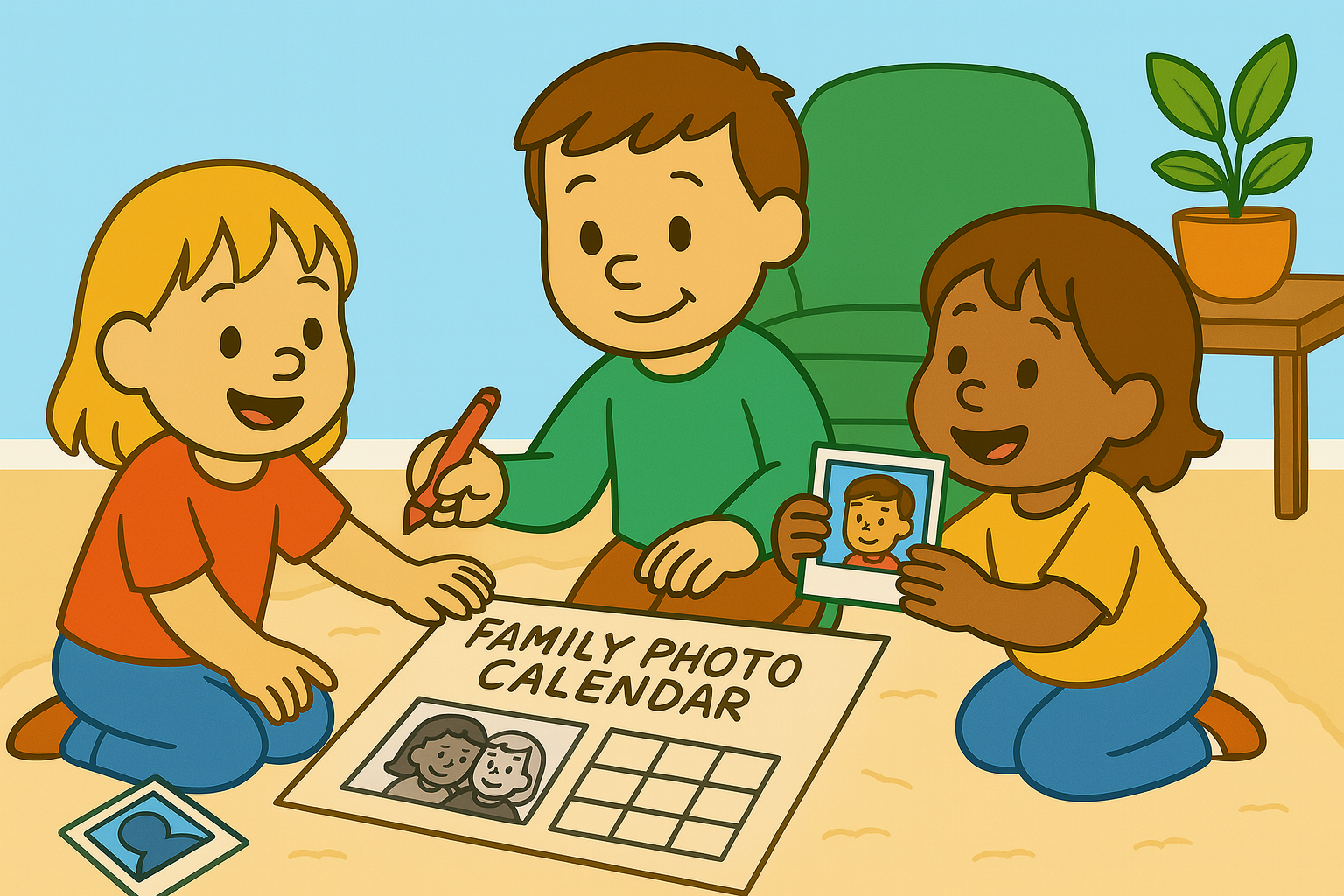
Creating a calendar together also becomes a creative bonding ritual. Kids feel proud knowing they helped choose photos, decorate layouts, and design something the whole family will use throughout the year. It’s a meaningful antidote to gift-buying culture—you're crafting something personal, lasting, and heartfelt.


The Emotional Benefits of Visual Family Memories
Children love seeing themselves in family artifacts because it reflects their place in the family’s story. As kids flip through the calendar each month, they’re reminded:
“I’m loved.”
“I’m part of our traditions.”
“I belong here.”
“My experiences matter.”
These emotional messages build identity and connection. They also spark conversation: “Remember when we built that snowman?” or “That was the day we made kindness cards!” Photo calendars function like a rotating memory scrapbook, echoing the ideas explored in How to Create a Yearly Family Memory Scrapbook, but in a format kids interact with daily.
Gathering Photos: Let Kids Lead the Selection
Children are natural curators—they know which moments spark joy for them. Invite them to sit with you while browsing phone galleries or printed stacks of photos. Ask playful, open-ended prompts:
“Which of these feel happy to you?”
“Which picture makes you laugh?”
“Which moment would you like to remember all year?”
Letting kids choose empowers them and gives the calendar emotional resonance rather than aesthetic perfection. Kids also tend to pick photos adults overlook, reminding you of the small moments that truly matter.
Choosing a Theme for Your Calendar
While not required, themes can help organize the project and give it personality. Options include:
Seasonal memories — scenes from spring, summer, fall, and winter
Family traditions — baking days, puppet shows, morning routines, nature walks
Milestones — first day of school, new activities, achievements
Kindness moments — acts of generosity, helping siblings, comforting friends
Play-based memories — favorite sensory bins, building days, outdoor adventures
Themes help kids understand the rhythm of the year—similar to how seasonal understanding is supported in Helping Kids Understand Seasons Through Play.
Turning Photo Selection Into a Storytelling Ritual
Before choosing final photos, spend time narrating the memories behind each one. Even a simple conversation can create connection:
“This was the morning we read books under the blanket fort.”
“You worked so hard to climb that trail!”
“You were helping your friend pick up the blocks here.”
Storytelling deepens emotional recall and strengthens family identity. It also helps kids practice reflection, a skill nurtured in activities such as Simple Family Traditions for New Year’s Reflection.
Designing the Calendar: Simple, Playful, and Kid-Involved
Kids love feeling like creators. Give them meaningful roles in the design process, depending on age:
Choose background colors
Arrange stickers or drawings on printed pages
Pick fonts or borders
Glue or tape decorations
Add handprints or doodles around the edges
Draw symbols for family events
If you're printing professionally, let kids help by previewing digital pages and suggesting small changes. For homemade versions, children can decorate each month by hand—a delightful, personal touch.
Adding Special Dates and Family Rituals
This is where the calendar becomes deeply personal. Invite kids to add:
Birthdays
Family celebrations
Seasonal traditions
Volunteer days
Nature walks
Reading nights
Puppet show nights
If your family has rituals like kindness days or gratitude moments, include those too. This turns the calendar into a map of the year’s emotional rhythm, similar to the connection-focused traditions outlined in The Role of Holidays in Building Family Identity.
Including Children in the Printing or Assembly Process
Kids love the behind-the-scenes magic. Let them:
Press “print” on the computer
Watch pages slide out of the printer
Help bind pages with clips or a simple coil
Flip through each month dramatically
Celebrate the finished creation
Their excitement increases ownership, making the final calendar something they feel proud to use and share.
Creating a Reveal Ritual for the Finished Calendar
Turn the unveiling into a small family ceremony:
Dim the lights
Light a candle
Play soft music
Flip through months together
Share favorite memories
Talk about hopes for the coming year
This transforms the calendar from a project into a heartfelt family moment—one that sets the emotional tone for the year ahead.
Using the Calendar Throughout the Year
Once the calendar is hanging in your home—kitchen, hallway, or playroom—it becomes a gentle touchstone. Kids may revisit the image for comfort, joy, or familiarity. Use each month as a conversation starter:
“What do you remember about this day?”
“What season were we in here?”
“How have you grown since then?”
These micro-reflections help children build narrative identity and emotional intelligence. Over time, the calendar becomes more than decoration—it’s a living family archive.
A Keepsake That Grows With Your Family
Family photo calendars hold a special kind of magic. They capture the small, meaningful moments that define a family’s story. They honor children’s voices, creativity, and emotions. They encourage reflection, belonging, and seasonal awareness. And above all, they remind families—every single day—how beautiful their shared life truly is.
This content is for educational purposes and is not a substitute for professional medical or psychological advice.