Family Holiday Music Nights With Homemade Instruments
Family Holiday Music Nights With Homemade Instruments
The Magic of Making Music Together During the Holidays
The holiday season is full of joyful noise — laughter, gatherings, cooking sounds, and festive music floating through stores and homes. But the most meaningful sounds are often the ones families create together. Hosting a Family Holiday Music Night is a simple tradition that turns an ordinary evening into a moment your family will remember for years.
Unlike activities that require planning, setups, or schedules, music nights thrive on spontaneity and heart. You don’t need to be musical or own instruments. In fact, the homemade nature of the instruments is what makes this tradition playful, whimsical, and approachable for children of all ages. It’s a ritual that brings everyone together, slows down the holiday rush, and fills the home with shared rhythms and laughter.


Why Homemade Instruments Are So Engaging for Kids
Homemade instruments are more than craft projects — they’re sensory explorations wrapped in creativity. The process of building them allows kids to experiment, problem-solve, and take ownership of their musical experience.
What makes them so magical?
They’re tactile. Children love materials they can touch, shake, tap, and manipulate.
They’re personal. Kids can decorate their instruments to match their personalities or holiday themes.
They build anticipation. By making the instrument first, kids naturally become more invested in the music night that follows.
They inspire curiosity. Kids wonder, “What sound will this make?” and then experiment to find out.
This tactile, hands-on engagement mirrors the play-based creative experiences described in How to Create a Family “Seasonal Play Bin”, where materials spark exploration and imagination.
Setting the Scene: Creating a Cozy Music Night Environment
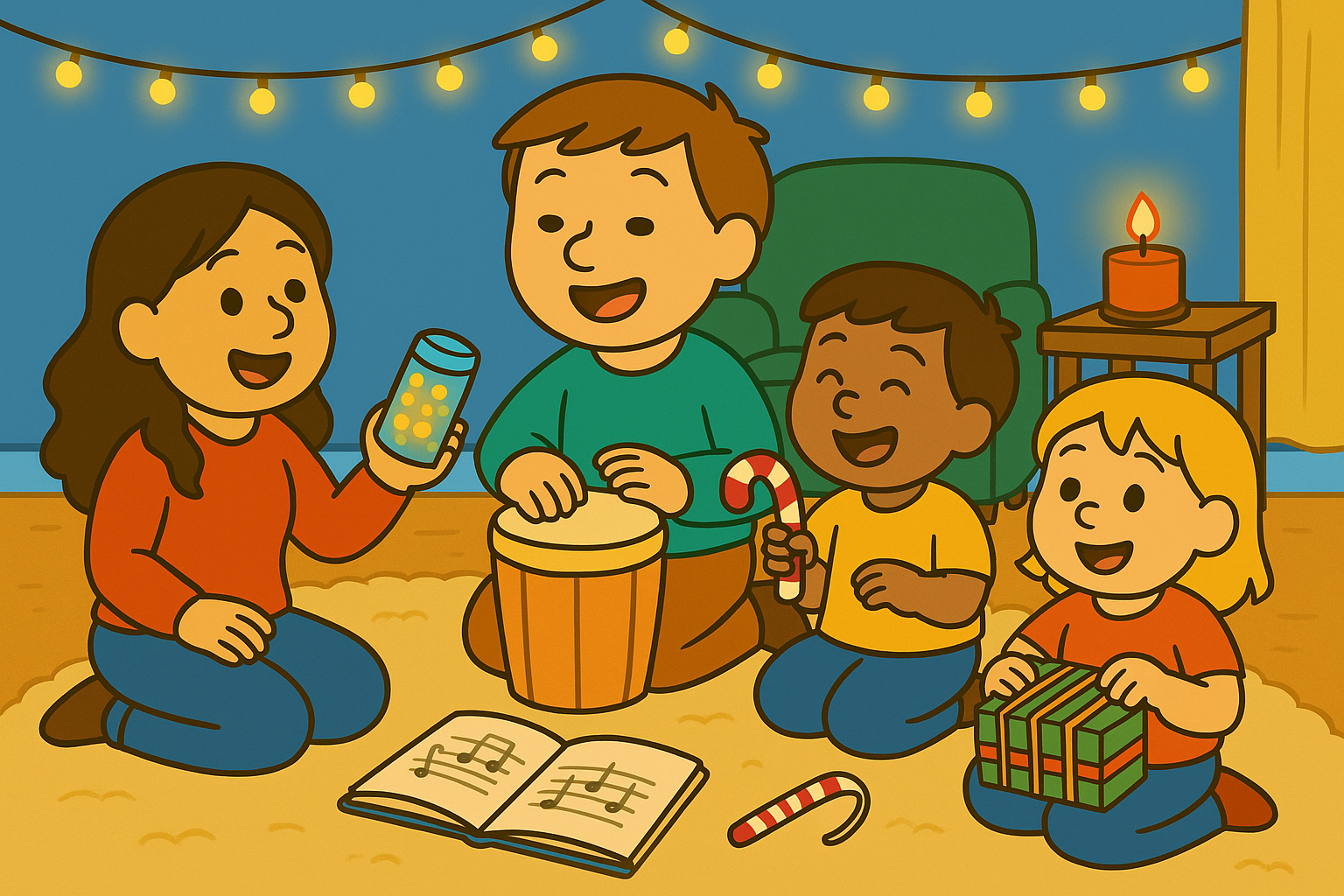
Turn one corner of your home into a warm, festive music nook. You don’t need elaborate décor — just a few thoughtful touches that signal, “Tonight is special.”
Consider elements like:
Soft lighting such as string lights or table lamps
A comfortable floor space with blankets or pillows
A basket of instruments organized and ready
A holiday music playlist set to low volume to begin the evening
One simple centerpiece like a candle (battery-operated for safety) or a small seasonal decoration
Children respond strongly to atmosphere. When the environment shifts, their behavior and attention follow. Creating a cozy scene makes the tradition feel meaningful rather than chaotic.
Simple, Kid-Friendly Homemade Instruments Anyone Can Make
You can make instruments in minutes using everyday items. Here are kid-favorite options that work beautifully during holiday seasons:
Holiday Shaker Bottles
Fill clear plastic jars with:
Dried beans
Jingle bells
Beads
Rice
Add ribbon or stickers for decoration.
Snow Drums
Flip over a mixing bowl or pot, and let children tap it with:
Wooden spoons
Craft sticks
Soft mallets
Add a white towel under it to create a winter “snowdrift.”
Candy Cane Chimes
Tie a few metal teaspoons together with red-and-white yarn. They create a gentle, sweet chime when tapped.
Gift Box Guitar
Stretch rubber bands around a small empty box and pluck each band to explore pitch and vibration.
Kids don’t care if instruments are simple — the joy comes from making music themselves.
Opening Your Music Night With a Playful Family Ritual
A simple opening routine prepares everyone emotionally and sets the tone for the evening.
Families often enjoy:
A call-and-response clap pattern
A starting phrase like, “Let the music begin!”
A moment of quiet listening to the first instrumental song
A gentle stretch to “wake up” the body
Little rituals like these can anchor the evening and help kids transition into the experience. They function similarly to the grounding routines seen in Predictability in Behavior Management, where structure helps children regulate and participate more confidently.
Giving Kids the Role of Music Leader
One of the quickest ways to make music night exciting is to rotate leadership roles. Children love having the power to “run the show,” even briefly.
Kids can:
Choose the next song
Start the rhythm
Tell the family when to play faster or slower
Introduce instruments
Lead a family dance break
Conduct an all-shaker finale
These leadership moments build confidence, communication skills, and emotional expression. They also help kids with shy temperaments participate more comfortably over time.
Blending Familiar Holiday Songs With Creative Improvisation
Holiday music already has built-in nostalgia and emotional resonance, which is why kids gravitate toward it. Start the night with well-known songs — “Jingle Bells,” “Deck the Halls,” or simple rhythmic chants.
Then, introduce improvisation:
Make up silly verses
Add a “shake when you hear this word” rule
Turn songs into movement games
Create rhythm-only versions of familiar tunes
Sing the song with exaggerated slow or fast tempos
Encourage kids to explore their voices — loud, soft, silly, smooth, or dramatic. These improvisations help children access creativity while learning basic musical concepts organically.
How to Support Kids Who Feel Shy or Overstimulated
Not every child will jump into music night with enthusiasm. Some may feel self-conscious, overwhelmed by noise, or unsure what to do. That’s normal — and totally workable.
Try:
Giving them a smaller, quiet instrument
Inviting them to sit beside you while you model
Offering a simple job like turning pages of the music book
Letting them observe until they choose to participate
The slow, low-pressure approach mirrors the emotional support strategies in Celebrating Birthdays Without the Stress, where the focus is on comfort and connection rather than expectations or performance.
Kids who feel safe and unhurried will eventually join in when they’re ready.
Adding Movement, Dance, and Rhythm Play
Movement brings energy and joy to holiday music nights and is especially helpful for toddlers and preschoolers who need physical expression.
Try:
Marching to a drumbeat
“Freeze” dancing
Copy-my-movement games
Slow swaying to gentle songs
A musical “train” that walks around the room
Rhythm play is also a great way to include babies or younger siblings. They can bounce in a parent’s arms or sit with a soft shaker.
Movement provides an outlet for energy, helping children stay engaged while regulating their bodies.
Ending With Reflection and a Cozy Wind-Down
After high-energy fun, bring the night to a soft close. Kids absorb traditions more deeply when there’s a moment of reflection.
Consider:
A final slow song
A “favorite part of tonight” sharing moment
A deep breath together
Placing instruments back in their basket
A warm drink or bedtime story afterward
Reflection strengthens emotional awareness and turns the evening from a temporary activity into a long-lasting tradition. The wind-down also helps maintain household calm, especially on nights when bedtime routines follow.
The Long-Term Impact of Holiday Music Nights
Family Holiday Music Nights leave a lasting impression on children. Year after year, they remember:
The sound of homemade shakers
The joy of dancing with family
The cozy glow of lights
The pride of leading a song
The silliness and laughter of shared rhythms
These memories shape family identity, emotional closeness, and children’s sense of belonging. What begins as a simple homemade tradition grows into a cherished part of the holiday season — one that kids look forward to long after they’re grown.
In a busy world, these moments of creativity and connection become gifts your children carry with them forever.
This content is for educational purposes and is not a substitute for professional medical or psychological advice.