Encouraging Outdoor Play After Digital Activities
Encouraging Outdoor Play After Digital Activities
Why the Transition Matters More Than the Screen Time
For many families, the hardest part of screen time isn’t starting it — it’s what happens after. Kids may seem restless, irritable, or resistant when it’s time to move on, especially if the next activity feels less exciting or less clear.
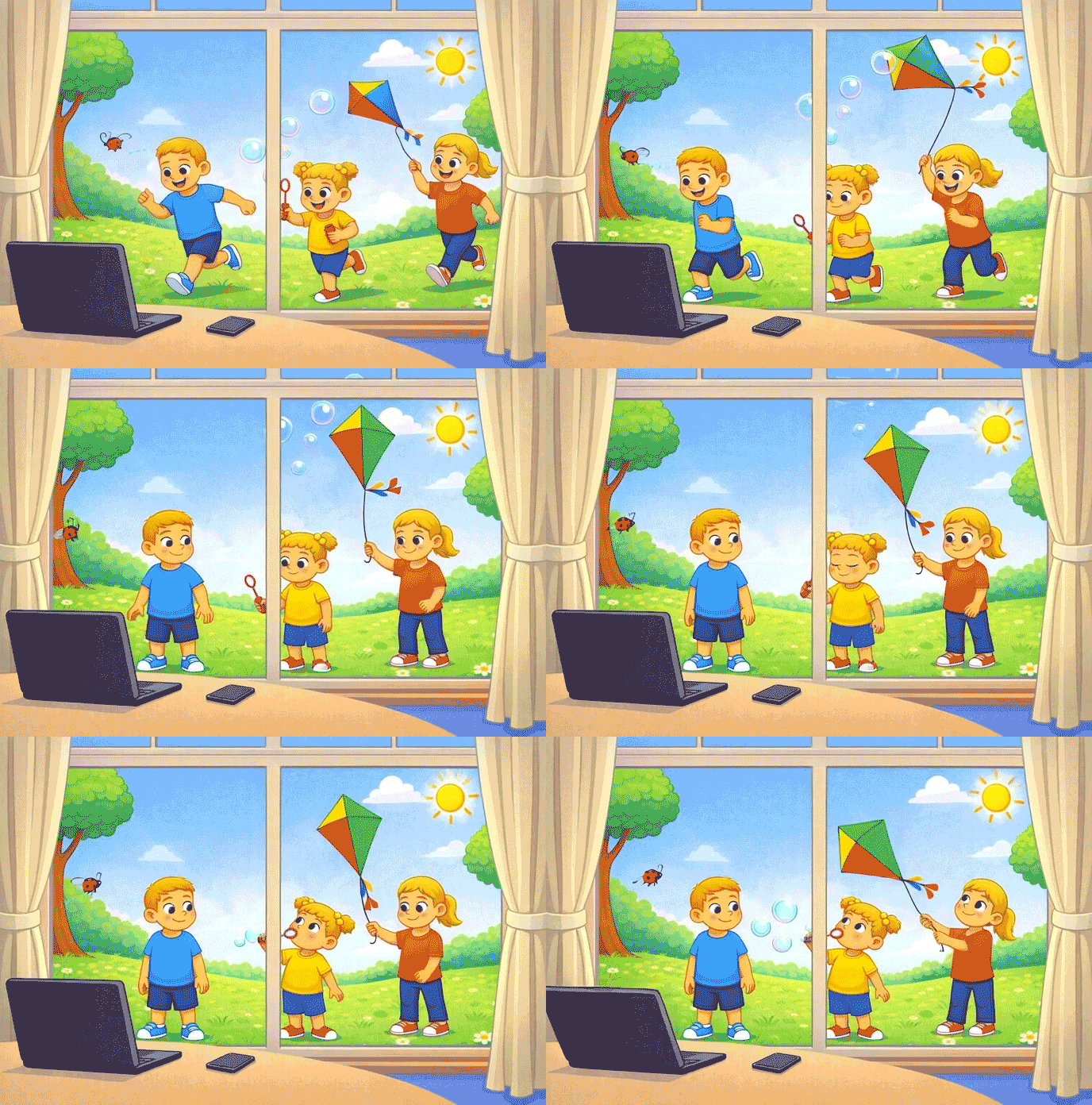
Outdoor play offers one of the most effective — and natural — resets after digital engagement. Fresh air, movement, and sensory variety help the nervous system recover from focused screen input. But the transition needs support. When kids are expected to switch instantly from digital immersion to outdoor play, frustration often follows.
Encouraging outdoor play after screens isn’t about “earning” time outside or correcting screen use. It’s about helping kids shift states — from inward focus to embodied movement — in ways that feel doable and inviting.


How Screens and Outdoor Play Affect the Body Differently
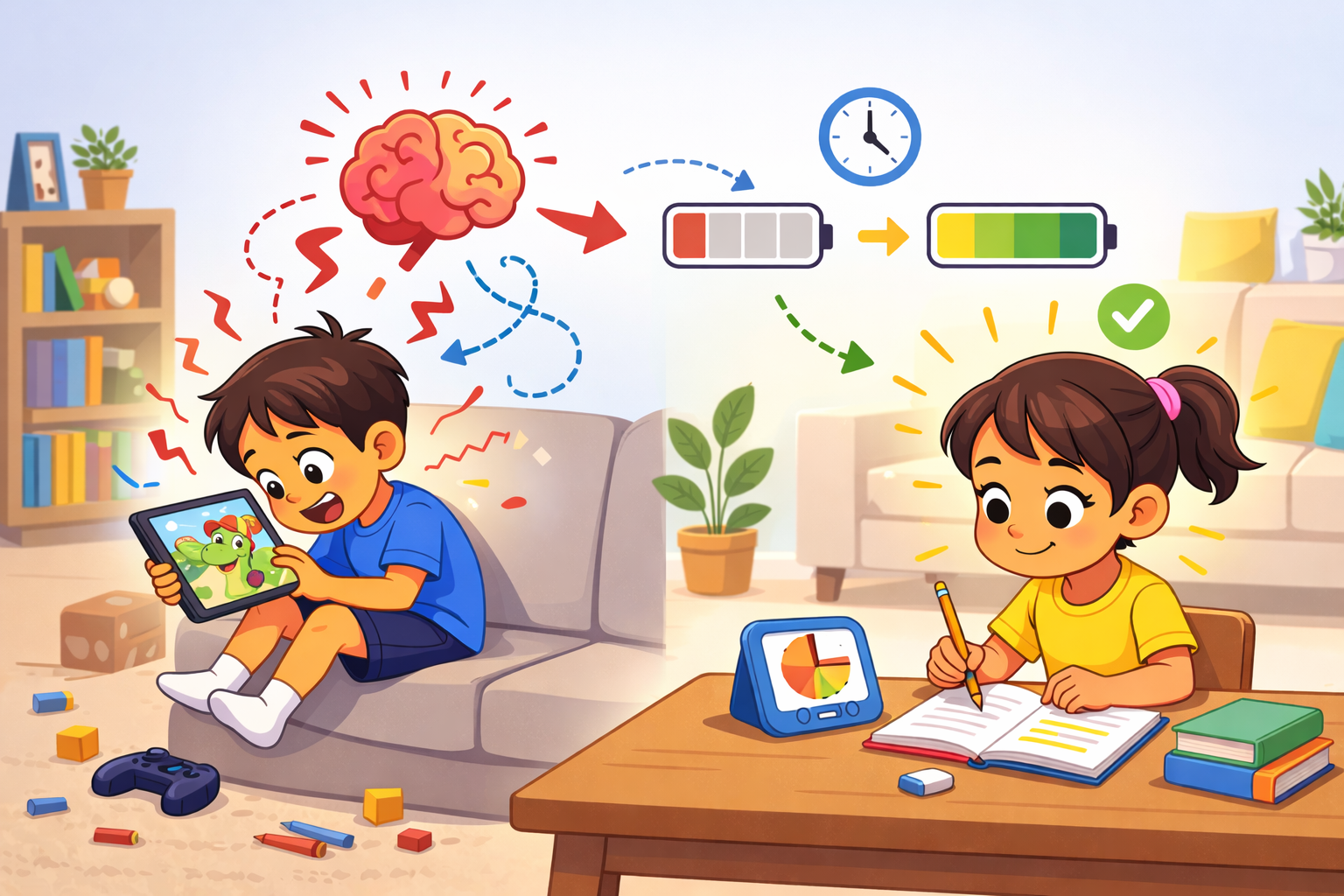
Digital activities and outdoor play stimulate the body and brain in very different ways. Understanding that difference helps parents plan smoother transitions.
Screens tend to:
Narrow attention and focus
Reduce large-body movement
Emphasize visual processing
Outdoor play tends to:
Engage the whole body
Increase sensory input
Support regulation through movement
These differences explain why outdoor play can feel challenging at first — but restorative once kids get moving.
Why Kids Often Resist Going Outside After Screens
Resistance doesn’t mean kids don’t like outdoor play. It usually means their bodies and brains haven’t fully shifted gears yet.
Kids may resist because:
Their nervous system is still highly focused
Transitioning feels abrupt
They don’t know what they’ll do outside
The contrast feels too big
Recognizing this helps parents respond with support instead of pressure.
Timing Outdoor Play for the Best Results
Outdoor play works best when it’s timed intentionally — not as an afterthought once screens end.
Helpful timing strategies include:
Scheduling outdoor time immediately after screens
Using daylight as a natural cue
Pairing outdoor play with daily routines
Creating Predictable Transitions From Screens to Outside
Predictability reduces resistance. When kids know outdoor play is coming next, they’re less likely to cling to screens.
Parents can build predictability by:
Giving advance warnings before screens end
Naming the next activity clearly
Using consistent transition phrases
This approach supports ideas in How to Recognize When Screen Time Becomes Overstimulation, where transitions help prevent overload.
Making Outdoor Play Feel Inviting, Not Mandatory
Kids are more willing to go outside when it feels like an opportunity, not a demand.
Outdoor play becomes inviting when:
Options are offered instead of commands
Play materials are visible and ready
Adults join briefly to get things started
Small invitations often work better than big expectations.
Letting Outdoor Play Be Simple and Unstructured
Outdoor play doesn’t need goals, games, or constant supervision. In fact, unstructured play is often the most regulating.
Kids may wander, dig, sit quietly, or invent their own games. This freedom allows their bodies and minds to reset at their own pace — something screens rarely allow.
Trusting simplicity helps outdoor time feel restorative instead of performative.
Using Outdoor Play to Release Screen Energy
After digital activities, kids often have stored energy that needs to move through the body.
Outdoor play helps release that energy through:
Running or climbing
Jumping or swinging
Carrying or pushing objects
These movements support regulation in ways that talking or reasoning can’t.
Pairing Outdoor Play With Social Connection
Outdoor time doesn’t have to be solitary. Shared outdoor play can strengthen relationships and ease transitions.
Families can encourage connection by:
Going outside together briefly
Inviting siblings or neighbors
Turning outdoor time into a shared ritual
Supporting Outdoor Play Even When Time Is Limited
Outdoor play doesn’t require long stretches to be effective. Even short bursts can help reset the nervous system.
Short outdoor resets might include:
A 10-minute walk
Playing catch
Sitting in the sun
This balance reflects The Science of Screen Time: How Devices Affect Kids’ Brains, where recovery matters as much as exposure.
Helping Kids Learn to Seek Balance on Their Own
Over time, children who regularly move from screens to outdoor play begin to notice how it feels. They learn that their bodies need movement after stillness and fresh air after visual focus.
Families who build this rhythm often notice:
Easier screen endings
Calmer moods afterward
More spontaneous outdoor play
Kids who self-initiate breaks
This content is for educational purposes and is not a substitute for professional medical or psychological advice.