Helping Kids Create Instead of Consume
Helping Kids Create Instead of Consume
Why Creation Matters More Than Limiting Consumption
Many parents worry about how much content their kids consume — shows watched, videos scrolled, games played. While those concerns are valid, focusing only on limiting consumption often misses a more powerful opportunity: helping kids create.
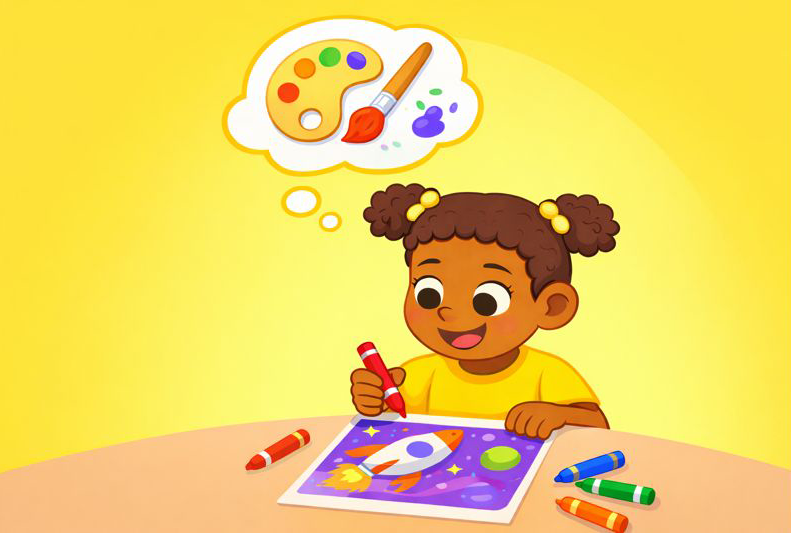
Creation changes a child’s relationship with technology. Instead of passively absorbing content, kids become active participants. They imagine, plan, problem-solve, and express themselves. The screen becomes a tool rather than a feed.
Shifting toward creation doesn’t require banning shows or enforcing strict limits. It simply means making room — and providing support — for kids to use technology as a way to make something, not just watch something.


The Difference Between Consuming and Creating
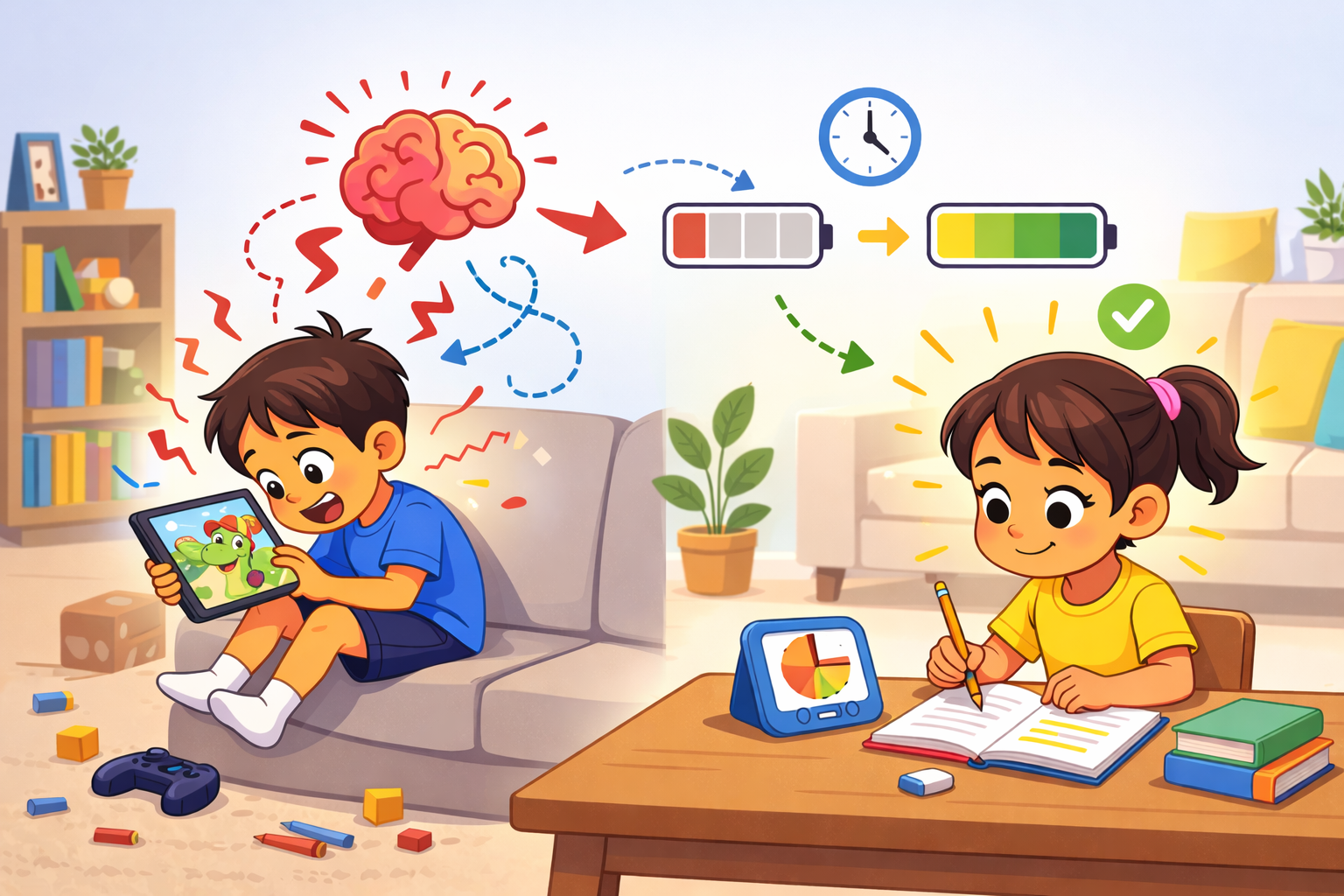
Consuming and creating engage the brain in very different ways. One pulls information in; the other pushes ideas out.
Creation-based tech use tends to:
Encourage imagination and originality
Strengthen problem-solving skills
Support confidence and agency
Extend focus for longer periods
Consumption, while sometimes relaxing or educational, rarely offers the same depth of engagement on its own.
Why Kids Naturally Drift Toward Consumption
It’s not that kids prefer consuming — it’s that consuming is easier. Most digital platforms are designed to reduce effort and keep content flowing.
Kids gravitate toward consumption because:
It requires no planning or setup
Feedback is immediate
Content is endless and polished
Stopping feels harder than continuing
Understanding this helps parents guide kids gently toward creation instead of framing consumption as a failure.
What “Creation” Can Look Like at Different Ages
Creation doesn’t have to mean advanced skills or complex tools. It simply means kids are contributing something of their own.
Creative tech use might include:
Drawing or animation apps
Audio recording or storytelling
Building digital scenes or characters
Making simple videos or slideshows
These activities align naturally with Encouraging Creativity Through Digital Storytelling Tools, where technology supports imagination instead of replacing it.
Why Creating Builds Confidence and Agency
When kids create, they see proof of their own abilities. They make choices, revise ideas, and experience the satisfaction of finishing something.
Creation helps kids:
Trust their ideas
Tolerate mistakes
Develop persistence
Feel proud of effort
Over time, this sense of agency carries into other areas of learning and play.
Using Technology as a Creative Tool, Not a Reward
Creation works best when it’s treated as a use of technology — not a prize for good behavior.
Families who succeed often:
Offer creative tools alongside entertainment
Introduce creation during calm moments
Avoid framing creation as “extra work”
Letting Creativity Stay Messy and Unfinished
One of the biggest barriers to creative tech use is adult expectation. When kids feel pressure to produce something impressive, creativity shuts down.
Creative work doesn’t need to be shared, saved, or finished. It can be temporary, silly, or incomplete. What matters is the process — not the product.
When kids are free to experiment without judgment, they’re far more likely to return to creation on their own.
Creating Gentle On-Ramps Away From Passive Screens
For kids used to passive content, jumping straight into creation can feel overwhelming. Small transitions help.
Helpful on-ramps include:
Pausing a show to draw a character
Retelling a story in their own words
Re-creating scenes with toys or apps
These bridges connect consumption to creation instead of treating them as opposites, reinforcing ideas from Screen-Free Alternatives That Still Feel Fun.
Making Space for Creation in Daily Routines
Creative tech use thrives when it has a predictable place in the day — not when it competes with exhaustion or transitions.
Families often support creation by:
Offering it during downtime windows
Pairing it with calm routines
Keeping creative tools easily accessible
When creation feels available, kids are more likely to choose it.
Celebrating Effort Without Over-Praising
Kids don’t need applause for every creation. What they need is acknowledgment that effort matters.
Supportive responses include:
Asking what they enjoyed making
Noticing persistence or creativity
Letting kids explain their choices
This keeps motivation intrinsic and avoids turning creativity into performance.
Raising Makers in a World Full of Content
Children are growing up surrounded by professionally made media. Helping them create reminds them that they don’t just consume the world — they contribute to it.
Families who prioritize creation often notice:
Longer engagement with tech
Less boredom-driven screen use
Increased confidence and curiosity
A healthier relationship with devices
At Fuzzigram, we believe technology is most powerful when it amplifies a child’s voice instead of drowning it out. When kids create instead of only consume, screens stop being something that happens to them — and start becoming something they use with intention.
This content is for educational purposes and is not a substitute for professional medical or psychological advice.