Encouraging Creativity Through Digital Storytelling Tools
Encouraging Creativity Through Digital Storytelling Tools
Why Storytelling Is a Natural Fit for Kids
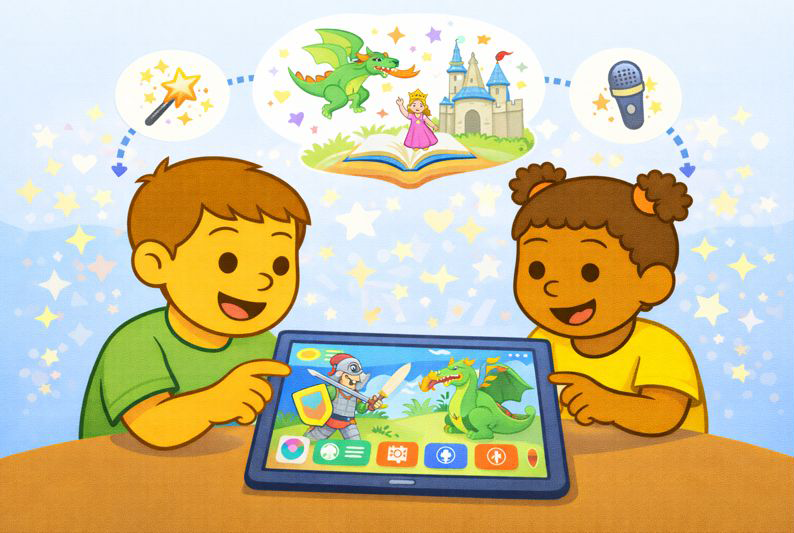
Storytelling is one of the earliest ways children make sense of the world. Long before kids can write or read, they tell stories through play, drawings, and pretend conversations. Stories help children explore emotions, test ideas, and imagine possibilities.
Digital storytelling tools don’t replace this instinct — they extend it. When used thoughtfully, they give children new ways to express ideas using voice, images, movement, and sequence. The heart of creativity stays the same; only the tools change.
The goal isn’t to create polished stories. It’s to give kids space to imagine, experiment, and share meaning in ways that feel playful and empowering.


What Digital Storytelling Tools Actually Are
Digital storytelling tools come in many forms, but they all center on helping kids create rather than consume. These tools invite children to build narratives instead of simply watching them unfold.
Common forms include:
Audio storytelling or voice-recording apps
Simple animation or scene-building tools
Photo-based story creators
Video tools that let kids narrate their own ideas
What matters most isn’t the format — it’s whether the tool invites original thinking and personal expression.
Why Creation Matters More Than Polish
Adults sometimes worry about whether kids are “using tools correctly” or making something that looks finished. For creativity, polish is far less important than process.
Creative storytelling supports:
Idea generation
Problem-solving
Emotional expression
Confidence in sharing thoughts
When kids feel free to create without evaluation, they take more risks. Those risks are where learning and creativity grow.
This mindset pairs well with principles in Turning Screen Time Into Learning Time, where engagement matters more than outcomes.
How Digital Storytelling Builds Language Skills
Storytelling naturally strengthens language development. Digital tools add layers that can make language practice feel exciting rather than instructional.
Through storytelling, kids practice:
Sequencing events
Describing characters and settings
Using emotional vocabulary
Experimenting with tone and voice
Because kids are invested in their own stories, language use feels meaningful. Re-recording, replaying, and revising happen naturally — without pressure.
Supporting Emotional Expression Through Stories
Stories are a safe place for big feelings. Children often explore emotions through characters long before they can talk about them directly.
Digital storytelling can help kids:
Express fears or worries indirectly
Explore conflict and resolution
Practice empathy through characters
Share experiences in a safe format
When adults listen with curiosity rather than correction, storytelling becomes a powerful emotional outlet — not just a creative one.
Choosing Tools That Encourage Open-Ended Play
Not all storytelling tools support creativity equally. Some limit choices too tightly or focus more on effects than ideas.
Creativity-friendly tools usually:
Allow multiple story paths
Avoid scoring or competition
Offer simple, intuitive controls
Leave room for imagination
The best tools feel like a blank page — not a checklist.
Blending Digital Stories With Offline Play
Digital storytelling is most powerful when it sparks offline creativity. A story created on a screen can easily jump into real-world play.
Families often extend stories by:
Acting them out
Drawing characters or scenes
Building props or settings
Continuing the story verbally
This blend supports ideas in Encouraging Balance Between Tech and Real-World Play, where screens inspire creativity instead of replacing it.
When stories move between digital and physical worlds, imagination expands.
Co-Creating Stories Without Taking Over
Parents often want to help — but creativity thrives when kids stay in the lead. Co-creation works best when adults act as collaborators, not directors.
Supportive roles include:
Asking open-ended questions
Offering help only when invited
Listening more than correcting
Showing genuine interest
This approach mirrors principles in Digital Role Modeling: How Your Own Habits Shape Theirs, where curiosity and respect guide learning.
When kids feel ownership, confidence grows.
Letting Stories Be Silly, Messy, or Incomplete
Not every story needs a beginning, middle, and end. Some stories wander. Some are silly. Some stop halfway through — and that’s okay.
Creativity flourishes when:
There’s no pressure to finish
Humor is welcomed
Nonsense is allowed
Ideas can change midstream
These “unfinished” stories still build skills. They show kids that creativity doesn’t require perfection — just exploration.
Watching for When Creativity Turns Into Consumption
Even creative tools can slip into passive use if kids spend more time watching templates than making choices.
It may be time to adjust if:
Kids stop narrating or explaining ideas
Tools are used silently and passively
Stories all look the same
Engagement drops quickly
Small shifts — like limiting templates or adding reflection — often bring creativity back to the center.
Creativity Thrives When Kids Feel Safe to Share
At its core, storytelling is about sharing ideas. Kids are more willing to create when they feel safe, supported, and respected.
Families who nurture creative storytelling often:
Celebrate effort over outcome
Listen without judgment
Ask about ideas, not quality
Keep creation playful
At Fuzzigram, we believe digital tools can be powerful creativity partners when they’re used with intention and trust. Digital storytelling doesn’t replace imagination — it gives it new places to grow.
When kids are encouraged to tell their own stories, they’re not just creating content. They’re building confidence, voice, and a sense that their ideas matter — on screens and beyond.
This content is for educational purposes and is not a substitute for professional medical or psychological advice.