Using Family Photo and Video Projects as Creative Learning
Using Family Photo and Video Projects as Creative Learning
Why Family Media Projects Are More Than Memories
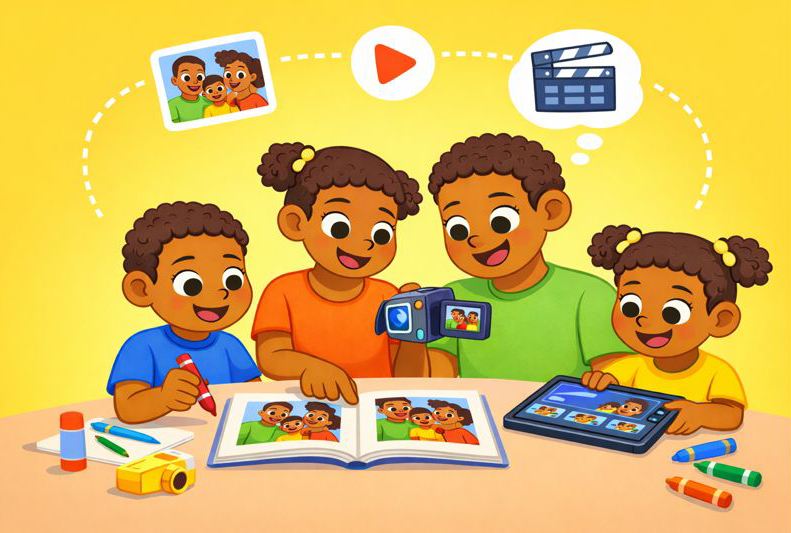
Photos and videos are often treated as documentation — something we capture quickly and store away. But when families turn photo and video projects into shared creative experiences, they become powerful learning tools.
Creating media together invites kids to observe, plan, reflect, and express themselves. It transforms screens from something kids passively watch into something they actively use. Family projects also carry emotional weight: they’re rooted in real relationships, familiar faces, and meaningful moments.
These projects don’t need to be polished or public. Their value comes from participation, collaboration, and the sense of “we made this together.”


How Creative Media Projects Support Learning
When kids participate in photo or video projects, they practice a wide range of skills — often without realizing it.
Family media projects help kids:
Develop storytelling and sequencing skills
Practice observation and attention to detail
Build confidence sharing ideas
Strengthen communication and collaboration
Because learning is embedded in a familiar context, kids often stay engaged longer than they would with traditional educational content.
Why Familiar Faces Make Learning Stick
Children learn best when content feels emotionally safe and relevant. Family photos and videos naturally meet both needs.
Using familiar people and places:
Reduces performance pressure
Increases emotional engagement
Helps kids make personal connections
Encourages authentic expression
This emotional grounding supports deeper learning than abstract or generic media ever could.
Simple Family Photo Projects to Start With
Creative projects don’t need advanced tools or editing skills. Simple ideas often work best — especially for younger kids.
Easy photo project ideas include:
A “day in the life” photo series
Emotion photos (happy, frustrated, proud)
Seasonal or holiday photo stories
Re-creating old family photos
These activities naturally connect with ideas in Family Movie Nights That Spark Conversations (Not Just Screen Time), where shared media becomes a springboard for connection and reflection.
Turning Video Into a Storytelling Tool
Video projects invite kids to think in sequences: beginning, middle, and end. Even short clips require planning and decision-making.
Video projects might include:
Short skits or puppet shows
How-to videos (building, cooking, drawing)
Family interviews or memory sharing
Pretend news or weather reports
These experiences align closely with Encouraging Creativity Through Digital Storytelling Tools, where narrative thinking strengthens creativity and confidence.
Letting Kids Take the Lead
One of the most powerful parts of family media projects is giving kids real ownership. When children make creative decisions, engagement deepens.
Kids can lead by:
Choosing what to film or photograph
Deciding roles (director, actor, camera helper)
Naming or organizing the project
Adult support still matters — but stepping back allows kids to develop agency and problem-solving skills.
Keeping Projects Low-Pressure and Process-Focused
Creative learning thrives when there’s no expectation to perform, share, or “get it right.” Family media projects work best when they’re playful and flexible.
Projects don’t need to be finished. They don’t need to be edited. They don’t need an audience. What matters is that kids feel free to experiment, change their minds, and enjoy the process.
When creativity feels safe, kids are far more likely to return to it on their own.
Using Media Projects to Build Emotional Awareness
Photo and video projects naturally open doors to emotional learning — especially when kids see themselves on screen.
Families can use projects to:
Talk about feelings shown in photos
Reflect on moments of pride or challenge
Practice empathy by revisiting shared experiences
This emotional reflection supports skills explored in Teaching Emotional Awareness Through Media Characters, but with the added depth of real-life context.
Supporting Collaboration Instead of Competition
Family projects work best when they’re collaborative rather than competitive. Everyone contributes in different ways.
Parents can encourage collaboration by:
Valuing all roles equally
Rotating leadership roles
Celebrating teamwork over results
This reinforces the idea that creativity is something families do together, not something to compare or rank.
Creating Healthy Screen Habits Through Purpose
When screens are used for creation, kids often self-regulate more naturally. The screen becomes a means to an end — not an endless feed.
Purposeful use helps kids:
Stay engaged without overstimulation
Transition away from screens more easily
View technology as a tool
These patterns align with Encouraging Purposeful Tech Use During Downtime, where intention replaces mindless scrolling.
Turning Everyday Moments Into Meaningful Media
Family photo and video projects don’t require special occasions. Ordinary moments — cooking dinner, walking the dog, playing outside — often make the best creative material.
Over time, families who create together often notice:
More thoughtful tech use
Increased creativity and confidence
Stronger family connection
Media that reflects real life, not comparison
This content is for educational purposes and is not a substitute for professional medical or psychological advice.