The Science of Dopamine and Digital Devices
The Science of Dopamine and Digital Devices

Why Digital Devices Feel So Hard to Put Down
Many parents notice the same pattern: children struggle to stop using devices even when they were happy moments earlier. This experience often leads to concern that screens are uniquely addictive or harmful. The reality is more nuanced — and deeply connected to how the brain naturally works.
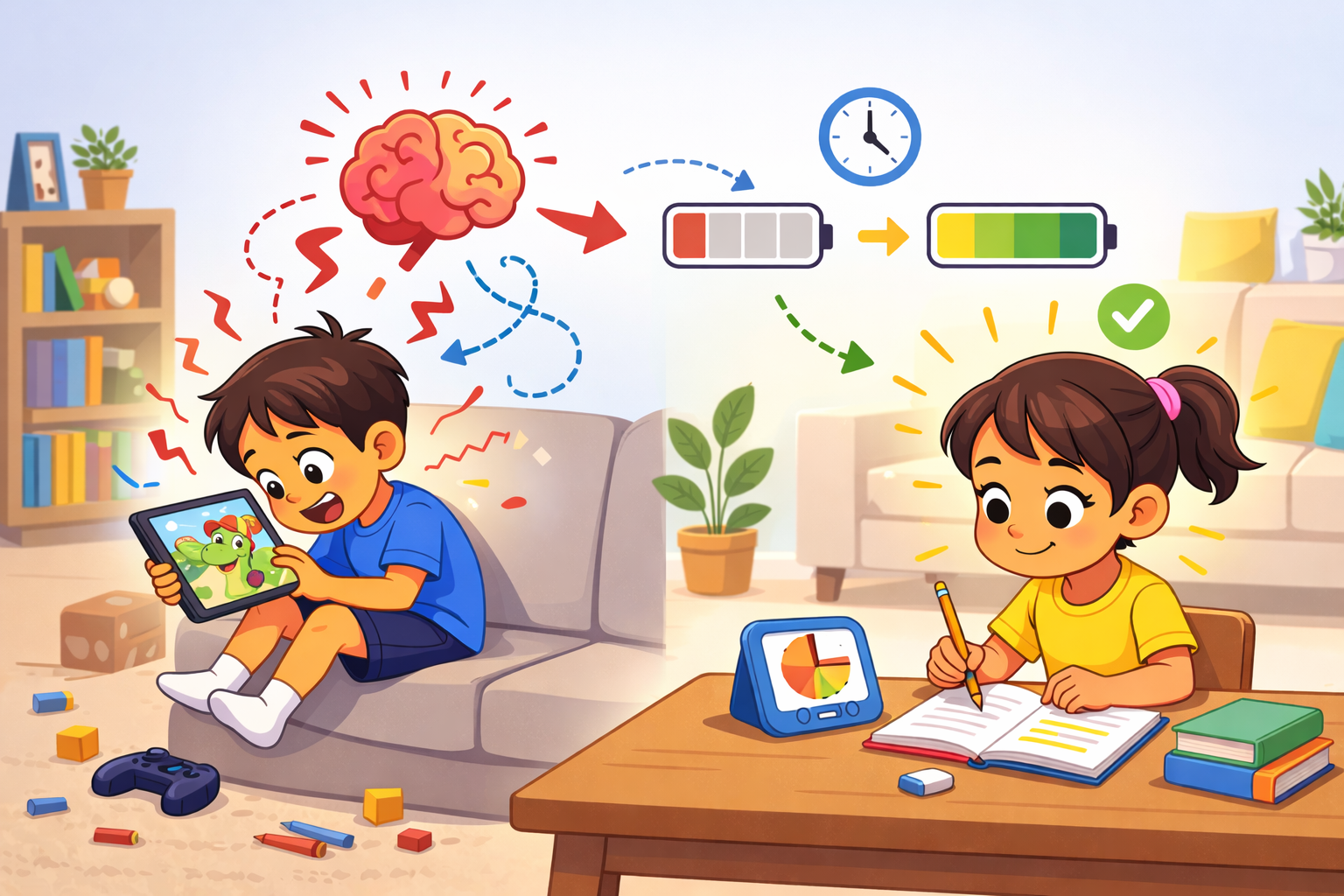
Digital devices interact with dopamine, a brain chemical involved in motivation, learning, and reward. Dopamine doesn’t simply create pleasure; it encourages us to repeat behaviors that feel rewarding or interesting. Screens are effective at activating this system because they provide rapid feedback, novelty, and predictable rewards.
Understanding dopamine helps families move away from blame or fear and toward informed, supportive screen habits.


What Dopamine Actually Does
Dopamine is often misunderstood as the “pleasure chemical,” but its primary role is motivation.
Dopamine helps the brain:
Notice rewarding experiences
Anticipate outcomes
Learn from repetition
Stay engaged in tasks
It pushes us toward behaviors the brain believes are worth repeating.
Why Digital Media Activates Dopamine Efficiently
Digital environments are especially good at triggering dopamine responses.
Devices often provide:
Immediate feedback
Constant novelty
Small unpredictable rewards
Progress markers or achievements
These elements keep attention engaged longer than many offline activities.
The Power of Variable Rewards
One of the strongest dopamine drivers is unpredictability — not knowing exactly when a reward will appear.
Examples include:
Unlocking a new level
Receiving likes or messages
Discovering surprising content
This variability encourages continued engagement because the brain anticipates the next reward.
Dopamine and Attention Patterns
Frequent dopamine activation can shape how children expect stimulation.
Fast digital feedback may:
Increase preference for quick rewards
Reduce tolerance for slow tasks
Make transitions feel harder
This connects with The Link Between Screen Use and Attention Span, where pacing influences focus development.
Why Stopping Feels Emotionally Difficult
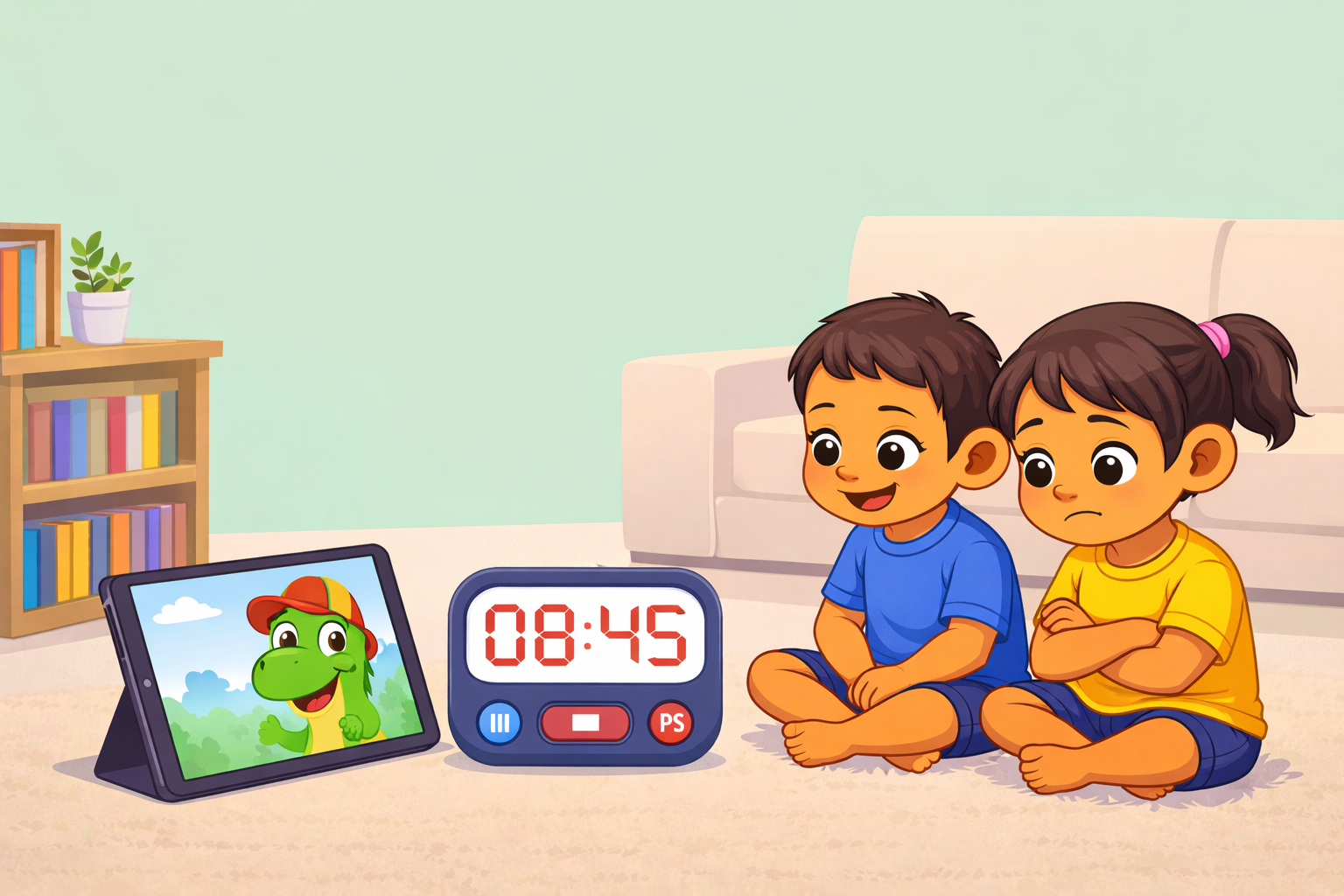
When screen use ends, dopamine stimulation drops suddenly. The brain shifts from high engagement to relative quiet.
Children may experience:
Irritability
Restlessness
Frustration
These reactions aren’t manipulation — they’re adjustment responses as the brain recalibrates.
Understanding this helps parents respond with empathy rather than escalation.
Dopamine Isn’t the Enemy
Dopamine itself is healthy and essential. It supports curiosity, learning, and persistence across all areas of life.
Sports, music, social interaction, and creative play also activate dopamine systems. The goal isn’t eliminating dopamine-driven experiences but balancing how often and how intensely stimulation occurs.
When families provide varied sources of reward, children develop flexible motivation instead of dependence on a single activity.
Using Structure to Support Healthy Brain Rhythms
Consistent routines help regulate dopamine cycles.
Helpful structures include:
Predictable screen windows
Clear stopping points
Regular offline activities
These approaches align with How to Use Digital Timers for Screen Management, where external structure supports smoother transitions.
Supporting Recovery After Screen Use
The brain benefits from recovery periods following stimulation.
Healthy recovery activities include:
Outdoor movement
Quiet play
Conversation
Creative hobbies
These resets mirror strategies in Encouraging Outdoor Play After Digital Activities, where physical movement helps rebalance attention systems.
Modeling Balanced Reward Habits
Children learn reward patterns by observing adults’ technology use.
Parents can model balance by:
Taking intentional breaks
Avoiding constant device checking
Choosing slower activities regularly
Helping Kids Build Healthy Motivation Over Time
Understanding dopamine reframes screen struggles. Children aren’t lacking discipline — their brains are responding exactly as designed.
Families who balance stimulation and recovery often notice:
Easier screen endings
Improved focus
Greater interest in offline play
At Fuzzigram, we believe science should empower families, not alarm them. Digital devices tap into natural motivation systems, but thoughtful structure helps children develop flexibility. When kids experience reward across many activities — movement, creativity, relationships, and learning — screens become one enjoyable option among many, not the only source of engagement.
This content is for educational purposes and is not a substitute for professional medical or psychological advice.