The Link Between Screen Use and Attention Span
The Link Between Screen Use and Attention Span
Why Attention Is More Complex Than We Think
When parents worry about screen time, attention span is often at the center of the concern. “Are screens shortening my child’s focus?” “Why can they watch a show for an hour but struggle with homework?” These questions are common — and understandable.
Attention isn’t a single skill. It’s a set of abilities: sustaining focus, shifting between tasks, filtering distractions, and managing impulses. Screens don’t automatically destroy these skills. But the type, pace, and pattern of screen use can influence how children practice attention throughout the day.
Understanding that nuance helps families move away from fear and toward intentional balance.


How Digital Content Engages the Brain
Many digital platforms are designed to capture and hold attention efficiently.
They often:
Use rapid scene changes
Offer constant novelty
Provide instant rewards
Remove natural stopping points
This design keeps attention locked — but it may not strengthen sustained, self-directed focus.
The Difference Between Passive and Active Attention
Watching a fast-paced show and building with blocks both involve focus — but they’re different types of focus.
Passive attention tends to:
Follow external cues
Depend on stimulation
End when content ends
Active attention tends to:
Require internal direction
Persist through effort
Strengthen with practice
Balancing both types matters for long-term development.
Why Some Screens Feel Easier Than Real-World Tasks
Children may appear highly attentive during screen time but struggle with offline tasks.
Screens often:
Remove boredom
Provide immediate feedback
Offer clear goals
Offline activities require kids to generate motivation internally, which is a different skill entirely.
The Role of Pace in Attention Development
Not all media affects attention equally. Pace plays a significant role.
Slower-paced content:
Allows processing time
Reduces sensory overload
Encourages reflection
This connects closely with The Benefits of “Slow Media” for Young Minds, where pacing supports regulation rather than fragmentation.
How Overstimulation Impacts Focus
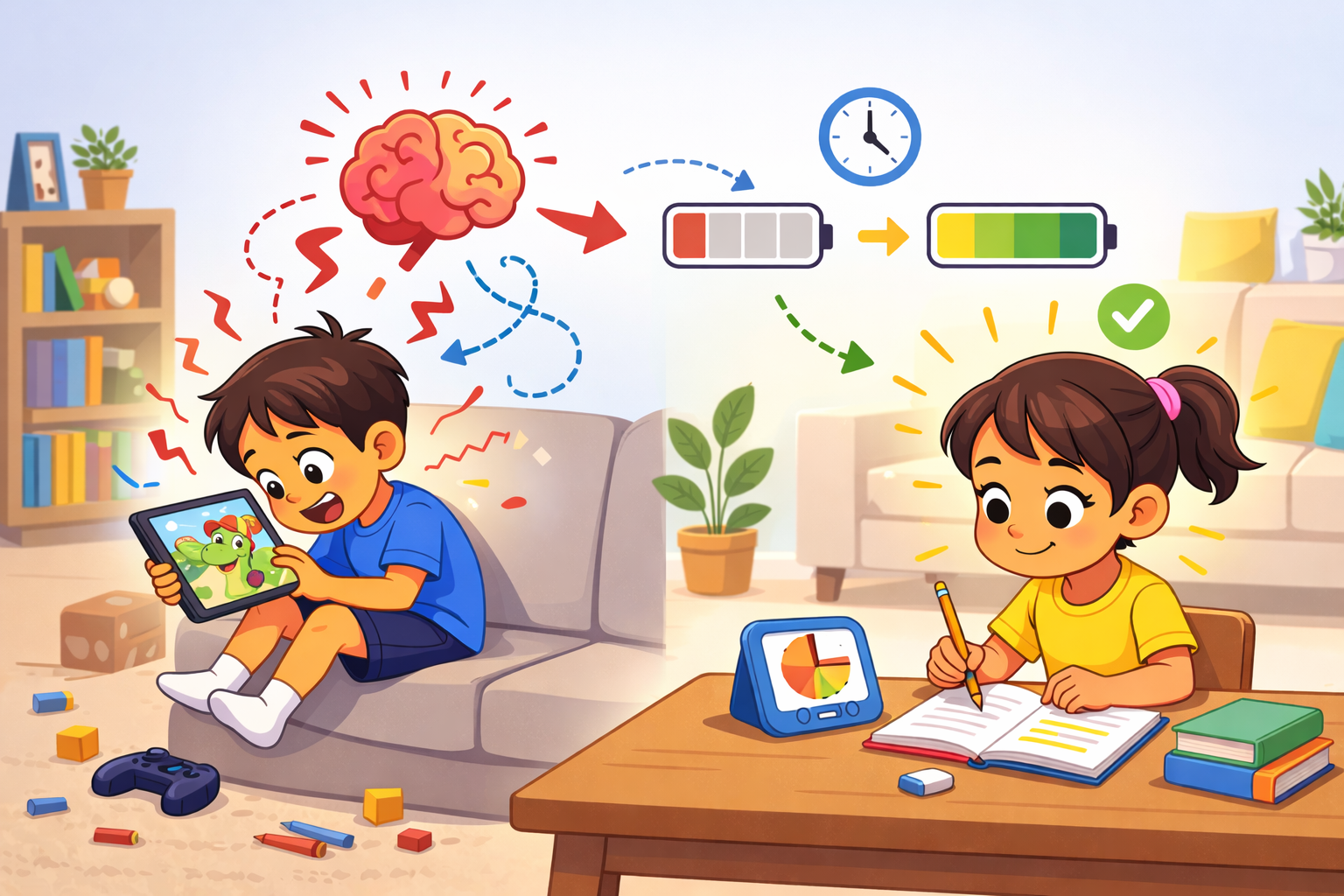
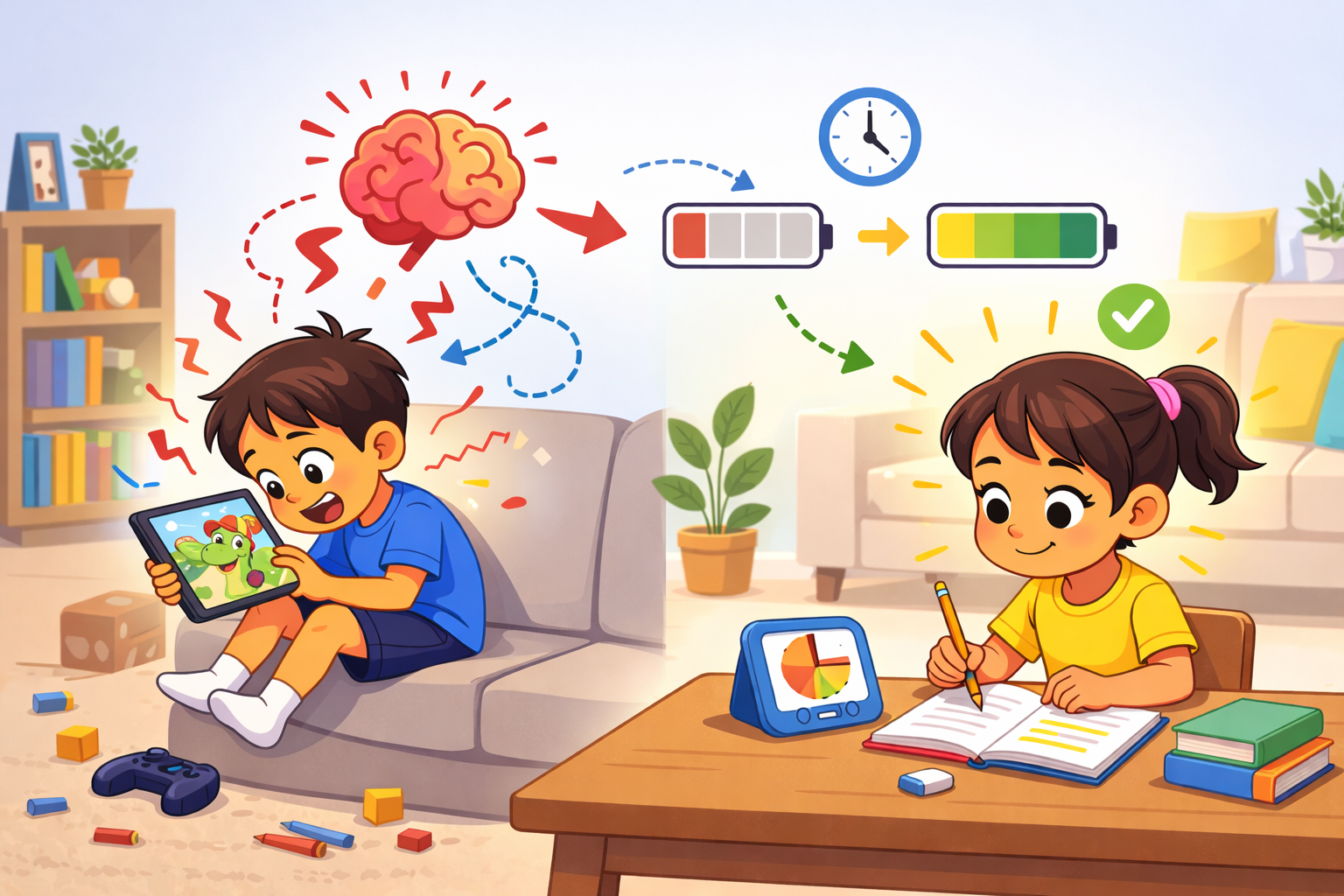
When children consume highly stimulating content for long stretches, their brains may struggle to downshift.
Signs of overstimulation may include:
Restlessness
Irritability after use
Difficulty transitioning
These patterns echo ideas in How to Recognize When Kids Are Overstimulated by Tech, where recovery time becomes essential.
Attention Builds Through Practice, Not Avoidance
It’s tempting to assume that removing screens entirely would fix attention concerns. But attention strengthens through diverse practice — not just absence.
Children build focus by:
Engaging in open-ended play
Participating in conversation
Completing manageable challenges
Screens are one input among many. Balance, not elimination, supports growth.
Supporting Sustained Attention Offline
Families can actively strengthen attention skills outside of screens.
Helpful practices include:
Setting short, achievable tasks
Gradually increasing focus time
Reducing environmental distractions
These strategies help children practice internal focus without constant external cues.
Using Screen Structure to Protect Attention
Intentional screen use supports attention better than open-ended access.
Protective structures might include:
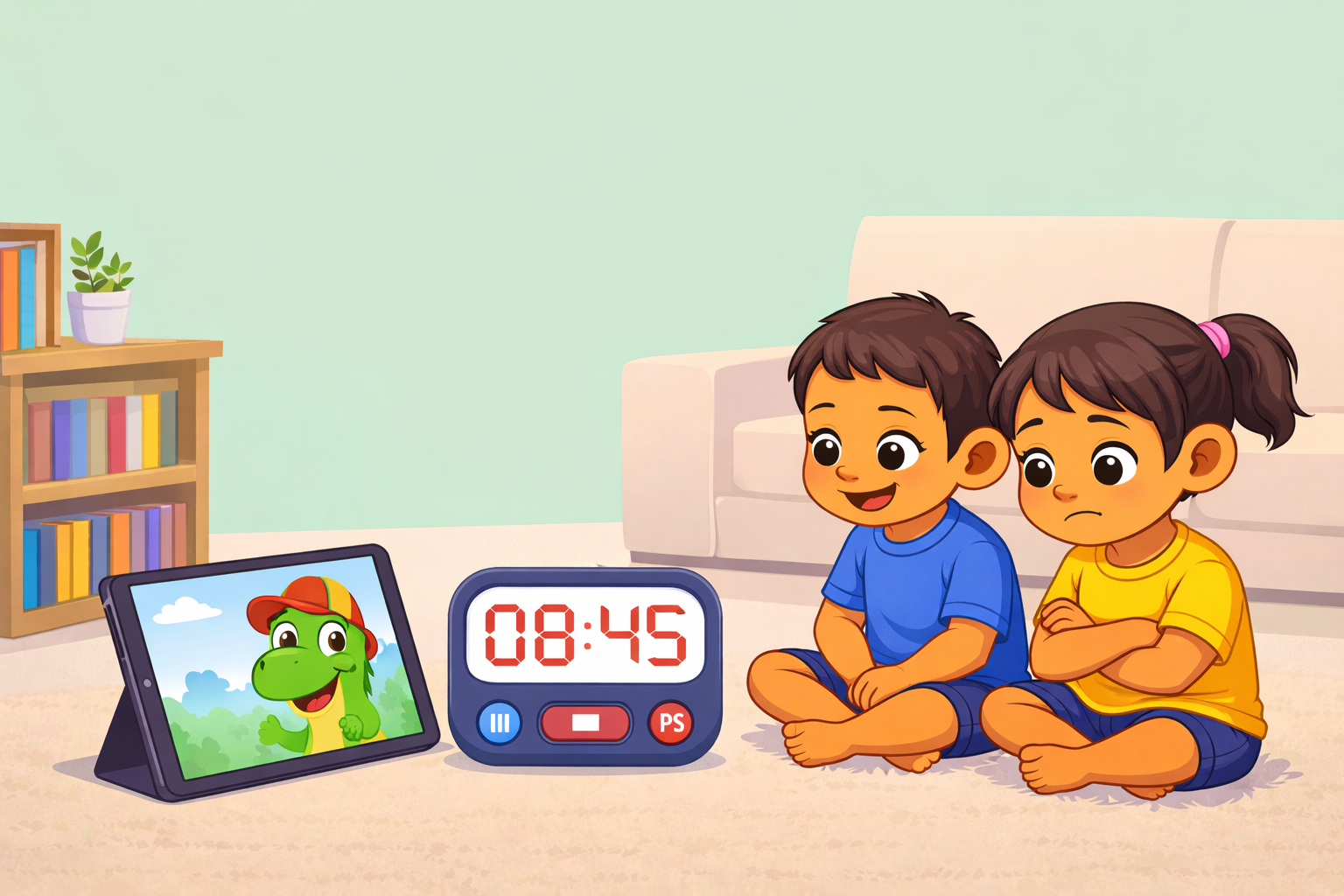
Clear start and end times
No multitasking during viewing
Screen-free homework spaces
These boundaries align with Managing Kids’ Expectations About Screen Time, where predictability protects regulation.
Modeling Healthy Attention Habits
Children observe adult focus patterns closely.
Parents can model attention by:
Completing tasks without phone interruptions
Avoiding constant device switching
Narrating moments of concentration
This modeling reinforces How to Model Mindful Tech Behavior as Parents, where attention is practiced visibly.
Building Attention in a Digital World
The goal isn’t to protect children from every digital influence. It’s to help them build attention skills within a world where screens exist.
Families who approach screen use intentionally often notice:
Stronger focus during homework
Smoother transitions
Less reliance on constant stimulation
At Fuzzigram, we believe attention grows where practice lives. Screens don’t automatically shorten focus — but patterns of use matter. When families balance digital engagement with slower, self-directed activities, children learn to sustain attention in multiple environments.
That flexibility — not perfection — is what prepares them for a world filled with both screens and real-world demands.
This content is for educational purposes and is not a substitute for professional medical or psychological advice.