How to Use Digital Timers for Screen Management
How to Use Digital Timers for Screen Management
Why Timers Work Better Than Repeated Reminders
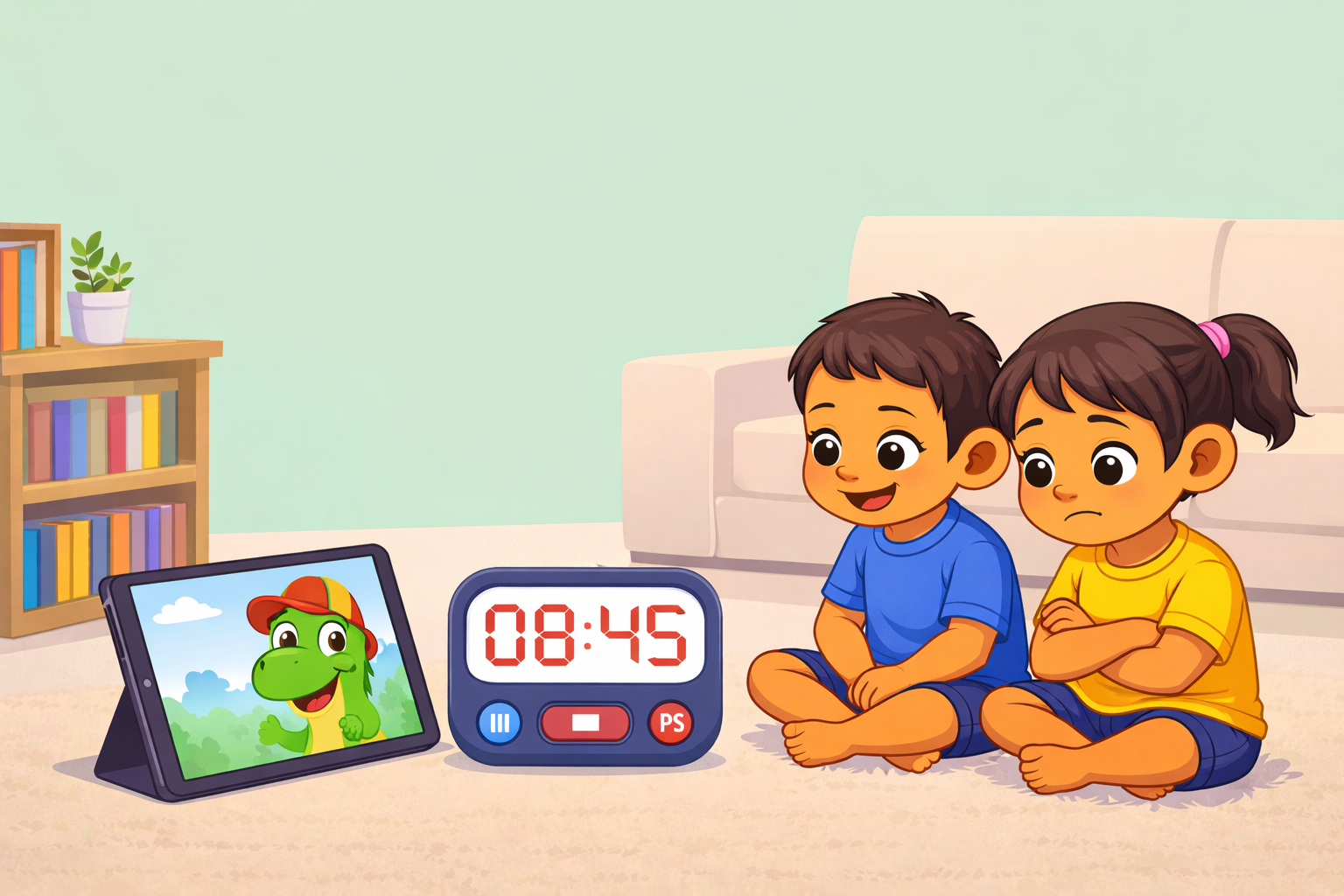
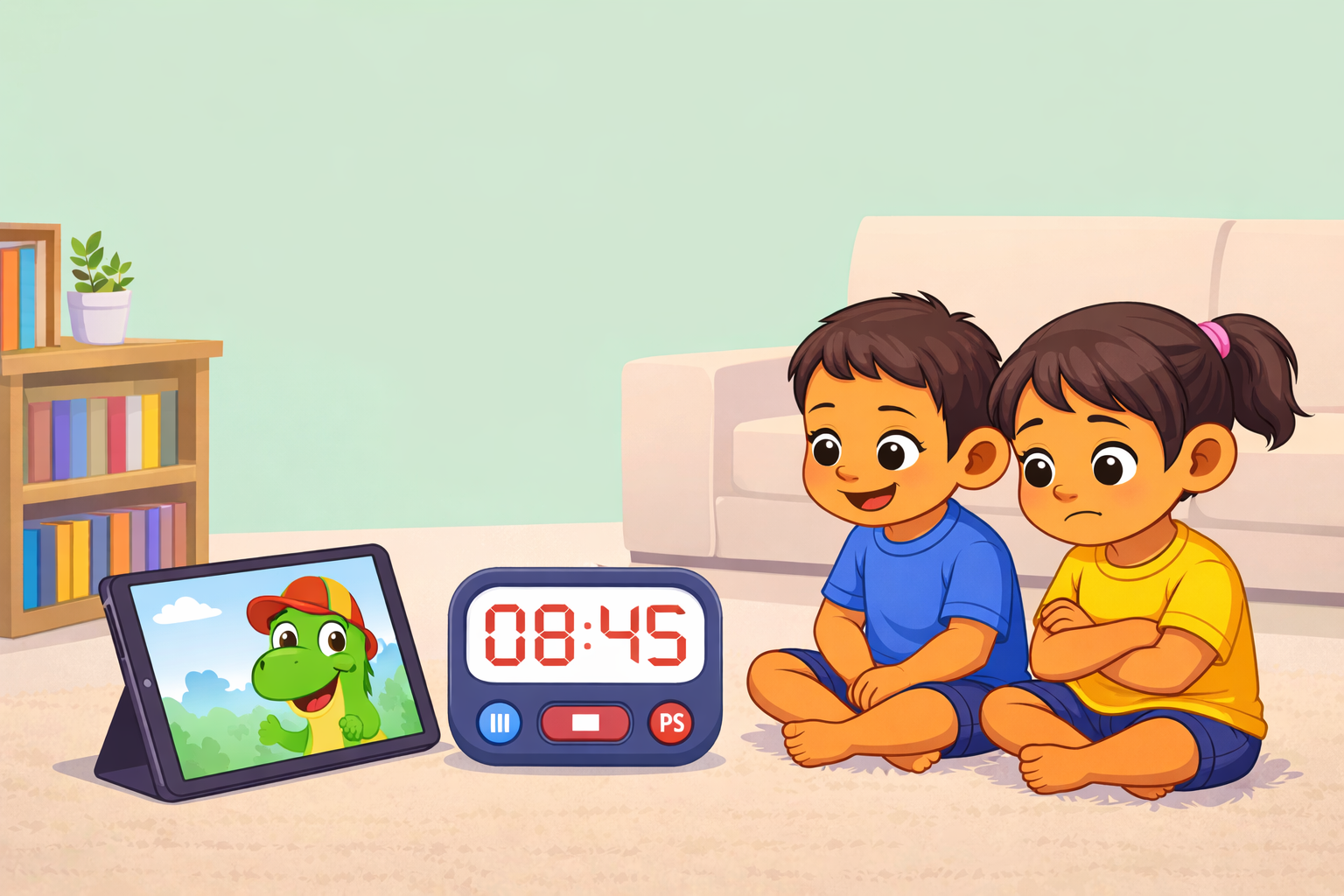
Many screen conflicts happen because the ending feels unpredictable. A parent says, “Five more minutes,” then extends it. Or the time simply runs out without warning. Children rely on adult cues — and when those cues shift, frustration rises.
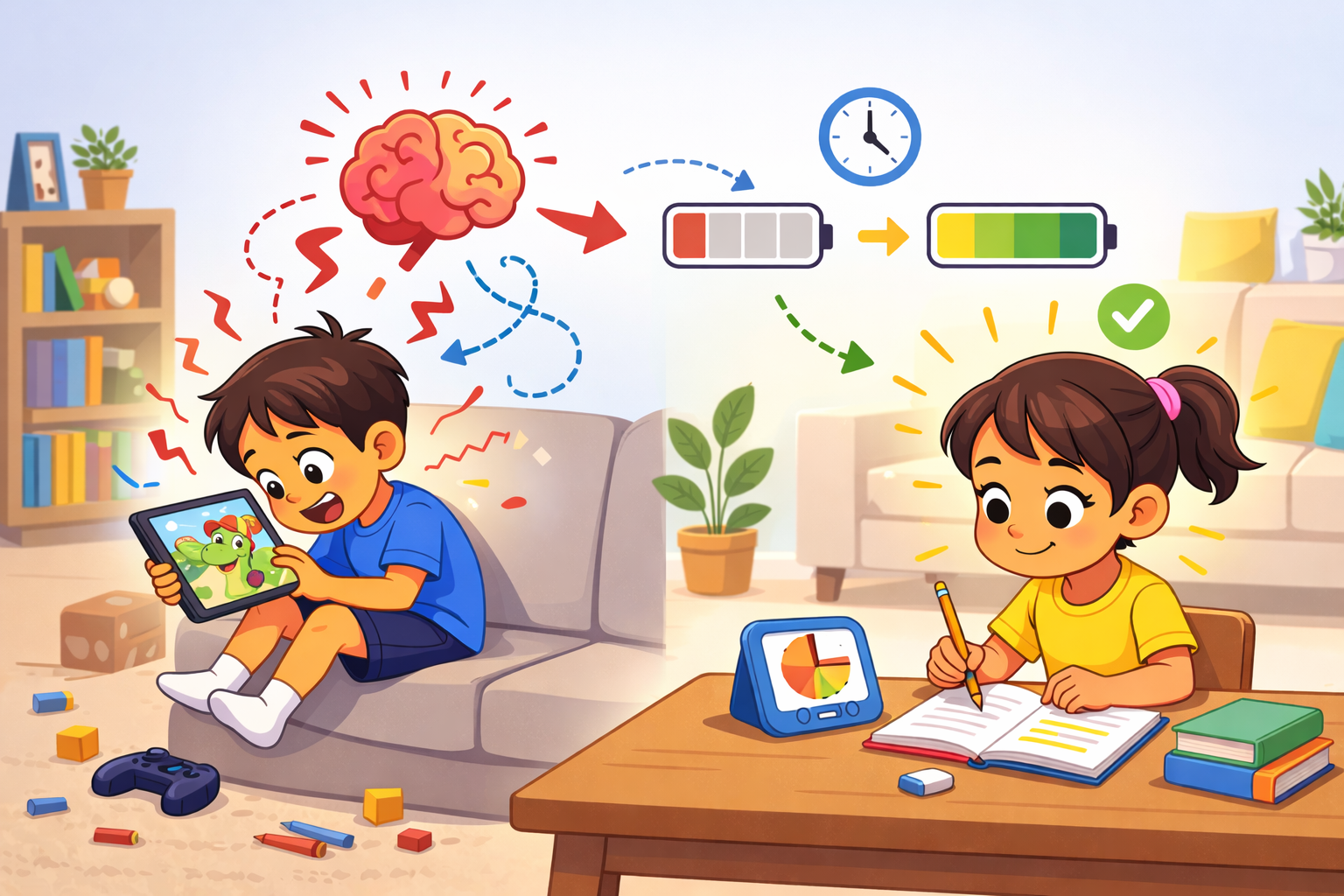
Digital timers create clarity that doesn’t depend on mood or memory. They externalize the limit. Instead of a parent deciding when something ends, the timer becomes the neutral signal. This shift reduces power struggles because the device — not the parent — marks the transition.
Timers don’t eliminate emotion, but they reduce surprise. And in screen management, predictability is everything.


Why Children Struggle With Abstract Time
Young kids don’t naturally grasp how long “ten minutes” feels. Without a visual or auditory marker, time feels flexible.
Children often:
Lose track of time completely
Feel endings are sudden
Assume more time remains
A timer turns abstract time into something concrete.
Choosing the Right Type of Timer
Not all timers support regulation equally. Some are too loud or abrupt, which can trigger frustration.
Helpful timer options include:
Visual countdown timers
Gentle chimes instead of alarms
Device-based countdown displays
Choosing a tone that feels neutral keeps the ending calm.
Setting the Timer Before Screens Begin
The moment before screen time starts is the most important.
Parents can:
Set the timer visibly
State the time clearly
Explain what happens when it ends
This pre-planning aligns with Managing Kids’ Expectations About Screen Time, where clarity prevents conflict.
Pairing Timers With Clear “Next Steps”
A timer alone doesn’t tell a child what comes next. Pairing it with routine reduces resistance.
Helpful pairings include:
Timer ends → snack time
Timer ends → outdoor play
Timer ends → homework
This structure echoes How to Limit Screen Time Without Power Struggles, where rhythm replaces negotiation.
Using Mid-Point Warnings
Some children benefit from knowing the timer is halfway through.
Mid-point cues help by:
Preparing emotionally
Reducing last-minute panic
Encouraging kids to wrap up
These small signals soften the final transition.
Letting the Timer Be the Messenger
Once the timer is set, consistency matters. Re-negotiating undermines its power.
When the timer rings, calm follow-through builds trust. Over time, kids look to the timer instead of watching the parent’s face for clues. That predictability lowers tension significantly.
Teaching Kids to Set Their Own Timers
As children grow, ownership increases cooperation.
Parents can encourage kids to:
Choose their screen window
Start the timer themselves
Monitor the countdown
This builds independence and supports skills described in Teaching Kids to Take Screen Breaks Naturally, where self-awareness develops gradually.
Using Timers for Breaks, Not Just Endings
Timers don’t only signal stopping — they can signal pausing.
Families might:
Set short play windows
Use timers for movement breaks
Build tech-free resets into long sessions
This approach reinforces regulation instead of restriction.
Modeling Timer Use as Adults
Children respect tools they see used consistently.
Parents can model by:
Setting timers for their own scrolling
Announcing their stopping point
Ending when the timer sounds
This modeling reflects How to Model Mindful Tech Behavior as Parents, where actions teach more than rules.
Turning Timers Into Predictable Support
Timers are most effective when they become routine. Over time, the emotional charge around endings fades because the pattern stays steady.
Families who use timers consistently often notice:
Faster transitions
Less arguing
More self-regulation
At Fuzzigram, we believe screen management works best when structure feels neutral. A digital timer doesn’t judge or negotiate — it simply marks time. When children learn to trust that signal, cooperation replaces conflict, and screen time becomes a manageable part of the day.
This content is for educational purposes and is not a substitute for professional medical or psychological advice.