Teaching Kids to Critically Think About Ads and Influencers
Teaching Kids to Critically Think About Ads and Influencers

Why Advertising Looks Different to Kids
Today’s advertising rarely looks like advertising. Instead of obvious commercials, children encounter product promotions inside videos, games, social media clips, and influencer content. Recommendations feel personal, entertaining, and trustworthy — which makes them especially powerful for young viewers.
Children are still developing the ability to separate persuasion from storytelling. When a favorite creator recommends a toy or product, kids often interpret the message as genuine enthusiasm rather than marketing. Teaching critical thinking helps children understand intent without becoming suspicious or fearful of media.
The goal isn’t to make kids cynical. It’s to help them become thoughtful viewers who recognize when someone is trying to influence their choices.


Why Kids Trust Influencers So Easily
Influencer content feels relational rather than commercial.
Kids often trust influencers because:
Content feels conversational
Creators appear relatable
Recommendations happen during entertainment
Repetition builds familiarity
Trust forms quickly when advertising blends seamlessly with storytelling.
Explaining Ads in Age-Appropriate Ways
Children don’t need complex marketing explanations. Simple language works best.
Parents can explain that:
Some videos are made to sell things
Creators may earn money from recommendations
Companies pay for attention
Clear explanations help kids recognize purpose without shame or confusion.
Teaching Kids to Ask Simple Questions
Critical thinking begins with curiosity rather than skepticism.
Helpful questions include:
“Why are they showing this?”
“What do they want viewers to do?”
“Would they still like it without payment?”
These questions encourage awareness instead of automatic acceptance.
Recognizing Emotional Advertising Techniques
Ads often work by connecting products to feelings rather than needs.
Children can learn to notice when content:
Promises popularity or happiness
Suggests ownership equals belonging
Creates urgency or scarcity
Understanding emotional persuasion builds resilience over time.
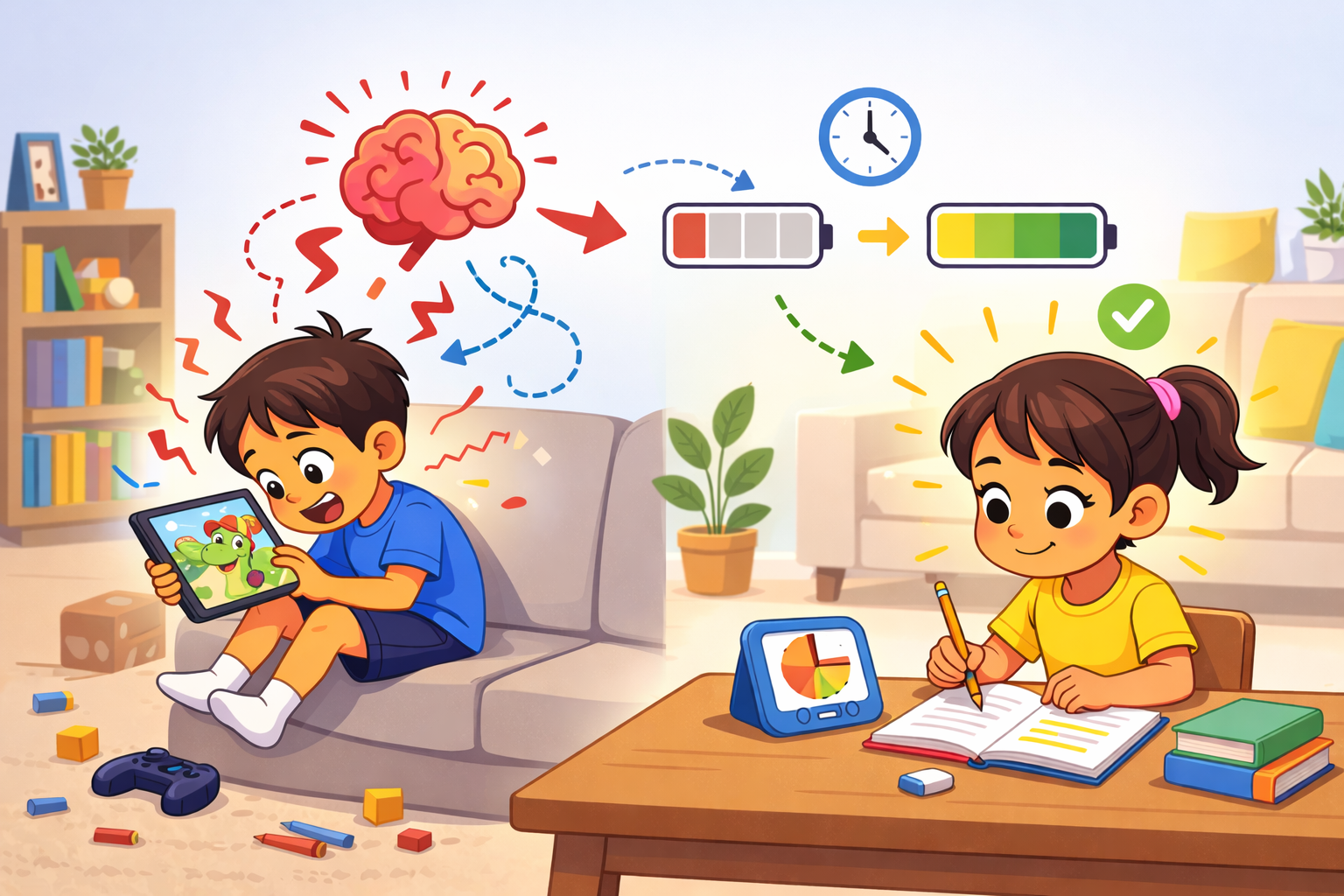
This awareness connects with The Link Between Screen Use and Attention Span, where fast-paced messaging captures focus intentionally.
Helping Kids Separate Entertainment From Promotion
Influencer content frequently mixes play and promotion together.
Parents can help kids notice:
Product placement during fun moments
Sudden enthusiasm shifts
Repeated brand mentions
Learning to spot these patterns strengthens media awareness without removing enjoyment.
Keeping Conversations Calm and Curious
Children respond best when discussions feel exploratory rather than corrective. If adults criticize content harshly, kids may become defensive or secretive about what they watch.
Curiosity keeps dialogue open. Asking what kids think — instead of telling them what to believe — encourages independent thinking. Over time, children begin evaluating content naturally without prompting.
Modeling Critical Thinking Out Loud
Kids learn media literacy by watching adults analyze content casually.
Parents can model by:
Wondering aloud about sponsorships
Noticing persuasive language
Comparing marketing claims with reality
This modeling reinforces How to Model Mindful Tech Behavior as Parents, where thinking habits become visible.
Connecting Ads to Real-World Decision Making
Critical thinking strengthens when kids apply it beyond screens.
Families can practice by:
Comparing products before buying
Discussing needs versus wants
Reflecting after purchases
These experiences help children understand influence in everyday life.
This approach complements Managing Kids’ Expectations About Screen Time, where awareness supports thoughtful choices.
Teaching Kids That Influence Isn’t Always Bad
Not all influence is harmful. Recommendations can introduce useful ideas or inspire creativity.
Balanced understanding helps kids:
Appreciate helpful suggestions
Recognize persuasion respectfully
Make independent decisions
Learning nuance prevents fear-based media habits.
Raising Thoughtful Digital Consumers
Children growing up in digital spaces will encounter persuasion constantly. Protection alone isn’t sustainable — understanding is.
Families who teach critical thinking often notice:
Fewer impulsive requests
Greater confidence in decision-making
More thoughtful media engagement
At Fuzzigram, we believe kids don’t need to avoid media to navigate it safely. When children learn how advertising works, they gain agency. Screens stop directing choices, and kids begin directing themselves.
That shift — from passive viewing to thoughtful participation — is one of the most powerful digital skills children can develop.
This content is for educational purposes and is not a substitute for professional medical or psychological advice.