Celebrating Diversity: Teaching Kids About Global Holidays
Celebrating Diversity: Teaching Kids About Global Holidays
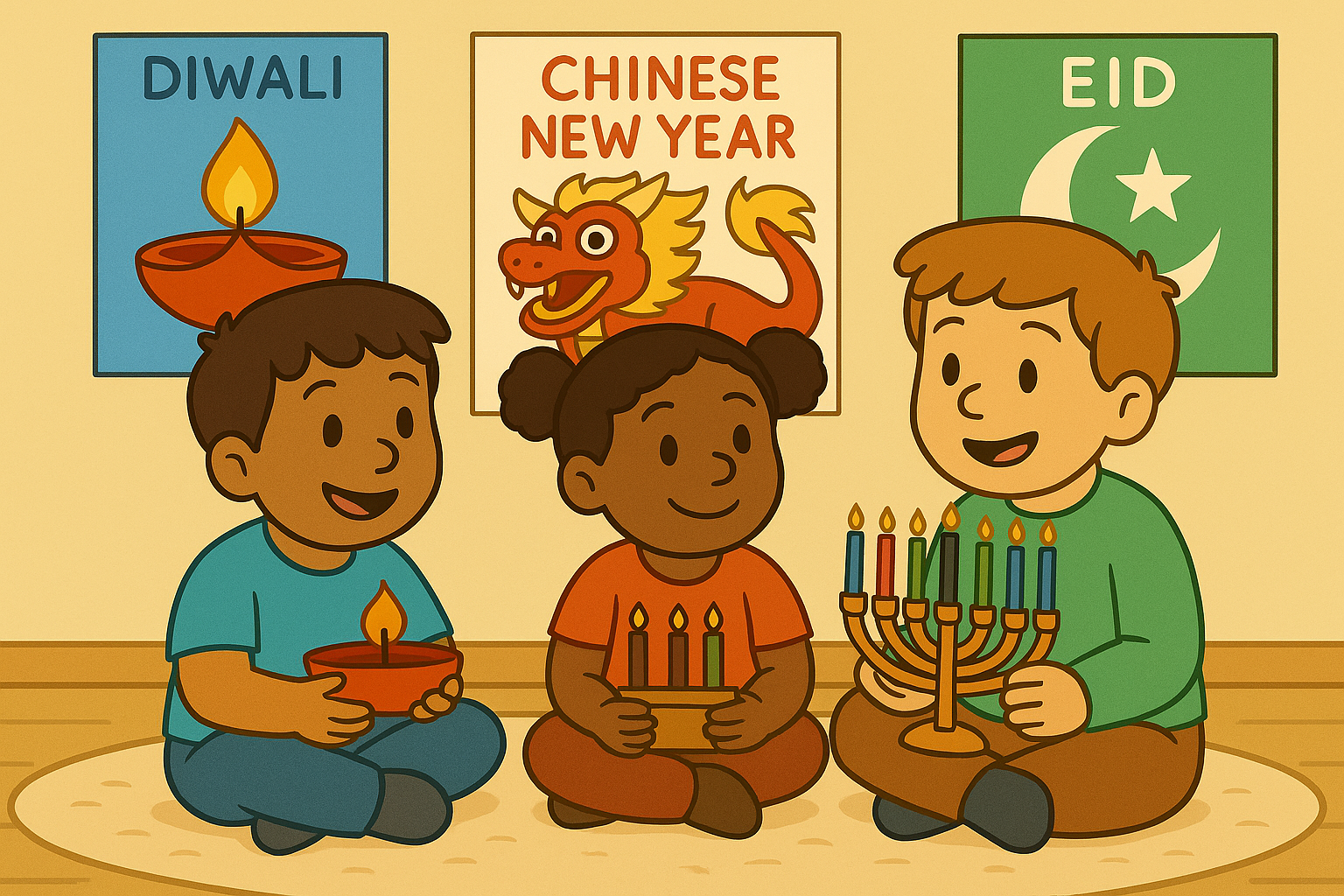
Why Children Benefit from Learning About Global Traditions
The world is full of beautiful celebrations—some full of light, some full of song, some full of quiet reflection. When children learn about holidays from different cultures, they don’t just memorize facts—they learn to widen their hearts. Understanding how others celebrate helps kids develop empathy, curiosity, and respect.
Holidays are perfect gateways to teaching diversity because they connect directly to things young children already understand: joy, family, ritual, gratitude, and community. When we introduce global holidays with warmth and wonder, children begin to see that different doesn’t mean strange—different often means fascinating and meaningful.


Approaching Diversity With Care and Curiosity
Children learn best when they feel safe to ask questions. Introduce cultural celebrations gently, inviting exploration rather than comparison. You might say:
“This family celebrates differently from us—and that’s wonderful!”
“Isn’t it exciting that the world has many ways to show joy?”
“Let’s learn about how people celebrate this season around the world.”
The goal isn’t to teach everything about every holiday, but to create recognition and respect. Kids don’t need full historical context—they need emotional bridges. When diversity feels like discovery, children open their hearts quickly.
Choosing Global Holidays to Explore
Focus on celebrations that highlight universal themes—light, family, gratitude, hope, renewal, seasons, and reflection. Here are examples to gently introduce:
Diwali (India) – Festival of lights and new beginnings
Lunar New Year (China, Korea, Vietnam, etc.) – Welcoming luck and renewal
Hanukkah (Jewish tradition) – Honoring courage and light
Kwanzaa (African American culture) – Celebrating unity and community values
Eid al-Fitr (Muslim tradition) – Joy after a month of reflection
Nowruz (Persian New Year) – Welcoming spring and fresh starts
Christmas (Christian tradition) – Love, giving, and family
Obon (Japan) – Honoring ancestors with lights and dance
Inti Raymi (Andes region) – Gratitude for the sun and nature
Children quickly notice connections: family gatherings, lights in darkness, costumes, feasts, and music appear across cultures. These patterns help kids understand that joy—and kindness—are universal.
Storytelling as a Window Into Celebration
One of the simplest ways to teach diversity is through stories. Try:
Picture books about global holidays
Puppets retelling a holiday’s tradition
Short videos showing parades or music
Audiobooks with songs, rhythms, or chants
Felt-board characters acting out key parts
An “imagination ticket” to travel to a new country
Simple Activities That Honor Different Traditions
You don’t need elaborate projects—just small creative moments:
Draw lanterns for Diwali or Lunar New Year
Make paper dreidels for Hanukkah
Create a Kwanzaa unity cup with cardboard
Dance like the Lion or Dragon for Lunar New Year
Try simple ingredients for a cultural snack
Use scarves or fabrics to act out dances
Use the phrase: “We are honoring—not copying.” This helps children learn respect rather than imitation. Let kids know: This is someone else’s special tradition, and we are learning about it with care.
Learning Through the Five Senses
Kids remember what they feel, hear, smell, and taste. Try sensory exploration:
Smell: spices like cinnamon, cardamom, ginger, cloves
Hear: cultural instruments or celebration sounds
See: photos of clothing or symbols
Taste: small snack with cultural relevance
Touch: fabrics, textures, or craft materials
Sensory learning brings celebration to life. For winter sensory exploration that blends with holiday learning, Winter Sensory Play Ideas for Indoors offers adaptable, soothing ideas.
Celebrating Diversity at Home
Families don’t need to host big festivals to appreciate global cultures. Try:
A “Holiday of the Week” family dinner placemat
Music from different countries in the background
A wall map with markers for celebration locations
A “celebration passport” kids can stamp
Learning how to say “Happy New Year” in different languages
Creating a display of global celebration symbols
Children become ambassadors of kindness when they learn that every culture has meaningful ways to celebrate.
Encouraging Respectful Conversation
Kids may ask challenging questions. Instead of shutting them down, invite reflection:
“Why do you think that tradition matters to them?”
“How do we show respect when someone celebrates differently?”
“What feelings do we both share during celebrations?”
“What can we learn from this holiday?”
These questions help children grow thoughtful rather than judgmental. For more guidance in shaping supportive family dialogue, Teaching Respectful Communication During Conflict can help model kind wording during tricky discussions.
Reflection: Similarities and Differences
After exploring traditions, help children process what they’ve learned:
“How did this holiday feel?”
“What was your favorite celebration to learn about?”
“Which holiday made you smile the most?”
“What was surprising to you?”
“Which traditions felt similar to ours?”
Kids learn that different cultures often share the same values—love, community, hope, gratitude, and joy. That recognition builds empathy.
What Diversity Teaches About Belonging
By learning about global celebrations, children gain a powerful message: every family has traditions that deserve respect. Kids also develop confidence in their own traditions—when comparison becomes celebration, children feel pride instead of competition.
Teaching diversity through holidays helps kids understand that the world is vast—but filled with people who love, hope, and grow just like them. When children see this, they begin to step into the world not just with knowledge—but with open hearts.
A Season of Connection, Not Comparison
Holiday celebration is not about choosing the “best” tradition—it’s about honoring what each one represents. Children who grow up learning about diversity don’t just memorize facts—they learn to see people with compassion.
When families gently introduce global celebrations, children begin to understand something beautiful: The more we learn about others, the more connected we feel.
And that is a lesson worth passing on—through every season, every culture, and every celebration of the year.
This content is for educational purposes and is not a substitute for professional medical or psychological advice.