Teaching Mindful Giving During the Holidays
Teaching Mindful Giving During the Holidays
Why Mindful Giving Matters
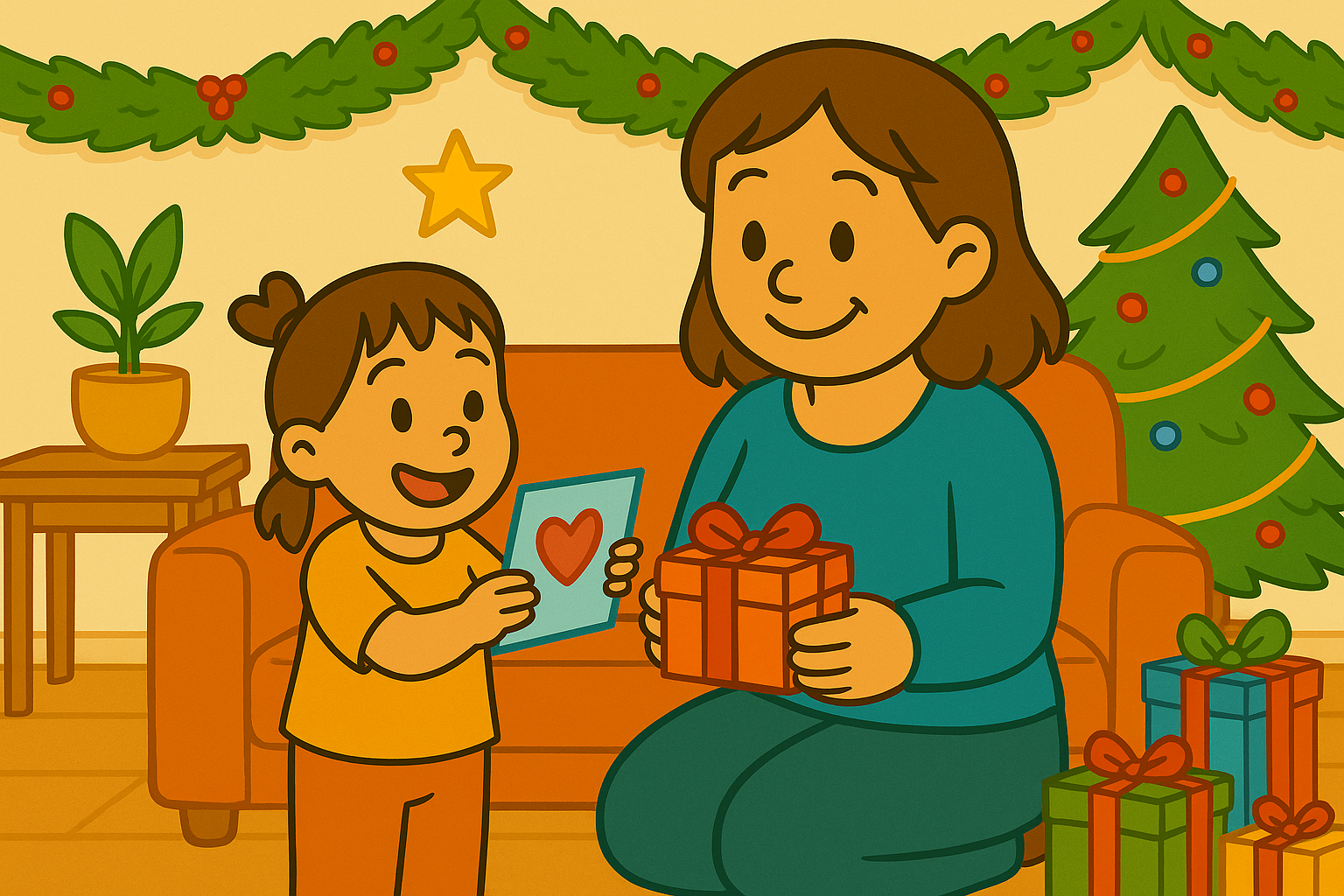
During the holidays, children often receive many messages about gifts—buying them, receiving them, asking for them. But one lesson that can shape their hearts for life is that giving can be mindful, thoughtful, and deeply personal. Mindful giving teaches kids that generosity isn’t measured by price—it’s measured by intention and care.
Mindful giving slows the season down. It helps children reflect on others’ needs, pay attention to feelings, and understand that gifts are an expression of seeing someone. And when kids learn this early, they begin to view the holidays not only as a celebration—but as a way to nurture relationships with empathy and kindness.


What “Mindful Giving” Really Means
Mindful giving is not about finding “the perfect gift.” It’s about:
Noticing what someone might need
Thinking about how they feel
Finding ways to help, support, or encourage
Giving from the heart—not from pressure
Children can learn that giving has many forms:
Time
Encouraging words
Helping hands
Homemade gifts
Listening
Sharing space or play
Mindful giving teaches presence. And presence often means more than any wrapped box.
Helping Children Understand the Why
Before creating a gift, talk about purpose. Ask questions like:
“When someone feels sad, what might help?”
“What makes Nana feel loved?”
“What does your friend need when they’re nervous?”
“How do we know a gift feels special to someone?”
This transforms gift-giving from a transaction into connection. Children learn to observe, notice, and care. To develop sensitivity around helping others without shame or blame, Helping Kids Learn Accountability Without Shame supports the emotional side of generosity.
Using Reflection to Spark Ideas
A reflective moment can guide a child toward meaningful giving:
“This year, who helped you?”
“Who made you laugh?”
“Who stayed patient when things got hard?”
“Is there someone you want to thank?”
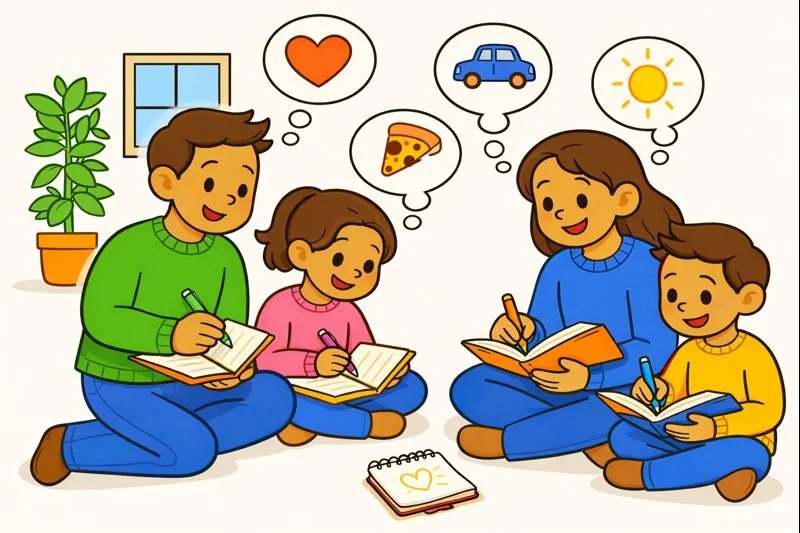
You can even create a “Gift List of Gratitude”—not items, but names. Children then brainstorm something small yet meaningful to offer each person. This turns giving into storytelling—and storytelling into appreciation.
Simple Meaningful Gifts Kids Can Create
Mindful gifts don’t need to be fancy. A few thoughtful ideas:
“Warm Words” card with encouraging phrases
A small kindness coupon booklet
A drawing of a shared memory
A homemade bookmark of their favorite color
A mini photo in a hand-painted frame
A puppet skit performance dedicated to someone
A decorated gratitude rock: “Keep this when you want courage”
For craft-based gifting ideas, Simple Homemade Gifts Kids Can Make and Give complements this section with accessible creations children can proudly make on their own.
Giving Through Actions (Not Just Things)
Teaching children that gifts don’t always need wrapping can be powerful. Actions can be gifts too:
Reading a book aloud to a sibling
Helping clean without being asked
Preparing someone’s favorite snack
Sitting with someone feeling lonely
Making a puppet show just for one person
Offering time to play when someone needs a break
This reframes giving as care, not just material exchange. Children start to understand that kindness can appear in everyday choices.
Storytelling & Role Play: “What Would the Puppet Do?”
Using puppets or role play, kids can test giving ideas safely. Ask:
“What would this puppet make for their best friend?”
“What could the bunny offer when someone feels sad?”
“Can you make up a story where a gift solves a problem?”
This reduces pressure and opens imagination. To explore connection through performances, Valentine’s Day Puppet Shows About Love and Friendship offers storytelling techniques that align well with mindful giving.
Helping Kids Avoid Comparison or Competition
Sometimes kids may ask: “Is my gift good enough?” or “But they spent more…” You might respond:
“Gifts don’t need to match to be meaningful.”
“Love isn’t a competition.”
“Handmade things often last longest in the heart.”
“Sometimes the tiniest gift means the most.”
Children thrive when they know that care is not measured by cost.
Creating a Family Tradition of Mindful Giving
Even small rituals can help mindful giving become a family legacy:
A “giving night” in December where everyone creates something
A dinner conversation around people who helped us this year
A homemade gratitude ornament for each person
A family kindness tree with “leaves of giving”
A wrapping station with recycled paper and nature decorations
Children soon learn that giving is not an obligation—it’s a meaningful rhythm. And when giving becomes joyful, children take ownership of it.
Reflecting After Giving: “How Did It Feel?”
Reflection deepens learning. After gifts are offered, ask:
“How did it feel to give that?”
“What do you think they felt?”
“Would you ever give something like that again?”
“What was your favorite moment?”
This helps the child integrate the emotional experience—not just complete the task. To further support thoughtful conversation, The Power of Shared Family Reflections Before Bed can guide gentle dialogue and emotional processing after giving moments.
The Heart of Giving That Lasts Beyond the Holidays
When children learn mindful giving, they carry it far beyond December. They begin to see moments of opportunity everywhere: a chance to help, to soothe, to cheer, to uplift, to connect. They learn that generosity is not an event—it’s a way of being.
And perhaps the most beautiful lesson of all is this: giving is not about what we have—it’s about how we care.
When children grow with that truth, they don’t just celebrate the holidays. They learn how to celebrate being human—every day of the year.
This content is for educational purposes and is not a substitute for professional medical or psychological advice.