Simple Family Traditions for New Year’s Reflection
Simple Family Traditions for New Year’s Reflection

Why Reflection Matters for Families
As a new year approaches, children may experience excitement, uncertainty, or even nervousness about change. Families often focus on resolutions—but reflection can be even more meaningful. When we pause to look back, we help children recognize growth, name emotions, and connect experiences to lessons.
Reflection nurtures self-awareness and confidence. It tells kids: Your story matters. You’ve already grown. You’re still growing. With gentle guidance, New Year’s can become a calm and meaningful transition—rather than a big dramatic shift.


Looking Back Before Looking Forward
Instead of jumping to goals or resolutions, reflection invites children to appreciate what has already happened. A few guiding questions:
What brought me joy this year?
What surprised me?
What was hard—but I got through it?
What helped me grow?
What am I proud of?
What did I learn about kindness?
Parents can model reflection with vulnerability: “I learned that slowing down helped me be a better listener.” Children learn most deeply when reflection feels real—and shared.
Creating a Reflection-Friendly Environment
Reflection is easier when the space feels peaceful. Choose a calm time and place:
Dim lights or use candles (battery-powered)
Play instrumental music
Have pillows, snacks, and blankets available
Avoid screens or noisy toys
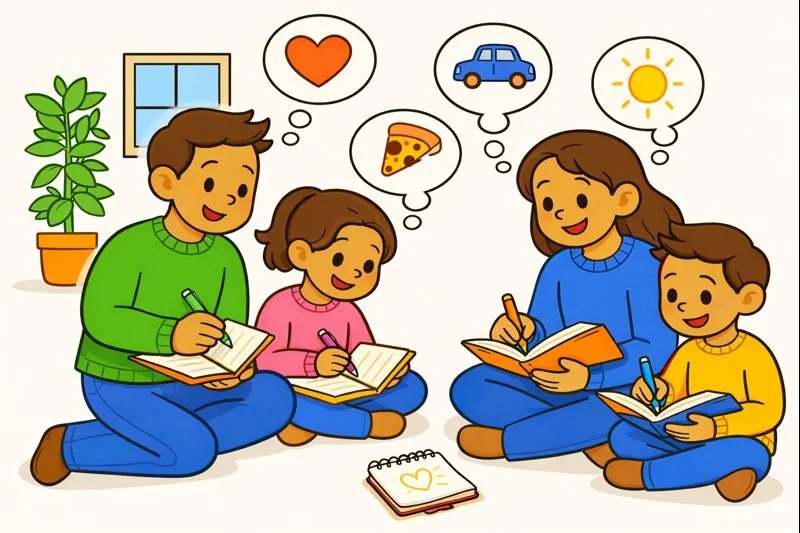
Provide paper, pens, or drawing tools
Parents might say: “Tonight is not about perfect answers—it’s about remembering together.” Children often open up more when pressure is removed.
A Family “Memory Jar” or “Reflection Basket”
This tradition can begin anytime—but New Year’s makes it special. Collect a jar, envelope, or decorated shoebox and invite everyone to contribute:
Favorite memories
Funny moments
Times we tried again
Ways we helped others
New things we learned
People who made us feel loved
Read some memories aloud at the end of the year—or tuck notes away and open them next New Year’s Eve. Reflection becomes visible, reusable, and heartfelt.
Visual Reflection Activities for Younger Kids
Children often remember feelings more than dates or details. Use visuals to spark gentle conversation:
Draw a “feelings map” of the past year
Label favorite places on a “map of memories”
Use stickers to mark special days on a calendar
Create a “highlight picture collage”
Use puppets for storytelling of the year
Turning Reflection Into Family Traditions
Simple yearly rituals help make reflection memorable. Try:
A “Candle of Gratitude” lit during dinner
A “Growth Toast” where each person shares something they learned
A winter walk followed by journaling
A family board game night with question cards taped to the box
A “Stars of the Year” mural displayed for a week
Traditions do not need to be elaborate. They simply need to be repeated with warmth so children know: this is what we do when a season changes.
Celebrating Progress Without Pressure
As children reflect, they may naturally compare themselves or feel unsure. Remind them:
Growth is not always loud
Some progress is invisible
Quiet bravery matters
Rest is valuable too
Parents might say:
“Sometimes the biggest growth is something no one else can see—but you felt it.”
This approach reflects ideas similar to those in Teaching Respectful Communication During Conflict, where words can soothe rather than judge.
Inviting Hope and Imagination for the New Year
Once reflection is complete, families may gently look ahead—but without pressure. Offer prompts like:
“Something I want to try…”
“Someone I want to appreciate more…”
“Something I want to learn…”
“A way I want to help…”
“Something I want to let go of…”
Encourage children to choose one idea—not a long list. Imagination grows best with space.
Drawing from nature can also help—ideas from Fall Nature Walks: Teaching Change Through Seasons can be adapted to show that growth takes time.
A Quiet Night That Feels Special
Not every New Year’s needs fireworks or countdowns. A peaceful evening can be just as magical:
Hot cocoa and cozy blankets
A favorite book read aloud
A family “thank-you circle”
Stargazing
Pajama dance party
A simple board game followed by reflection time
Children remember connection more than celebration. Calm traditions can make transitions feel safe and exciting at the same time.
When Reflection Feels Difficult
Some years hold challenges that are hard to revisit. If reflection brings discomfort, try:
Using puppets instead of direct conversation
Drawing feelings rather than writing them
Identifying one thing that helped during a tough moment
Saying, “We don’t need answers today—just space together.”
Reflection is not about fixing the past—but holding it with compassion. Families do not need to force closure—just allow softness.
A New Year That Grows With Your Family
Reflection doesn’t need to end when the calendar turns. It can become an ongoing rhythm—collected through drawings, notes, voice clips, bedtime talks, or nature walks. With time, children begin to see their life as a story—with ups, downs, and growth woven through every chapter.
The new year isn’t a reset. It’s a continuation. A continuation of learning, loving, trying again, failing gently, growing boldly, and belonging to something bigger than a moment.
And that—when shared lovingly—becomes the most beautiful tradition of all.
This content is for educational purposes and is not a substitute for professional medical or psychological advice.