Hosting a Puppet Parade for Kids’ Birthdays
Hosting a Puppet Parade for Kids’ Birthdays
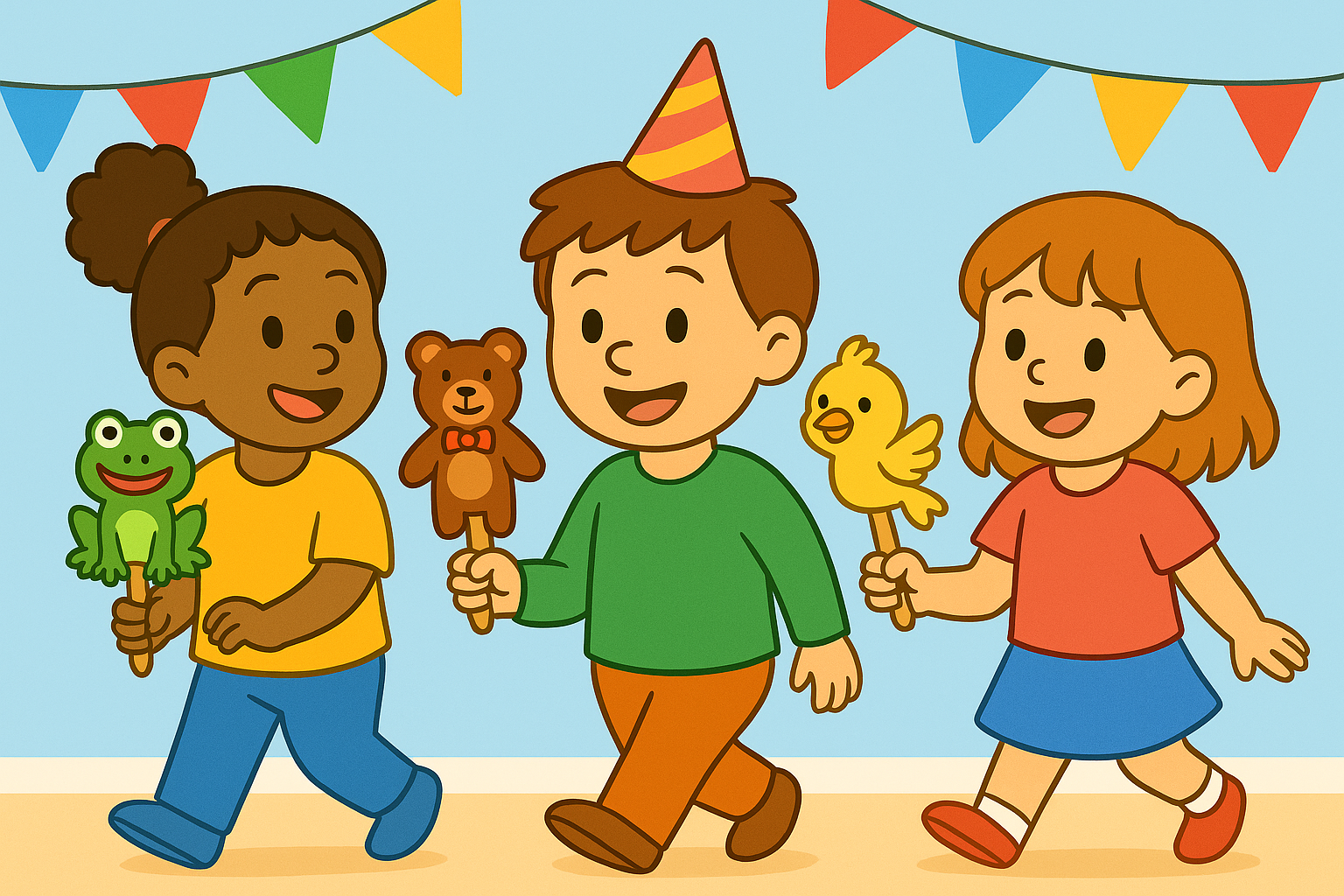
Why Puppet Parades Make Birthdays Magical
Birthdays often come with excitement, expectations, and sometimes even overwhelm for kids. A puppet parade is a gentle, joyful way to celebrate—without pressure or overstimulation. Instead of focusing on flashy parties or big crowds, a puppet parade invites creativity, storytelling, and connection. Children become the creators of the celebration, not just guests at it.
Puppet parades turn birthdays into an experience rather than an event. They can be loud and silly… or quiet and imaginative. And most importantly—they make space for every child’s personality to shine. Whether the birthday child is outgoing or shy, a puppet parade can honor who they are and celebrate how they’ve grown.


The Benefits of Puppet-Based Celebrations
Puppet parades bring emotional, social, and developmental benefits:
Encourages imagination and storytelling
Allows shy children to express themselves indirectly
Supports cooperative play and turn-taking
Creates low-pressure social interaction
Builds confidence and voice control
Makes celebration meaningful—not overwhelming
Puppets let kids explore characters, play roles, and share ideas—without needing a stage performance or spotlight moment.
Choosing a Puppet Parade Style
There are a few ways to structure a puppet parade depending on energy levels and party size:
Marching Puppet Parade – Kids walk around with puppets and music
Story Parade – Every puppet has a mini moment to introduce itself
Theme Parade – Nature animals, outer space, carnival creatures, etc.
Birthday Child Parade – All puppets tell stories about the birthday child
Quiet Reflection Parade – Children move puppets slowly to soft music and narration
Let the birthday child choose the style—they feel ownership over the celebration and excitement builds naturally.
Creating a Puppet-Making Station
Before the parade begins, let guests make their own puppets. This becomes half the fun! Supplies can include:
Paper bags or socks
Markers, stickers, and yarn
Fabric scraps, ribbon, googly eyes
Popsicle sticks + cardboard circles
Nature items (leaves, twigs, petals)
Set out a sign: “Design Your Parade Puppet!”
Kids immediately feel creative ownership—no instructions needed beyond encouragement. For open-ended creativity, ideas from Simple Homemade Gifts Kids Can Make and Give can inspire materials that spark imagination.
Music & Movement: Setting the Parade in Motion
Music sets the emotional tone—playful, mysterious, dramatic, or calm. Options include:
Drums and claps (kids can provide sounds)
Classical or instrumental background music
Marching band rhythms
Soft lullabies for quiet puppet parades
Rhythm games (everyone moves puppets on beat!)
Children love coordinating movement with sound. Even toddlers can tap sticks or shake maracas to set the pace.
Adding Storytelling to the Parade
You can narrate or let kids take turns telling the story:
“Here comes the brave fox…”
“This puppet represents someone who loves birthday cake…”
“The shy butterfly is looking for a friend to fly with.”
“Can anyone ask the dragon how he feels today?”
Puppets make emotional expression safe and playful. They allow children to explore feelings indirectly—an approach supported beautifully in Teaching Respectful Communication During Conflict.
Giving Every Puppet a Purpose
To help kids connect personally with their puppets, ask:
“What’s your puppet’s favorite snack?”
“Does your puppet have a challenge to solve?”
“How does your puppet celebrate birthdays?”
“What makes your puppet brave?”
Turn simple questions into micro-shows. Kids may surprise you with depth, humor, or authenticity. A single question often becomes a full parade storyline.
Ideas for Puppet Parade “Stations”
To keep kids engaged and moving gently through the experience, you can set up different themed stations. Each one allows for creativity and expression without pressure. Here are playful options you can rotate or mix and match:
• Costume Corner
Kids add accessories to their puppets—hats, scarves, stickers, yarn hair, paper capes, or fabric scraps. This builds personality and ownership over each puppet.
• Voice Booth
Set up a simple mic (or cardboard tube) so kids can try out different puppet voices. They can experiment with pitch, volume, accents, or whisper voices for shy puppets.
• Feelings Zone
Children choose an emotion—like brave, worried, excited, lonely, or peaceful—and act it out using their puppet. This helps them process feelings safely through imagination.
• Birthday Cheer Station
Each puppet gives one kind message to the birthday child. Kids can say it aloud, write it on paper, or perform a tiny skit. The goal is warmth—not performance.
• Memory Lane Stop
Puppets share a small memory about the birthday child—something funny, kind, or brave. This gently supports confidence and emotional connection.
Ending the Parade With Meaning
Instead of applause, try meaningful closure:
“Parade bow” with a moment of silence
Puppets forming a circle around the birthday child
Each puppet naming a strength of the birthday child
A group song—performed by puppets!
“Wish Tree” where puppets add paper leaves with birthday wishes
The birthday child leaves the celebration not just with gifts—but with affirmation and belonging.
Keeping It Calm and Accessible for All Personalities
Some children love the spotlight. Others feel safer behind their puppet. That’s okay. A puppet parade gives space for both. Create:
A quiet puppet rest area
Noise-reducing headphones
A small support role (like “puppet usher”)
A co-puppeteering option with a grown-up
This ensures that every child feels included, not pushed. Birthdays become about comfort—not performance.
A Birthday Tradition That Grows With Your Child
One of the best parts about puppet parades is that they can evolve every year. Children can:
Create parade storybooks
Record puppet performances
Build themed puppet worlds over time
Add new characters each birthday
Reflect together on how their stories changed
Kids begin to see their own growth through the voices of their puppets—and year after year, they’ll remember: Birthdays were a celebration of my creativity—not just candles and cake.
This content is for educational purposes and is not a substitute for professional medical or psychological advice.