Valentine’s Day Puppet Shows About Love and Friendship
Valentine’s Day Puppet Shows About Love and Friendship
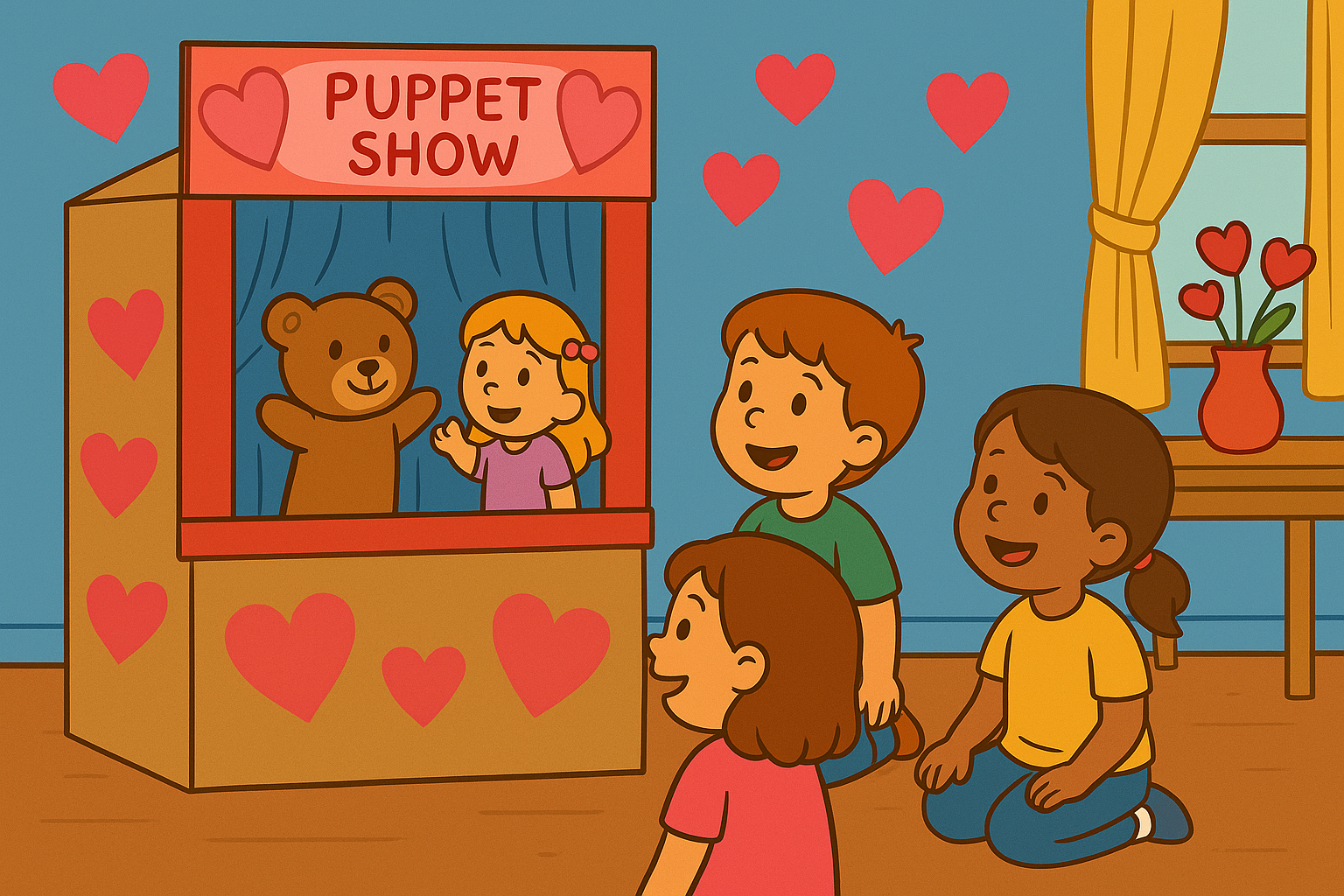
Why Puppets Are Perfect for Valentine’s Day
Valentine’s Day can be joyful, silly, warm, or even confusing for young children. Instead of focusing on cards and candy, puppet shows offer a way to explore the real meaning of love and friendship—through imagination, storytelling, and play. Puppets make big topics feel safe and accessible, helping kids understand cooperation, care, emotions, and kindness in ways everyday conversations sometimes can’t.
Puppetry taps into something children already know how to do well: pretend and connect. When characters talk about feelings, ask questions, or work through problems, children learn emotional lessons gently—and often remember them long after the show is over.


The Social & Emotional Benefits of Puppet Storytelling
Puppet shows build important skills through play. When children perform, watch, or help create a puppet skit, they practice:
Reading emotional cues in body language and voices
Exploring conflict and problem-solving
Expressing feelings with words instead of actions
Perspective-taking (“How would this character feel?”)
Relationship-building through teamwork
Even simple shows offer valuable learning. For strengthening cooperative behavior and emotional understanding, a puppet format aligns beautifully with ideas in Teaching Respectful Communication During Conflict.
Setting the Stage: Your Valentine’s Day Puppet Theater
You don’t need anything fancy—a couch, cardboard box, tablecloth, or blanket can become your theater. Kids can help build it, using:
Paper hearts
Red and pink fabric scraps
Streamer curtains
Twinkle lights or flashlights
A Valentine’s Day sign with their chosen show title
Let them choose a name for the theater—like “Love Lane Puppet House” or “Friendship Stage.” Ownership turns performance into memory.
Puppet Characters That Teach About Love & Friendship
Great characters don’t need to be perfect—they need personality! Try character types like:
A shy hedgehog who wants friends but feels prickly
A friendly raccoon who shares snacks with everyone
Two birds who disagree but learn to listen
A robot who doesn’t know what kindness means
A dog who loves giving compliments but needs help receiving them
A star who thinks love means always being brave
To dig deeper into emotional learning while keeping things playful, The Best Puppet Skits for Christmas and Winter Fun can inspire similar storytelling strategies for Valentine’s themes.
Simple Skit Ideas for Valentine’s Day
Here are easy skits that spark meaningful conversations through fun:
1. The Lost Heart
A paper heart goes missing—so the friends search for it and end up finding acts of kindness along the way.
Lesson: Love isn’t an object—it’s shown through actions.
2. The Friendship Mix-Up
Two characters misunderstand each other. They learn that different personalities can still be friends.
Lesson: Friendship isn’t sameness—it’s understanding.
3. The Compliment Parade
Each character learns how to give and receive compliments without feeling embarrassed.
Lesson: Love includes letting others appreciate you.
4. The Kindness Challenge
Characters pull cards with kindness tasks. They act them out until the stage is filled with hearts.
Lesson: Love grows when kindness spreads.
For more child-led giving ideas, Simple Homemade Gifts Kids Can Make and Give pairs beautifully with kindness-based skits.
Helping Kids Express Emotions Through Puppet Voices
Trying different voices helps children explore feelings safely. Encourage:
A “shaky voice” for nervous characters
A “whisper voice” for shy moments
A “superhero voice” for bravery
A “slow voice” for thinking
A “gentle voice” for kindness
Let them exaggerate voices as much as they want—it deepens emotional understanding and makes the lessons more memorable.
Including Family Members, Friends, or Stuffed Animals
Invite siblings, grandparents, or even stuffed animals to join the show. Roles can include:
Ticket maker
Narrator
Stage designer
Assistant puppeteer
Emotional helper (says things like “Let’s breathe!”)
Even toddlers can hand out tissue-paper hearts or press pretend sound-effect buttons. And if someone just wants to watch—that’s okay too.
Turning Skits Into Real Conversations
After the show, ask gentle questions to make meaning stick:
“Which character was kind?”
“Was anyone left out? What could they do next time?”
“Do you think being a friend means always agreeing?”
“Did any character say sorry?”
“Which part made your heart feel warm?”
Relating story moments to real life helps children transfer emotion learning to everyday social moments. For more ways to nurture these connections, Helping Kids Learn Accountability Without Shame can support reflection without guilt or pressure.
Turning Puppet Shows Into a Valentine’s Tradition
Make puppet theater part of every February with special touches:
Create countdown cards to build excitement
Take pictures of each year’s cast
Record voice clips of favorite lines
Save a “Best Lesson” card from each show
Hang paper hearts with quotes from the performance
These traditions remind kids that love and friendship aren’t just themes for one day—they’re skills practiced all year.
Valentine’s Day Beyond Candy and Cards
By using puppets, children experience Valentine’s Day as something more than gifts or decorations. They discover that:
Love involves courage and softness
Friends don’t always agree, but they listen
Empathy feels even better than receiving
Love can be silly, confusing, and joyful—and still real
This shift is powerful. Puppets make emotions visible… and when kids can see emotions, they can learn them.
Love, Friendship, and the Stories We Tell
Children don’t need perfect scripts or fancy stages—they need space to process feelings, express care, and experiment with kindness. Puppet shows offer that—with warmth, laughter, and possibility.
Valentine’s Day can be a day of sugar—or a day of story, connection, and meaningful play. Every puppet show gives children one more chance to understand what love feels like—not just what it looks like. And those lessons are the ones that stick.
This content is for educational purposes and is not a substitute for professional medical or psychological advice.