Encouraging Family Digital Breaks for Reconnection
Encouraging Family Digital Breaks for Reconnection

Why Reconnection Often Starts With a Pause
Families don’t usually lose connection all at once. It fades quietly — a few distracted conversations here, a meal eaten with one eye on a screen there, moments together that feel shared but not fully felt. Technology isn’t the cause of this drift, but it can accelerate it when it fills every pause.
Digital breaks aren’t about rejecting technology or creating strict rules. They’re about noticing when screens are crowding out presence — and choosing, briefly and intentionally, to make room for reconnection. Even small pauses can create meaningful shifts in how families relate to one another.


What We Mean by “Digital Breaks”
A digital break doesn’t have to mean unplugging for days or taking devices away entirely. For most families, it’s a short, intentional pause from screens that creates space for interaction, rest, or shared experience.
Digital breaks can be:
Ten minutes after school
Screen-free meals
An evening without devices
A weekend afternoon unplugged
The length matters less than the intention. A digital break works when everyone understands why it’s happening.
Why Families Often Resist Digital Breaks
Resistance is common — from kids and adults alike. Screens are convenient, comforting, and familiar. They help fill silence, ease boredom, and reduce friction in the moment.
Families may resist breaks because:
Screens feel necessary for relaxation
Silence feels awkward at first
Transitions feel harder without distraction
Adults worry about creating conflict
Understanding this resistance helps parents introduce breaks with empathy rather than force.
How Digital Breaks Support Emotional Connection
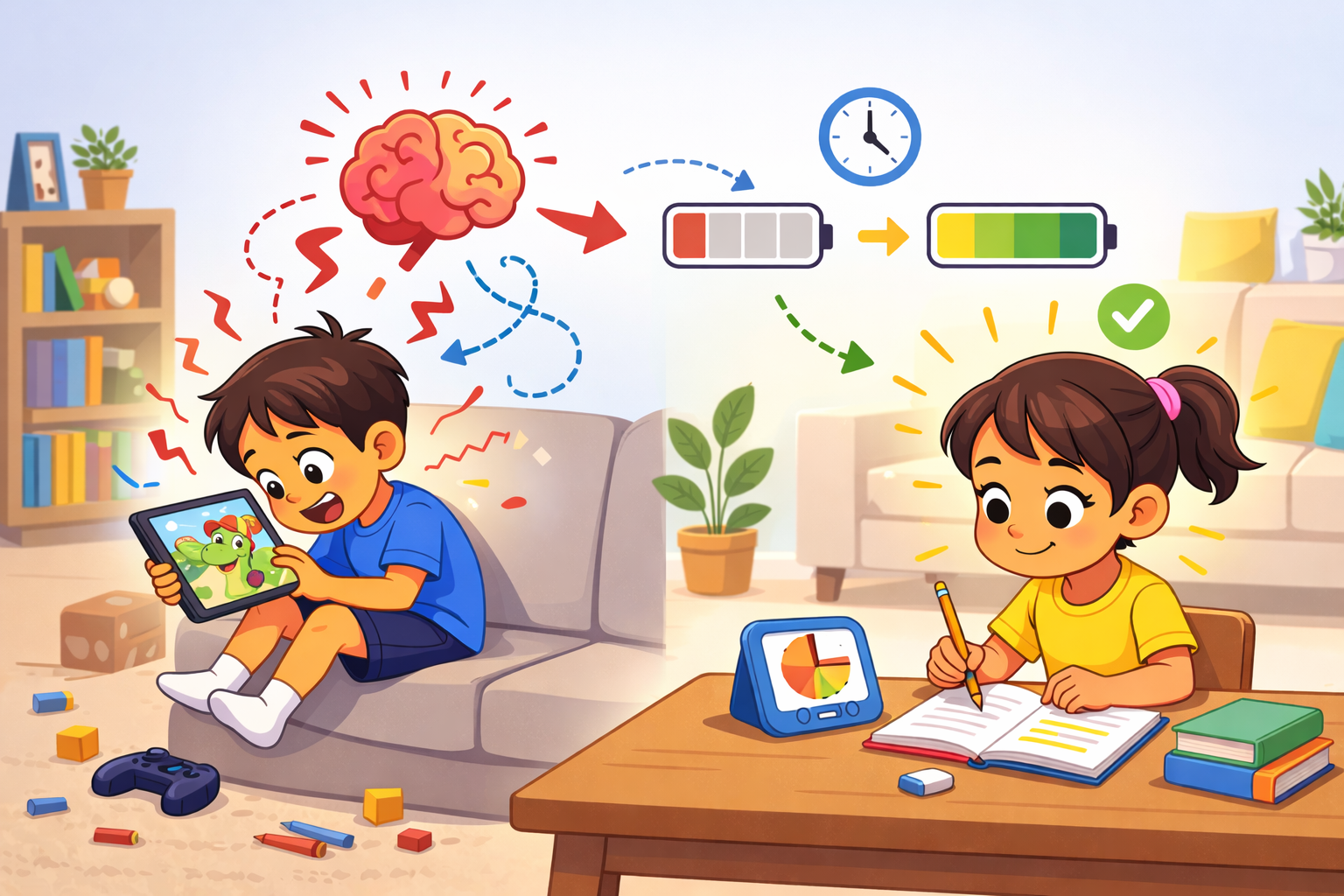
When screens are removed — even briefly — something interesting happens. Conversation slows down. Eye contact increases. Small moments of connection surface naturally.
Digital breaks often allow space for:
Spontaneous conversation
Emotional check-ins
Shared humor or storytelling
Cooperative play
Starting Small to Build Trust
Digital breaks are more effective when they feel manageable. Starting small builds confidence and reduces pushback.
Helpful starting points include:
One screen-free meal per day
A short device-free window after school
Phones away during bedtime routines
As families experience the benefits, breaks often expand naturally. Trust grows when kids see that breaks are temporary — not punishments.
Making Breaks Feel Inviting, Not Restrictive
A digital break works best when something replaces screens — not just removes them. When families plan what they’ll do together, resistance drops.
Inviting alternatives might include:
Simple board or card games
Outdoor walks
Cooking or baking together
Shared music or storytelling
Using Shared Language to Signal Breaks
Clear, consistent language helps digital breaks feel predictable rather than abrupt. When families use the same phrases, kids know what to expect.
Helpful language might include:
“Let’s take a family tech pause.”
“This is our screen-free time.”
“Devices come back after dinner.”
This consistency reduces negotiation and helps kids mentally prepare for transitions.
Creating Environmental Support for Breaks
Environment often matters more than willpower. When devices are always within reach, breaks feel harder to maintain.
Families often support breaks by:
Charging devices in a common area
Creating device-free rooms
Keeping screens out of shared spaces
These strategies align closely with Creating Screen-Free Zones at Home, where environment quietly shapes behavior without constant reminders.
Handling Pushback With Calm Confidence
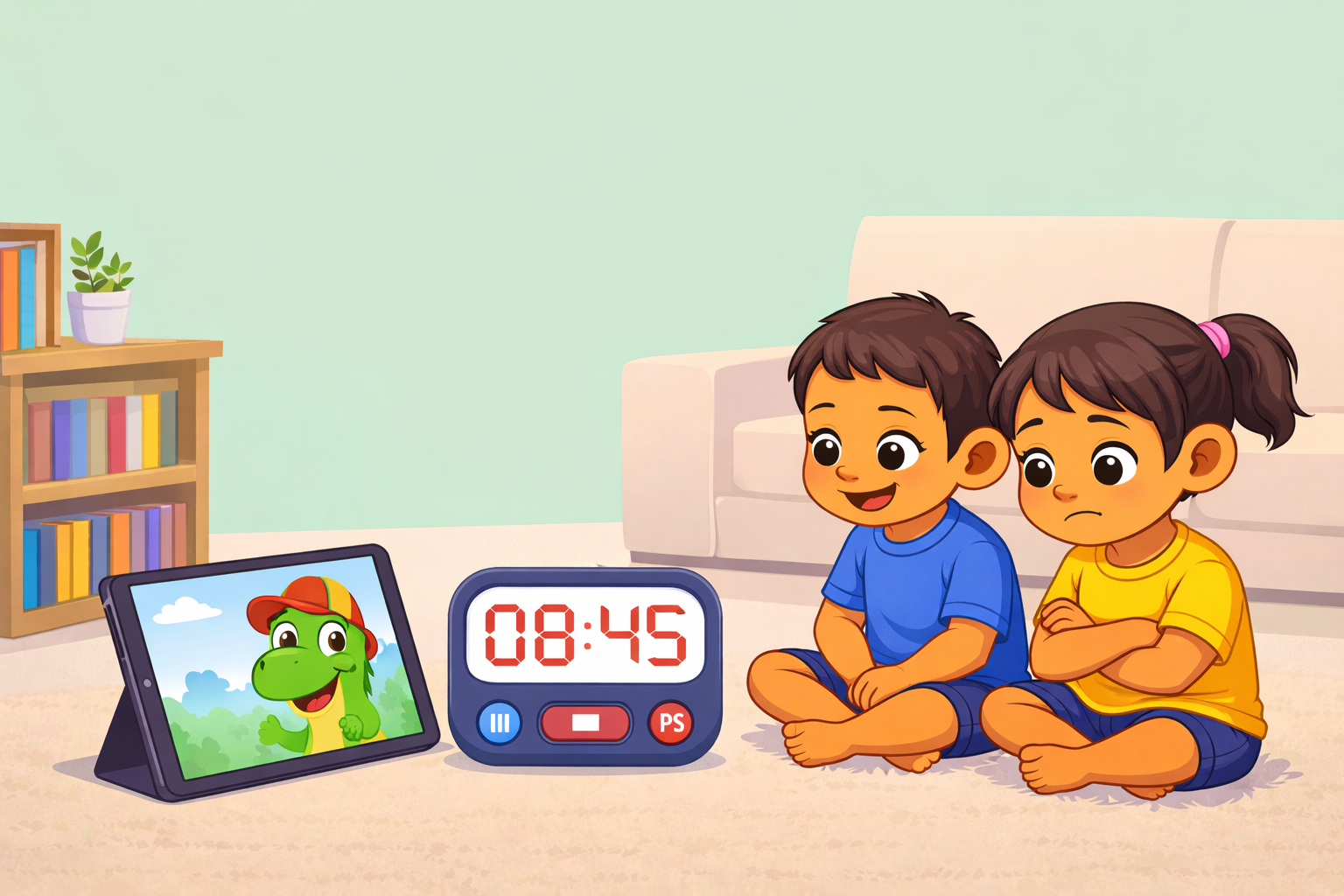
Pushback doesn’t mean a break isn’t working — it means habits are being interrupted. How parents respond in these moments matters.
Supportive responses include:
Acknowledging frustration without changing the plan
Staying calm and predictable
Redirecting attention to the next activity
Avoid turning the break into a debate. Calm repetition builds security and reduces escalation over time.
Noticing the Subtle Benefits Over Time
The effects of digital breaks aren’t always immediate or dramatic. Often, they show up quietly.
Families may notice:
More conversation during everyday moments
Less tension around transitions
Increased willingness to engage offline
Stronger sense of togetherness
These changes echo ideas in The Art of the Digital Detox: Restoring Balance as a Family, where intentional pauses restore emotional rhythm.
Making Digital Breaks a Normal Part of Family Life
Digital breaks don’t have to be special events. Over time, they can become part of a family’s natural rhythm — moments when everyone knows it’s time to reconnect.
Families who embrace regular digital breaks often experience:
Deeper relationships
Fewer screen-related conflicts
Greater emotional awareness
More meaningful shared memories
This content is for educational purposes and is not a substitute for professional medical or psychological advice.