Family Challenges: A Week Without Screens Experiment
Family Challenges: A Week Without Screens Experiment
Why a Screen-Free Experiment Can Be Eye-Opening
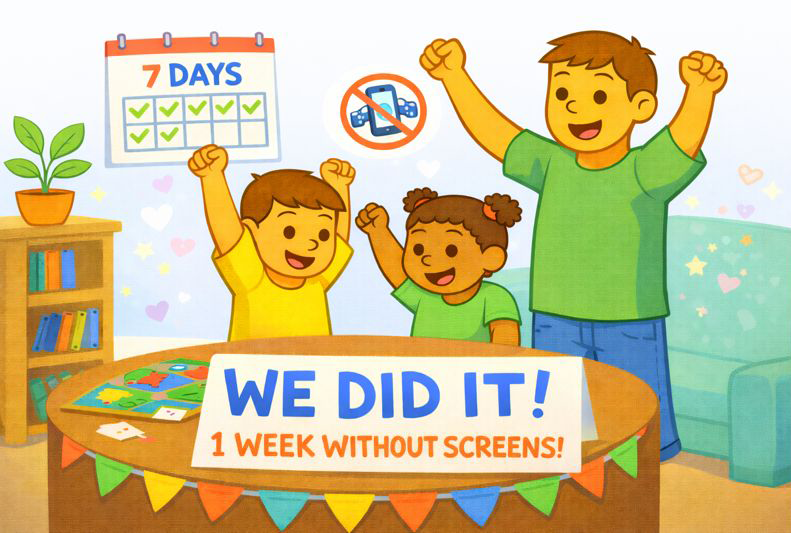
A week without screens can sound extreme — or even unrealistic — for many families. Screens are woven into work, school, entertainment, and connection. But that’s exactly why a short, intentional pause can be so revealing.
This isn’t about proving screens are “bad” or forcing perfection. A screen-free experiment is simply a way to notice patterns that are usually invisible. When screens are removed temporarily, families often see more clearly how technology shapes routines, emotions, and relationships.
Think of this as an experiment, not a test. There’s no pass or fail — only information.


Setting the Right Expectations Before You Begin
How the challenge is framed matters more than how long it lasts. When kids feel like screens are being taken away from them, resistance grows. When the challenge is presented as a shared family experiment, curiosity takes over.
Helpful framing includes:
Emphasizing that it’s temporary
Explaining the “why” in simple terms
Letting kids ask questions
Acknowledging that it may feel hard
When expectations are clear, children feel safer stepping into something unfamiliar.
Deciding What “Screen-Free” Actually Means
Every family defines “screen-free” a little differently. Clarifying the boundaries ahead of time prevents confusion and conflict.
Families often decide:
Whether phones are allowed for work only
If music or audiobooks count
How school-required screens are handled
Whether video calls with relatives are included
There’s no single right definition. The goal is consistency — not strictness.
This clarity mirrors principles in How to Create a Family Media Plan That Actually Works, where shared understanding prevents daily negotiations.
Anticipating the First Few Days
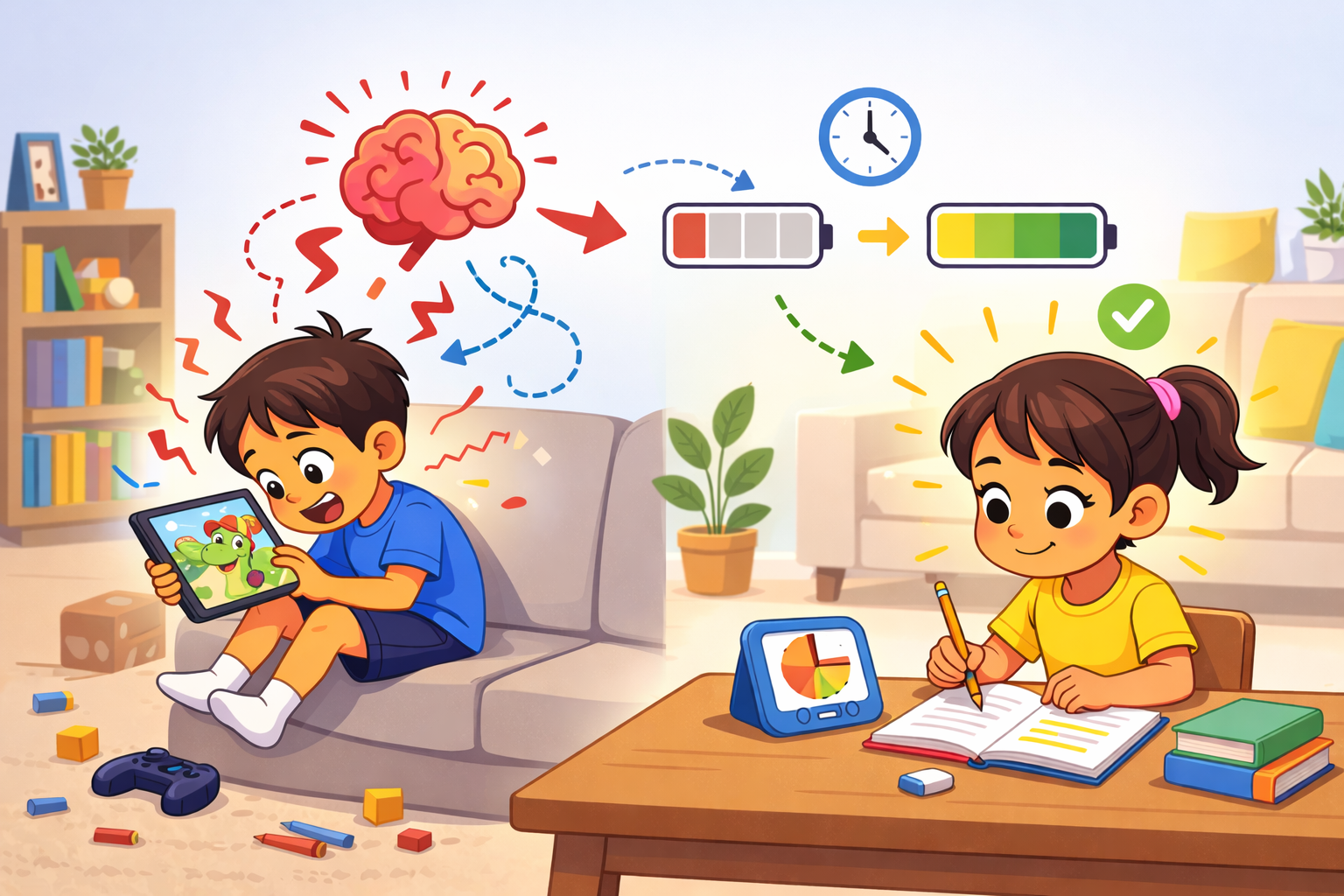
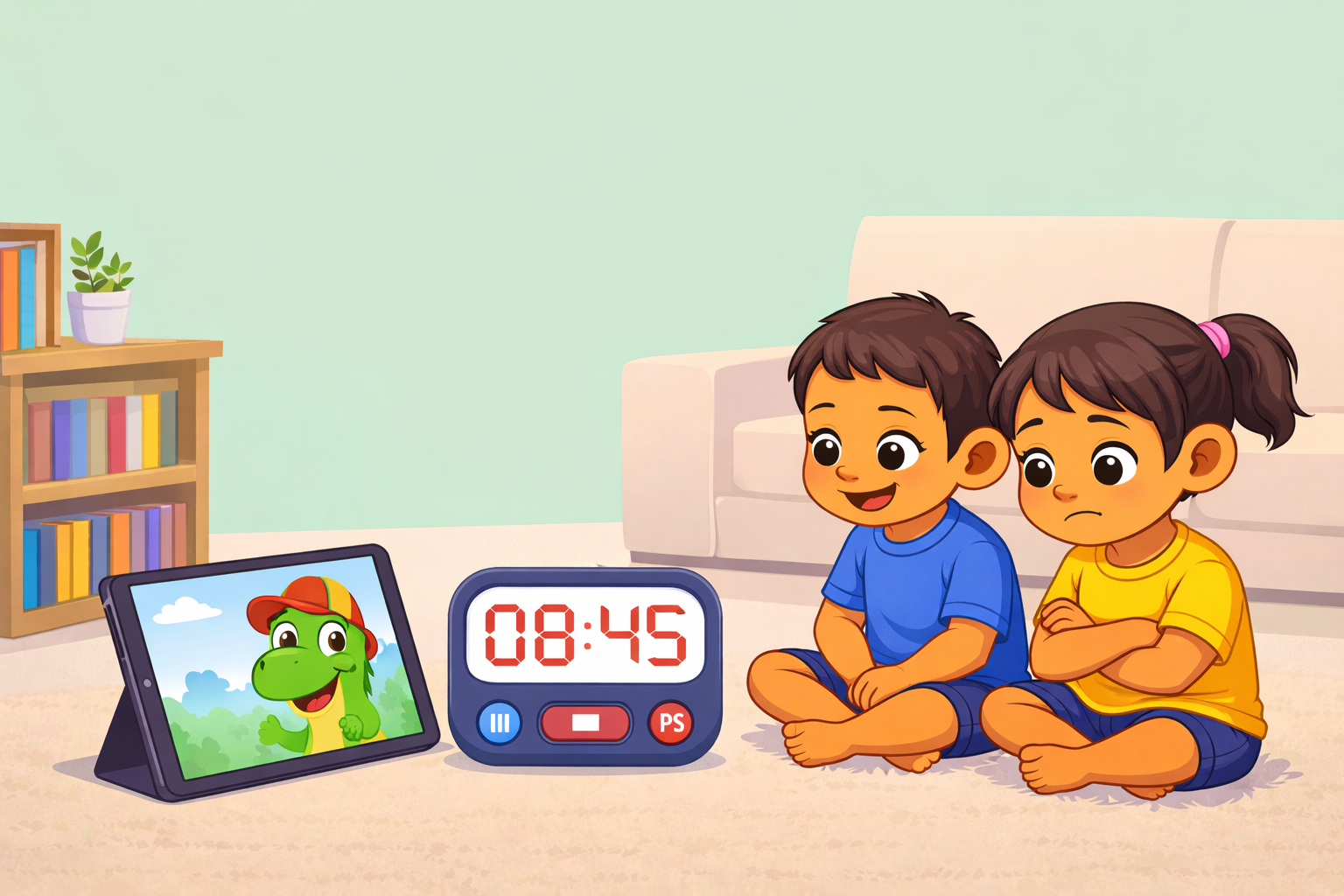
The first few days of a screen-free challenge are often the hardest. Screens fill space quietly, so when they’re gone, the absence feels loud.
Families commonly notice:
Boredom or restlessness
Requests for screens out of habit
Heightened emotions
Awkward stretches of unstructured time
This phase is normal. It doesn’t mean the experiment is failing — it means adjustment is happening.
What Kids Often Discover During the Week
Once the initial discomfort fades, many kids begin finding their own rhythm. Without screens as the default option, creativity and initiative often surface naturally.
Parents frequently observe kids:
Inventing new games
Returning to old toys
Spending more time outdoors
Engaging more deeply in play
These shifts align closely with ideas in Screen-Free Alternatives That Still Feel Fun, where joy doesn’t depend on devices.
What Parents Tend to Notice About Themselves
A screen-free week doesn’t just change kids’ behavior — it changes adults’ awareness too. Parents often notice how often screens act as fillers, escapes, or stress relievers.
Common parent reflections include:
How often phones are checked automatically
How quiet moments feel without a device
How attention shifts during conversations
How evenings slow down
These insights connect naturally with Digital Role Modeling: How Your Own Habits Shape Theirs, where awareness leads to intentional change.
Emotional Shifts That Appear Midweek
Around the middle of the week, many families notice subtle emotional changes. Without constant stimulation, emotions sometimes surface more clearly.
This can look like:
Deeper conversations
More expressive play
Occasional emotional releases
Increased need for connection
Rather than avoiding these moments, the experiment invites families to respond with presence instead of distraction.
How Family Dynamics Often Change
Without screens pulling attention in different directions, family rhythms often shift. Some families feel closer; others notice long-standing friction more clearly.
Common changes include:
More shared time
Fewer interruptions
Increased collaboration
Occasional tension from togetherness
These observations are valuable. They show where connection is strong — and where support or structure may be needed.
Using the Week to Reset Media Habits
A screen-free experiment isn’t meant to eliminate technology forever. It’s meant to inform what comes after.
Many families use insights from the week to:
Reintroduce screens more intentionally
Create clearer boundaries
Reduce background media
Prioritize shared screen experiences
This reflection pairs well with Encouraging Balance Between Tech and Real-World Play, where balance replaces extremes.
When a Full Week Feels Like Too Much
Not every family is ready for a full week — and that’s okay. Even partial challenges can be meaningful.
Alternatives include:
A weekend without screens
Screen-free evenings only
One device-free room
A daily screen-free block
The length matters less than the intention. Any pause can create awareness.
Turning the Experiment Into Long-Term Insight
The real value of a screen-free week isn’t what happens during it — it’s what families carry forward afterward.
Families who reflect together often ask:
What did we enjoy most?
What was hardest?
What do we want to keep?
What do we want to change?
At Fuzzigram, we believe experimentation builds confidence. A screen-free week isn’t about restriction — it’s about discovery. When families pause screens with curiosity instead of fear, they gain insight, connection, and clarity that lasts long after the experiment ends.
Screens don’t have to disappear to be healthier. Sometimes, they just need a break.
This content is for educational purposes and is not a substitute for professional medical or psychological advice.