Turning Screen Time Into Learning Time
Turning Screen Time Into Learning Time
Rethinking What “Learning Time” Really Means
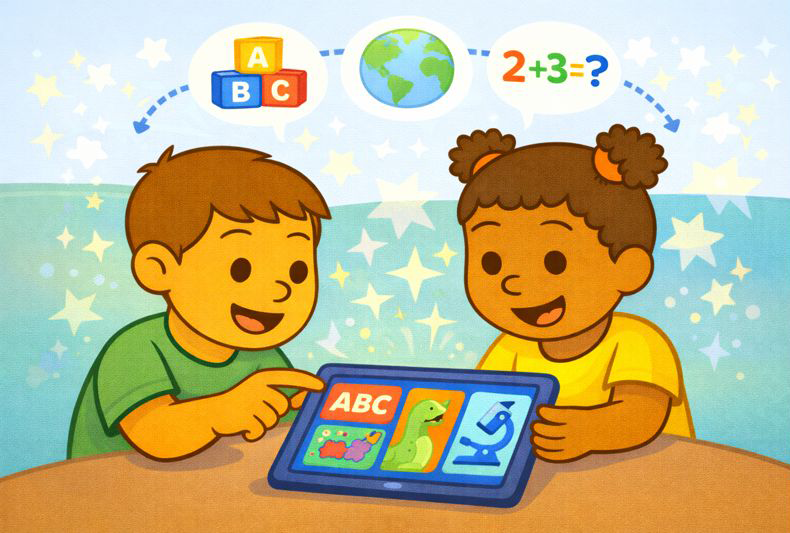
For many families, screen time and learning time feel like opposites. Learning is often imagined as books, worksheets, or hands-on activities, while screens are seen as entertainment or distraction. In reality, learning doesn’t depend on the format — it depends on engagement.
Children learn when they are curious, focused, and emotionally present. Screens can support that state when they’re used intentionally. The goal isn’t to turn every screen moment into a lesson, but to recognize when and how screens can reinforce skills kids are already developing.
When families shift from counting minutes to shaping experiences, screen time becomes far more meaningful.


What Makes Screen Time Educational
Not all screen time leads to learning — and that’s okay. Learning-focused screen time has a few consistent qualities that set it apart.
Educational screen time typically:
Encourages thinking rather than passive watching
Invites interaction or reflection
Builds on real-world skills
Has a clear beginning and end
When screens are used with intention, they can support language, problem-solving, creativity, and emotional understanding without overwhelming kids.
Aligning Screen Use With Developmental Goals
The most effective learning happens when screen experiences match a child’s developmental stage and interests.
Parents often see the biggest benefits when screen content:
Reinforces skills kids are already practicing
Matches attention span and emotional maturity
Supports curiosity rather than rushing it
This approach connects closely with The Role of Technology in Early Learning: Finding the Sweet Spot, where balance and readiness matter more than early exposure.
Screens work best as a bridge — not a shortcut — to learning.
Choosing Content That Invites Active Engagement
Learning-focused screen time isn’t about what kids watch — it’s about what they do while watching or interacting.
Engaging content often:
Asks questions or prompts responses
Encourages imitation, movement, or problem-solving
Allows kids to pause, repeat, or explore
Leaves space for imagination
When content invites participation, learning naturally follows.
The Power of Co-Viewing and Conversation
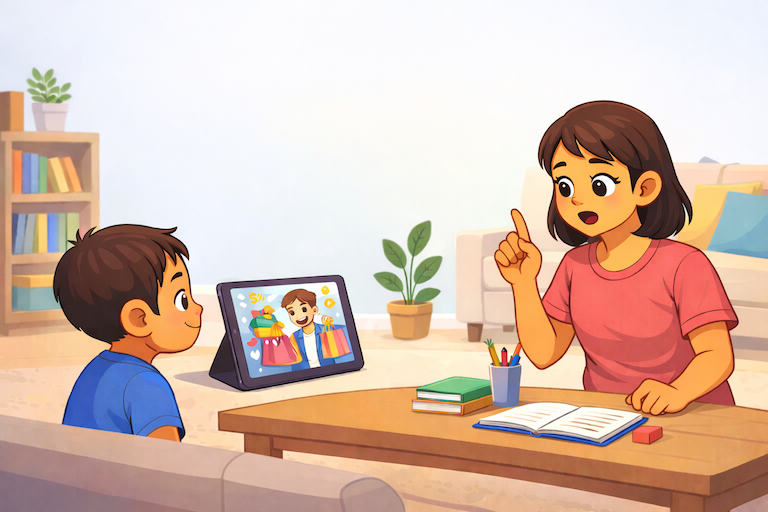
One of the simplest ways to turn screen time into learning time is to share it. Even brief moments of co-viewing can deepen understanding.
When adults co-view, they can:
Ask open-ended questions
Clarify confusing moments
Connect screen content to real life
Model curiosity and reflection
This shared approach reinforces ideas in The Hidden Power of Co-Viewing: Watching Together Builds Connection, where conversation transforms viewing into learning.
Learning doesn’t require a lecture — it requires presence.
Using Screens as a Starting Point, Not the End
Screens are often most powerful when they spark learning rather than contain it. A short video or app experience can lead to rich offline exploration.
Families often extend learning by:
Acting out stories or concepts afterward
Drawing or building inspired by what they saw
Singing songs or repeating new vocabulary
Asking “what would happen if…” questions
This shift keeps screens in a supportive role and prevents them from replacing hands-on play.
Building Learning Routines Around Screen Time
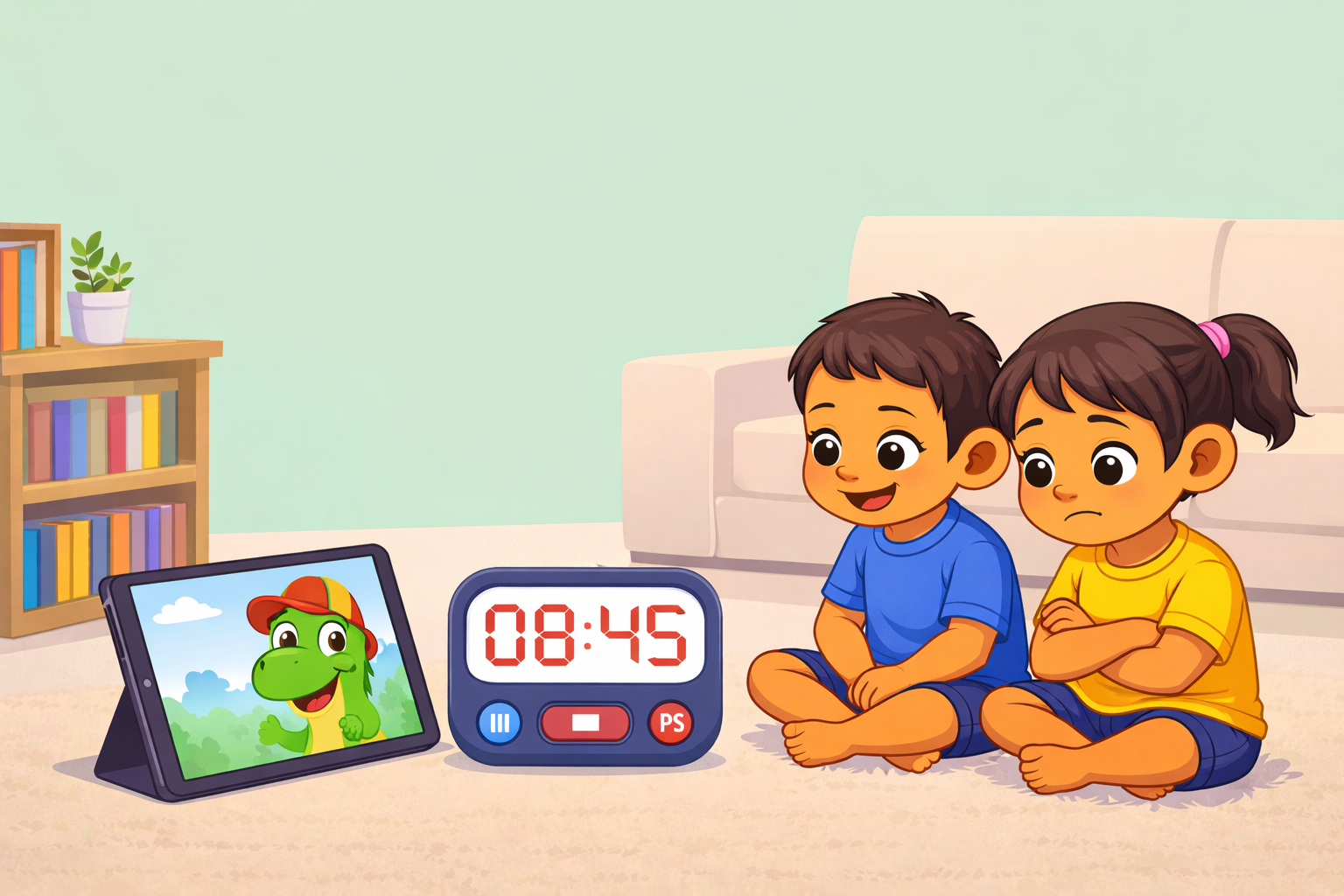
Learning is more likely to stick when screen time follows predictable rhythms. Random, on-demand use rarely supports deep engagement.
Helpful routines might include:
A short educational show after school
A learning app paired with quiet time
A digital story before reading together
When screen use has a place in the day, children know what to expect — and are more open to transitioning away when time ends.
Watching for Signs That Learning Is Happening
Learning through screens doesn’t always look serious or focused. Often, it shows up later — in play, conversation, or curiosity.
Signs that screen time is supporting learning include:
Kids asking questions afterward
Repeating ideas or vocabulary
Incorporating themes into play
Wanting to explore topics further
These signs matter more than whether kids can recite facts or complete levels.
Avoiding the Pressure to Make Screens “Productive”
One common trap is feeling like all screen time must be educational to be worthwhile. This pressure can drain the joy from learning — and from parenting.
It’s okay for screens to sometimes:
Entertain
Relax
Provide connection or rest
Balancing learning-focused screen time with downtime aligns naturally with Screen-Free Alternatives That Still Feel Fun, where variety supports healthy development.
Learning thrives in balance, not constant optimization.
Adjusting When Screen Time Stops Supporting Learning
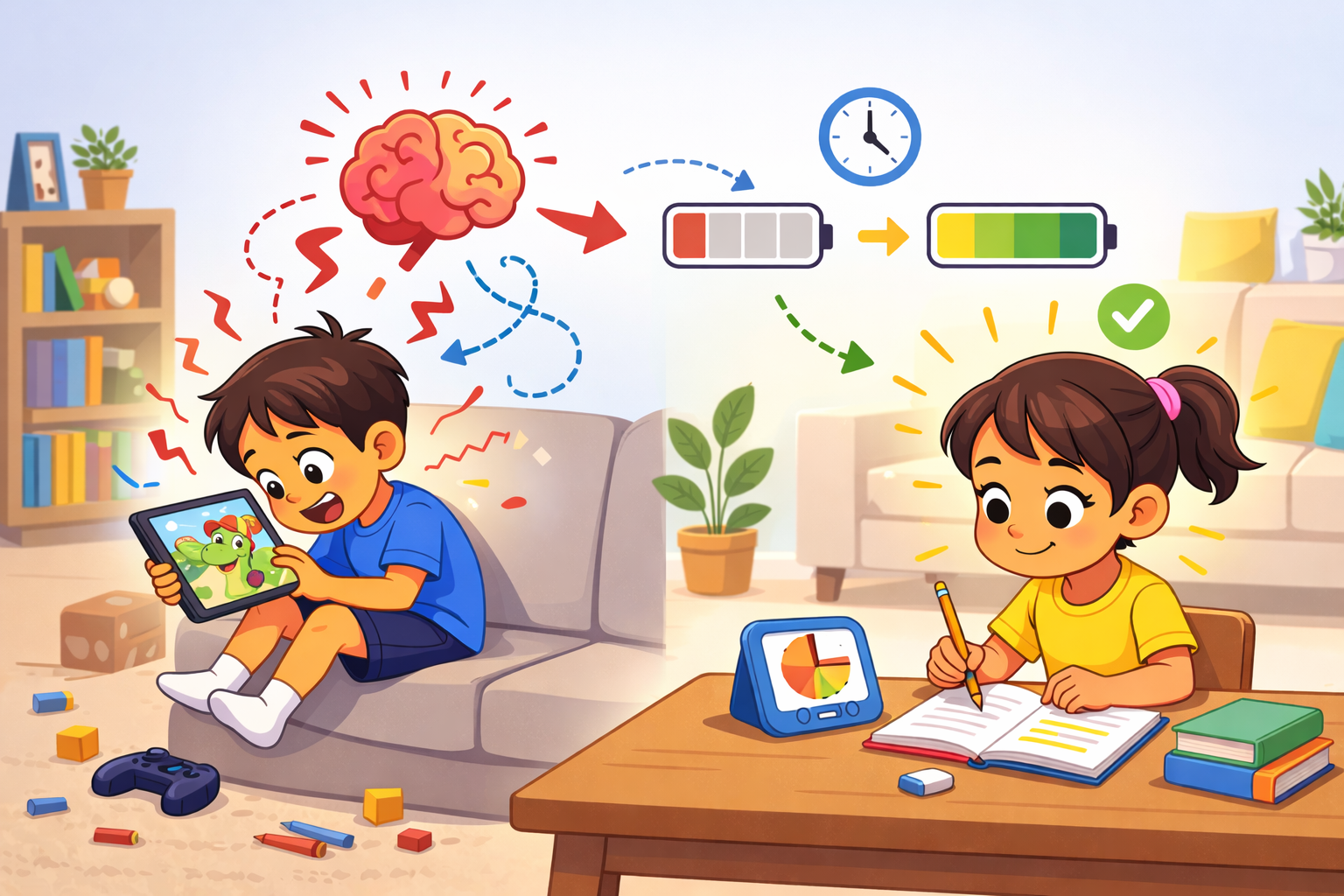
Even high-quality content can lose its learning value if it becomes overstimulating or habitual.
It may be time to adjust when:
Kids disengage quickly
Transitions become difficult
Content feels frantic or repetitive
Screen use replaces play or connection
Small changes — like shortening sessions or pairing screens with calming activities — often restore balance without eliminating screens altogether.
Letting Learning Stay Curious and Human
The most meaningful learning doesn’t come from screens or books alone — it comes from curiosity, connection, and exploration. Screens can support that process when they’re used with intention and flexibility.
Families who successfully turn screen time into learning time often:
Focus on experience over outcomes
Stay involved without hovering
Adjust based on their child’s cues
Value curiosity over productivity
At Fuzzigram, we believe learning should feel engaging, playful, and human. When screens are used thoughtfully, they don’t compete with learning — they support it, opening new doors for discovery while leaving plenty of room for imagination, play, and connection.
This content is for educational purposes and is not a substitute for professional medical or psychological advice.