Teaching Kids About Online Privacy (Without Fear)
Teaching Kids About Online Privacy (Without Fear)
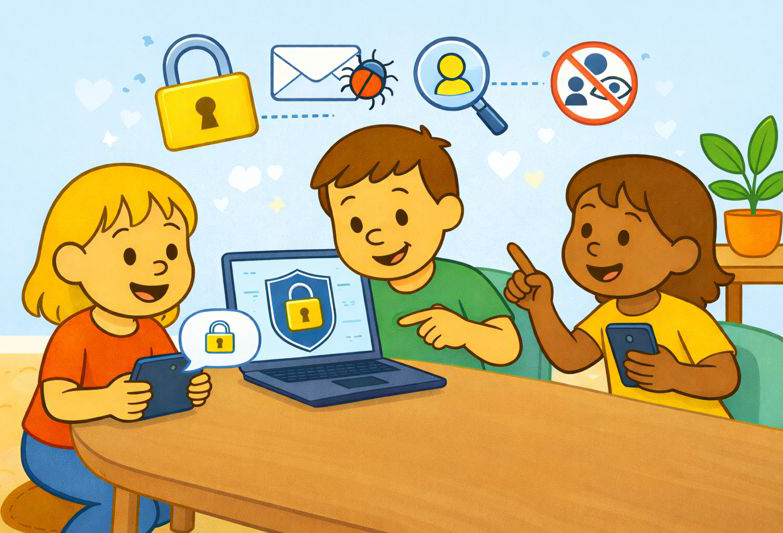
Why Online Privacy Should Be Taught Gently
When adults think about online privacy, fear often sneaks into the conversation. Headlines, warnings, and worst-case scenarios can make the digital world feel dangerous — especially when it comes to kids. But children don’t need fear to learn privacy. They need clarity, confidence, and guidance they can actually understand.
Teaching online privacy is less about protecting children from everything and more about helping them develop awareness over time. Just like teaching kids to cross the street or talk to strangers, privacy skills grow gradually. When the tone stays calm and supportive, kids are far more likely to absorb the message and ask questions later.
A fear-free approach builds trust. It teaches children that they can come to adults when something feels confusing or uncomfortable — which is the most important privacy skill of all.


What “Privacy” Means to a Child
Adults often think of privacy in abstract or technical terms, but children experience it much more simply. For kids, privacy is about personal space, boundaries, and choice.
At its core, online privacy for children means:
Knowing which information is personal
Understanding that not everything needs to be shared
Recognizing when something feels uncomfortable
Knowing they can ask for help
When privacy is explained using familiar, real-world ideas — like keeping a bedroom door closed or not sharing a secret — it becomes much easier to understand. These concepts lay the groundwork for digital awareness without overwhelming kids.
Starting with Everyday Boundaries
Before kids can understand online privacy, they need to understand boundaries offline. Everyday moments provide natural teaching opportunities long before devices enter the picture.
You can reinforce privacy skills when children:
Decide who can see their drawings or photos
Ask before touching someone else’s belongings
Choose when they want alone time
Learn that some information is just for family
These small lessons help kids internalize the idea that boundaries are normal and healthy. When privacy later shows up in digital spaces, it feels like an extension of what they already know — not a brand-new rule set.
This foundation connects closely with ideas explored in Digital Role Modeling: How Your Own Habits Shape Theirs, where children learn most by watching how adults respect boundaries themselves.
Explaining Personal Information in Kid-Friendly Ways
Children don’t need a long list of rules to understand personal information. They need simple categories and repeated reinforcement.
A helpful way to frame personal information is by explaining that some details are:
Okay to share (favorite color, hobbies)
Only for trusted people (full name, school name)
Private and protected (address, passwords)
Using everyday language keeps the conversation approachable. Instead of saying “never,” focus on “let’s check together first.” This approach keeps kids engaged rather than defensive.
Teaching Privacy Without Creating Fear
Fear-based messaging often backfires. When kids feel scared, they either shut down or become secretive. Calm, matter-of-fact conversations work far better.
A fear-free privacy approach includes:
Avoiding graphic or extreme examples
Emphasizing safety skills over danger
Reassuring kids that adults are there to help
Normalizing mistakes as part of learning
This supportive tone aligns closely with Building Digital Resilience: Helping Kids Handle Online Challenges, where confidence and coping skills are prioritized over avoidance.
When children feel secure, they’re more likely to speak up if something doesn’t feel right.
Helping Kids Understand Digital Footprints
The idea that things can last online can be tricky for kids to grasp. Abstract explanations rarely stick, but concrete comparisons do.
Helpful ways to explain digital footprints include:
Comparing posts to footprints in wet sand
Talking about photos as “copies” that can travel
Explaining that some things are hard to erase
The goal isn’t to scare children into silence — it’s to help them pause and think. When kids understand that sharing is a choice with impact, they develop awareness without anxiety.
Privacy Skills Change as Kids Grow
Online privacy education isn’t a one-time conversation. It evolves as children gain independence, access new platforms, and mature emotionally.
As kids grow, privacy lessons often shift toward:
Managing usernames and passwords
Understanding ads and data collection
Navigating group chats and comments
Recognizing pressure to overshare
These age-appropriate shifts fit naturally alongside guidance in The Science of Screen Time: How Devices Affect Kids’ Brains, where development matters more than strict timelines.
Revisiting privacy topics regularly keeps them relevant and grounded.
Using Media Moments as Teaching Opportunities
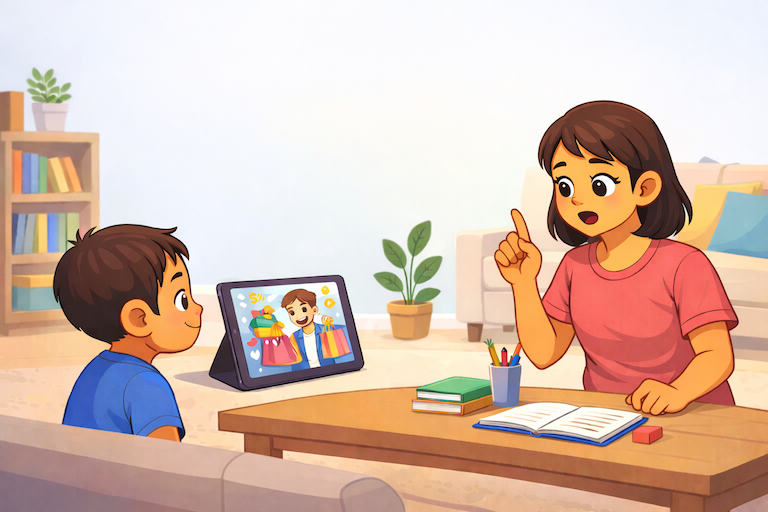
Some of the best privacy conversations happen in the moment — not during planned “talks.” A show, game, or app can open the door naturally.
You might pause to ask:
“What information did they share there?”
“Do you think that felt comfortable?”
“What would you do instead?”
These low-pressure questions invite reflection without judgment. Over time, kids start asking similar questions themselves — a sign that awareness is growing.
Modeling Privacy Through Your Own Behavior
Children pay close attention to how adults share information. They notice when photos are posted without permission or when devices interrupt conversations.
Privacy-aware modeling includes:
Asking kids before sharing their photos
Explaining why you keep certain information private
Narrating your own digital decisions
Respecting children’s personal boundaries
This modeling reinforces the idea that privacy isn’t about control — it’s about respect. It also mirrors principles in Raising Digital Citizens: Teaching Online Safety and Kindness, where empathy and responsibility go hand in hand.
Creating a Family Privacy Culture
When privacy is treated as a shared value, kids feel supported rather than monitored. Family agreements help reinforce expectations without fear.
Families often benefit from:
Clear rules about sharing photos or videos
Open conversations about new apps
Consistent check-ins as kids grow
A promise that kids won’t get in trouble for asking for help
This approach makes privacy a normal part of family life — not a set of warnings kids try to avoid.
Confidence Is the Goal, Not Control
The ultimate goal of teaching online privacy isn’t perfect behavior. It’s confident decision-making. Kids who understand privacy feel empowered rather than restricted.
They learn:
They have choices
Their boundaries matter
Mistakes are opportunities to learn
Trusted adults are always available
At Fuzzigram, we believe the healthiest digital habits are built through trust, conversation, and steady guidance. When kids learn about online privacy without fear, they grow into thoughtful, capable digital citizens — ready to navigate the online world with confidence and care.
This content is for educational purposes and is not a substitute for professional medical or psychological advice.