How to Choose Podcasts and Audiobooks for Kids
How to Choose Podcasts and Audiobooks for Kids
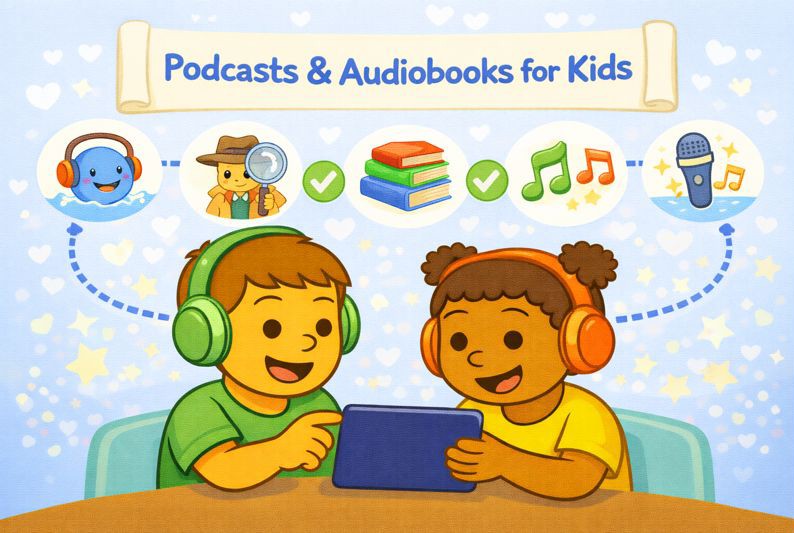
Why Audio Media Deserves More Attention
When families think about kids and media, screens usually dominate the conversation. Audio, on the other hand, often feels invisible — playing quietly in the background during car rides, chores, or bedtime. But podcasts and audiobooks can be some of the most powerful learning tools available to kids.
Audio media invites children to listen, imagine, and focus without visual stimulation. It strengthens attention, supports language development, and leaves room for creativity. Unlike many screen-based experiences, audio allows kids to move, draw, build, or relax while learning happens in the background.
Choosing the right audio content isn’t about finding what’s “educational enough.” It’s about finding voices, stories, and formats that respect a child’s age, attention span, and emotional world.


Understanding the Difference Between Podcasts and Audiobooks
While podcasts and audiobooks are both audio-based, they serve slightly different purposes — and understanding the difference helps families choose intentionally.
In general:
Audiobooks offer longer, continuous narratives with structured storytelling
Podcasts tend to be episodic, topic-based, or conversational
Audiobooks often support deep immersion and sustained listening, while podcasts are great for curiosity, variety, and shorter listening windows. Many families use both, depending on the moment and the child.
Matching Audio Content to Your Child’s Development
Just like books or shows, audio content works best when it aligns with a child’s developmental stage — not just their interests.
When choosing podcasts or audiobooks, consider:
Length of episodes or chapters
Complexity of language and ideas
Emotional tone and intensity
Pacing and narration style
These considerations connect closely with How to Choose Safe, Age-Appropriate Media for Kids, where suitability matters more than popularity.
Younger children often thrive with repetition, simple plots, and familiar voices. Older kids may enjoy layered stories, interviews, or informational formats that invite curiosity.
Why Voice and Pacing Matter So Much
In audio media, voice is the experience. The narrator or host shapes how children feel while listening — calm, curious, excited, or overwhelmed.
High-quality kids audio typically features:
Clear, expressive narration
Warm, engaging tone
Predictable pacing
Minimal background noise
Fast, frantic delivery can feel overstimulating, especially for younger listeners. Slower pacing allows kids to process ideas, visualize scenes, and stay regulated.
Choosing Content That Encourages Imagination
One of the greatest benefits of audio media is that it leaves visuals to the child’s imagination. Unlike screens, audio invites kids to create mental images and interpretations.
Imagination-friendly audio often:
Describes scenes vividly without overexplaining
Leaves space between ideas
Uses sound intentionally rather than constantly
This imaginative engagement fits beautifully alongside ideas in Encouraging Balance Between Tech and Real-World Play, where media supports — rather than replaces — creativity.
Deciding When and Where Audio Fits Best
Audio media shines in specific moments of the day. Choosing the right time can make the difference between engagement and distraction.
Families often use podcasts and audiobooks:
During car rides
While drawing or building
During quiet time or rest
As part of bedtime routines
Replacing background TV with intentional audio — as discussed in Replacing Background TV with Intentional Family Soundscapes — helps families reduce visual noise while still enjoying stories and learning.
Evaluating Educational Value Without Overthinking
Not every podcast or audiobook needs to teach facts to be valuable. Learning also happens through storytelling, humor, and emotional exploration.
Educational value may show up as:
New vocabulary
Curiosity-driven questions
Emotional insight
Improved listening skills
This perspective aligns with The Role of Technology in Early Learning: Finding the Sweet Spot, where depth and engagement matter more than labels.
If a child is listening attentively, asking questions, or replaying favorite moments, learning is likely happening.
Listening Together vs. Listening Independently
Audio media can be enjoyed both independently and together — and each has its benefits.
Shared listening can:
Spark conversation
Help parents gauge content fit
Support emotional processing
Independent listening can:
Build focus and attention
Encourage self-directed learning
Provide calm personal space
Balancing both allows families to stay connected without hovering.
Avoiding Audio That Feels Overstimulating
While audio is generally gentler than screens, not all audio content is calming or supportive.
It may be time to reconsider a podcast or audiobook if:
Sound effects are constant or loud
Pacing feels rushed
Kids seem dysregulated afterward
Listening replaces sleep or play
Choosing calmer formats helps audio remain a regulating, supportive tool rather than another source of overload.
Letting Kids Help Choose — With Guidance
Children are more engaged when they feel ownership over their media choices. Letting kids participate in selecting podcasts or audiobooks builds confidence and interest.
Helpful approaches include:
Offering a small, curated selection
Letting kids sample before committing
Talking about what they like or don’t like
Guidance still matters — but choice within boundaries builds trust and motivation.
Building an Audio Routine That Grows With Your Child
Podcasts and audiobooks work best when they become part of a rhythm, not a filler for every quiet moment. Over time, families often discover favorite genres, narrators, or formats that grow alongside their children.
A thoughtful audio routine:
Supports listening skills
Encourages imagination
Reduces screen reliance
Feels calming and enjoyable
At Fuzzigram, we believe audio media offers something rare in the digital world: space. Space to imagine, to listen deeply, and to learn without visual overload.
When families choose podcasts and audiobooks with intention, audio becomes more than background noise — it becomes a meaningful part of childhood learning, curiosity, and calm.
This content is for educational purposes and is not a substitute for professional medical or psychological advice.