How to Create Family Tech Agreements That Work
How to Create Family Tech Agreements That Work
Why Families Need Agreements — Not Just Rules
Many families start with tech rules: time limits, device bans, or firm schedules. While rules can help, they often lead to power struggles, negotiations, and frustration — especially as kids grow older.
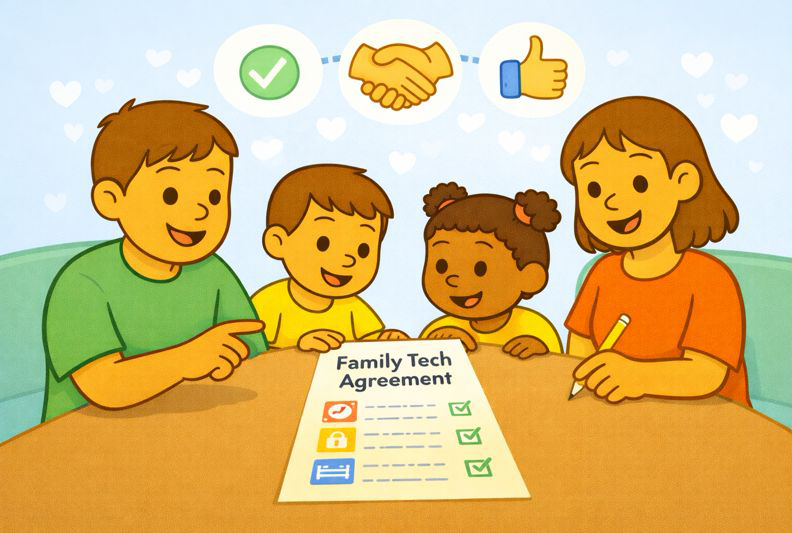
Family tech agreements take a different approach. Instead of focusing only on control, agreements focus on shared understanding. They help families clarify values, expectations, and responsibilities around technology in a way that feels collaborative rather than reactive.
An agreement isn’t about perfection or constant enforcement. It’s about creating a shared framework that guides decisions — even when situations change.


What Makes a Tech Agreement Different From a Rule
Rules are typically one-sided. Agreements are mutual. This difference matters, especially when kids are old enough to notice fairness and autonomy.
A tech agreement:
Explains the why behind boundaries
Includes input from both adults and kids
Evolves as children grow
Emphasizes responsibility over punishment
When kids feel heard, they’re more likely to respect limits — even when they don’t love them. Agreements turn technology into a shared responsibility instead of a constant battleground.
Starting With Family Values Around Technology
Before deciding on screen time limits or device locations, it helps to step back and talk about what your family values most.
Many families find clarity by asking:
What role do we want technology to play in our lives?
How do we want tech to support learning and connection?
What do we want to protect (sleep, play, relationships)?
These conversations naturally connect with ideas in How to Create a Family Media Plan That Actually Works, where values shape structure instead of the other way around.
When values are clear, agreements feel purposeful rather than arbitrary.
Involving Kids in the Process
Tech agreements work best when kids are part of creating them. This doesn’t mean kids set all the rules — it means their perspectives are considered.
Involving kids might look like:
Asking what feels hard about current tech limits
Discussing what helps them feel balanced
Letting them suggest ideas within clear boundaries
Even young children benefit from simple involvement. When kids understand expectations ahead of time, they’re less likely to push against them later.
Keeping Agreements Clear and Specific
Vague agreements are hard to follow and harder to enforce. Clear, concrete expectations reduce confusion and conflict.
Effective tech agreements often include clarity around:
When devices can be used
Where devices are allowed
What happens when time ends
How exceptions are handled
This clarity pairs closely with Tech Boundaries That Stick: Setting Limits Without Meltdowns, where predictability helps children feel secure rather than controlled.
Planning for Transitions — Not Just Usage
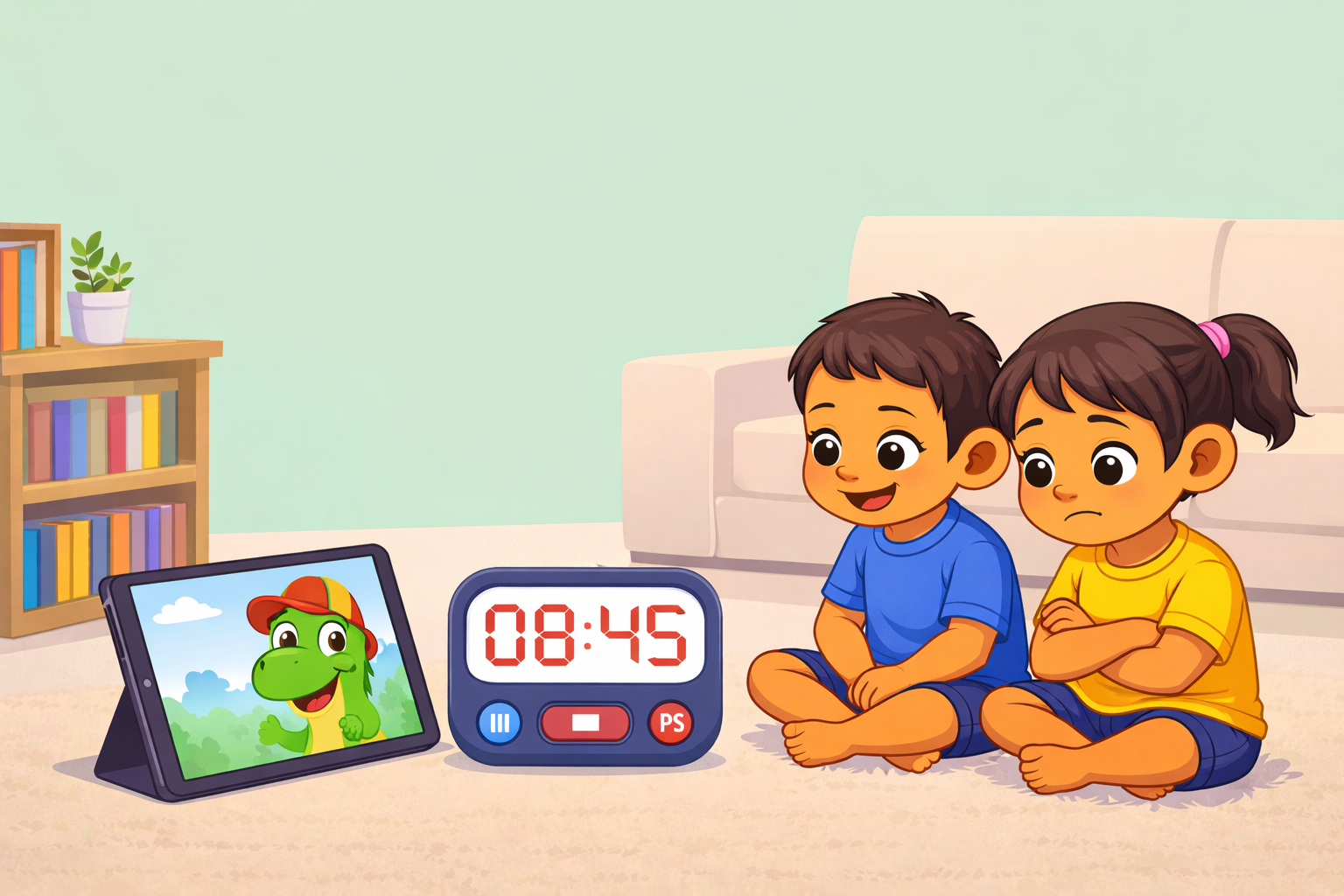
One of the biggest pain points in family tech use isn’t starting screen time — it’s ending it. Agreements that ignore transitions often fall apart quickly.
Helpful agreements plan for:
Advance warnings before time ends
Clear signals for stopping
Calm follow-up activities
Consistent responses from adults
These strategies align naturally with Helping Kids Transition Away from Screens Peacefully, where emotional regulation matters as much as timing.
When transitions are predictable, resistance decreases.
Addressing What Happens When Agreements Break Down
No agreement works perfectly all the time. What matters is how families respond when things don’t go as planned.
Healthy responses often include:
Calm reminders instead of lectures
Logical consequences connected to the agreement
Problem-solving conversations afterward
Adjustments if expectations were unrealistic
Treating breakdowns as learning moments — not failures — keeps agreements flexible and realistic.
Modeling the Agreement as Adults
Children pay close attention to whether adults follow the same principles they’re asked to follow. A family tech agreement loses credibility if it only applies to kids.
Modeling might include:
Putting devices away during family time
Explaining when and why you use technology
Respecting agreed-upon screen-free moments
This modeling reinforces ideas in Digital Role Modeling: How Your Own Habits Shape Theirs, where daily behavior speaks louder than rules ever could.
Revisiting and Updating Agreements Over Time
Technology changes. Kids grow. Schedules shift. A strong tech agreement is meant to evolve.
Many families revisit agreements:
At the start of a new school year
When a child gains a new device
During periods of increased stress or transition
Revisiting the agreement together reinforces that it’s a living document — not a one-time contract.
Keeping Agreements Focused on Balance, Not Control
The goal of a tech agreement isn’t to eliminate screens or enforce constant limits. It’s to support balance.
Balanced agreements:
Protect sleep, play, and connection
Allow flexibility for special situations
Encourage self-awareness rather than compliance
When kids understand that balance — not obedience — is the goal, they’re more likely to internalize healthy habits over time.
Building Trust Through Consistency and Communication
At its core, a family tech agreement is about trust. Trust that adults will guide fairly. Trust that kids can learn responsibility. Trust that technology can have a healthy place in family life.
Families who approach agreements thoughtfully often notice:
Fewer daily power struggles
More open conversations about tech
Stronger emotional regulation
Greater mutual respect
At Fuzzigram, we believe the best tech habits grow from clarity, connection, and calm consistency. When families create tech agreements together — and treat them as tools rather than rules — technology becomes easier to manage and far less stressful to live with.
This content is for educational purposes and is not a substitute for professional medical or psychological advice.