Managing Screen Time During Holidays or Travel
Managing Screen Time During Holidays or Travel

Why Holidays and Travel Change Everything
Holidays and travel disrupt routines — and that’s part of what makes them special. Bedtimes shift, schedules loosen, and expectations soften. Screens often step in to fill gaps: long car rides, delayed flights, unfamiliar environments, or moments when adults need a break.
Managing screen time during these periods isn’t about enforcing “normal rules” in abnormal situations. It’s about recognizing that needs change — and adjusting thoughtfully so screens support the experience instead of dominating it.
When families plan for flexibility instead of perfection, screen decisions become far less stressful.


Letting Go of Everyday Screen Expectations
Trying to maintain regular screen limits during holidays or travel can create unnecessary tension. What works during a school week may not make sense on a road trip or at a relative’s house.
A healthier mindset includes:
Accepting temporary changes without guilt
Viewing screens as tools, not rewards
Planning for re-entry after the break
Screens don’t have to be all or nothing. Temporary shifts don’t undo long-term habits — especially when families return to routine with intention.
Deciding What Role Screens Will Play
Before the holiday or trip begins, it helps to decide what role screens will serve. Are they for downtime, connection, entertainment, or necessity?
Some families choose to use screens:
During long travel segments
As quiet downtime in unfamiliar settings
For shared experiences like movies
Clarifying the purpose ahead of time prevents screens from becoming the default filler for every moment.
This clarity reflects principles in How to Create Digital “Downtime” Routines That Stick, where intention replaces impulse.
Planning for Travel-Specific Screen Needs
Travel often presents unique challenges: confined spaces, waiting periods, and unpredictable delays. Screens can be incredibly helpful — when used strategically.
Helpful travel-specific approaches include:
Downloading content in advance
Choosing longer-form content over rapid clips
Pairing screen time with movement breaks
Setting expectations before screens start
Planning ahead reduces stress for both kids and adults — especially when internet access is limited or schedules change suddenly.
Using Screens to Support Connection, Not Escape
During holidays, screens can either pull families apart or bring them together. Shared screen experiences often feel more grounding than individual ones.
Families sometimes choose:
Group movie nights
Shared games or trivia apps
Watching family videos or photos together
These shared moments echo ideas in Family Movie Nights That Spark Conversations (Not Just Screen Time), where screens become a place for connection rather than isolation.
Creating Screen-Free Moments That Still Feel Special
Screen-free time doesn’t need to feel like deprivation — especially during holidays. In fact, some of the most memorable moments happen when screens are intentionally set aside.
Screen-free holiday moments might include:
Shared meals without devices
Outdoor walks or sightseeing
Simple games or storytelling
Quiet moments of rest
These intentional pauses help balance increased screen use elsewhere, aligning with Encouraging Balance Between Tech and Real-World Play.
Helping Kids Transition In and Out of Screen Time
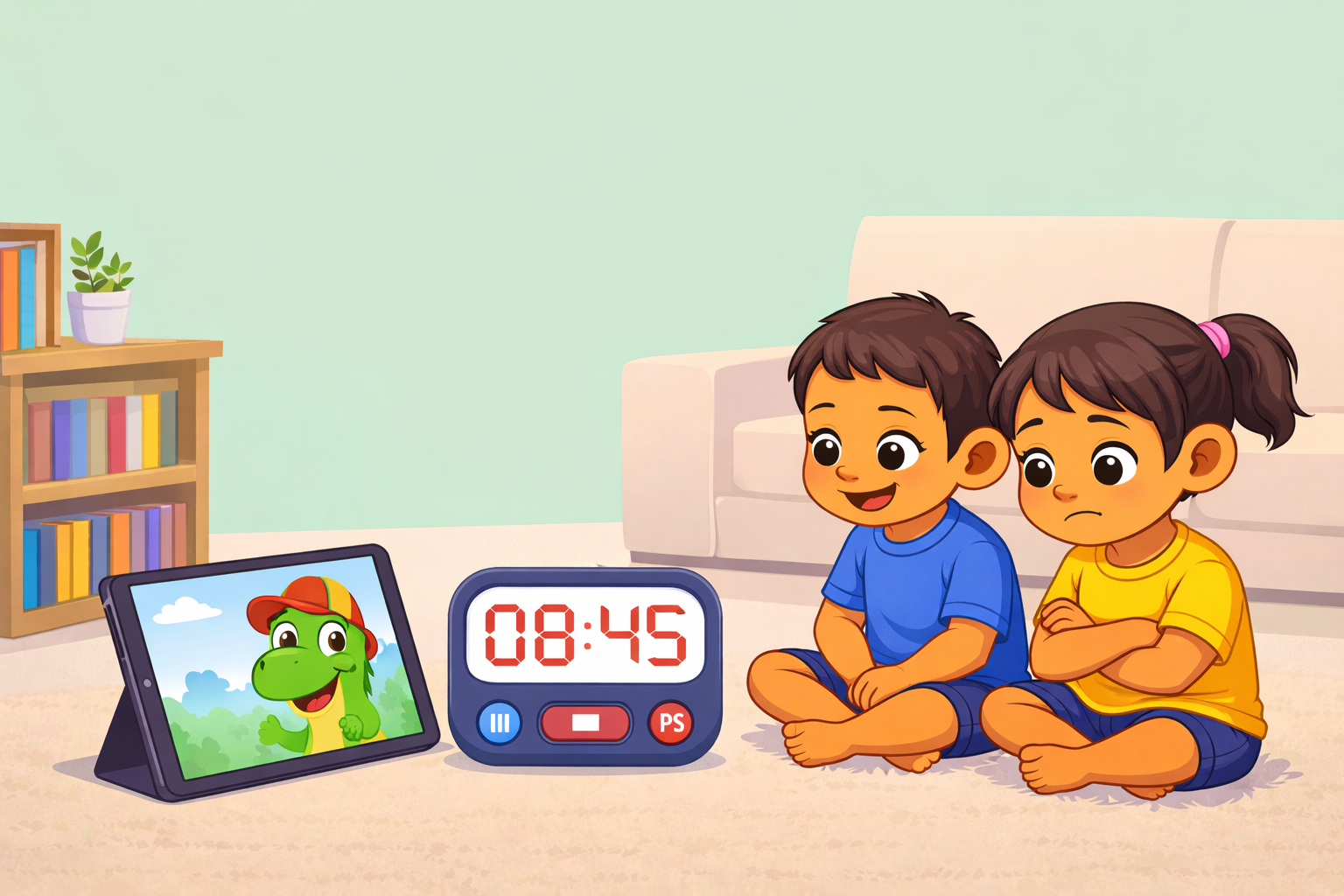
Transitions matter even more during travel and holidays, when kids are already navigating change. Abrupt cutoffs can escalate emotions quickly.
Supportive transitions include:
Giving advance notice before screens end
Pairing screens with a clear next activity
Using familiar cues or phrases
Predictability within flexibility helps kids feel secure — even when everything else feels different.
Handling Family Pressure and Differing Rules
Holidays often mean being around extended family with different screen philosophies. One household’s norms may clash with another’s — and kids notice.
Helpful strategies include:
Explaining your family’s approach calmly
Allowing some flexibility without abandoning values
Talking privately with kids about differences
These conversations help children understand that rules can vary by context — without creating confusion or resentment.
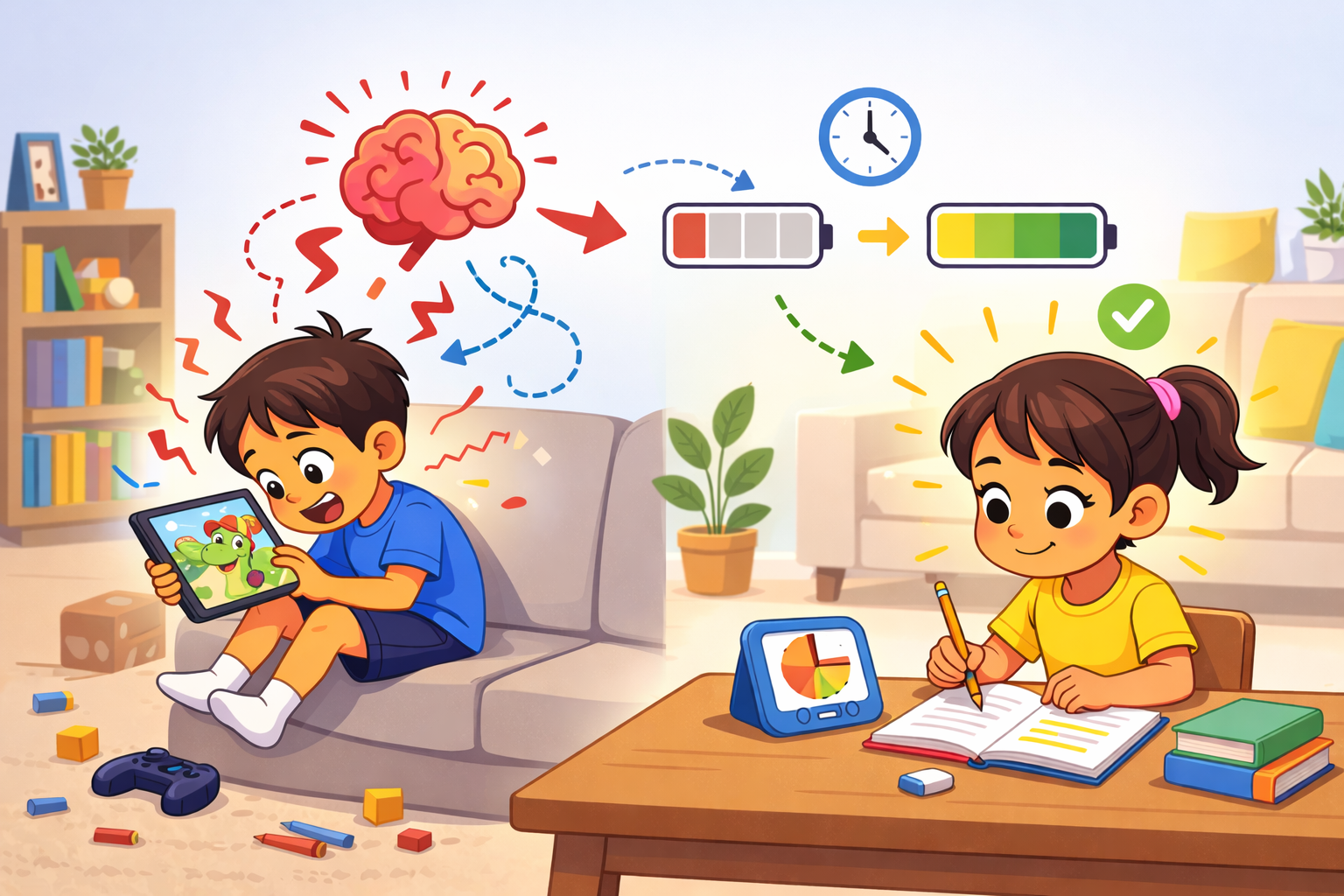
Watching for Signs of Overstimulation
With excitement, late nights, sugar, and travel fatigue, kids can become overstimulated quickly. Screens can either soothe or add to the overload.
Signs that screens may need adjusting include:
Increased irritability or meltdowns
Difficulty sleeping
Trouble transitioning away from screens
When these signs appear, it’s often helpful to shorten sessions or choose calmer content — rather than removing screens altogether.
Resetting After Holidays or Travel End
One of the most important parts of managing holiday screen time is what happens after. Returning to routine helps children feel grounded again.
Families often reset by:
Reintroducing normal screen schedules
Talking about what worked and what didn’t
Re-establishing screen-free spaces
Choosing Flexibility Without Losing Balance
Managing screen time during holidays or travel isn’t about rigid limits or unlimited access. It’s about flexibility guided by awareness.
Families who approach these moments thoughtfully often notice:
Less screen-related conflict
More presence during special moments
Easier transitions back to routine
Reduced parent guilt
At Fuzzigram, we believe holidays and travel are meant to expand experiences — not stress them. When screens are used intentionally, they support rest, connection, and sanity without overshadowing what truly matters.
Screens don’t have to disappear during special times. They just need thoughtful boundaries — and room for real life to shine through.
This content is for educational purposes and is not a substitute for professional medical or psychological advice.