Preparing Kids for the Digital Future With Mindfulness
Preparing Kids for the Digital Future With Mindfulness
Why the Digital Future Requires More Than Technical Skills
When parents think about preparing kids for the digital future, the focus often lands on skills — coding, typing, navigating apps, or understanding new platforms. While these skills matter, they aren’t what determine whether children thrive long-term in a tech-filled world.
The bigger challenge is how kids relate to technology. Can they notice when something is overwhelming? Can they pause before reacting? Can they use digital tools with intention rather than habit? These are mindfulness skills — and they’re becoming just as essential as digital literacy.
Preparing kids for the future isn’t about predicting the next app. It’s about helping them build awareness, self-regulation, and values that travel with them no matter how technology changes.


What Mindfulness Means in a Digital Context
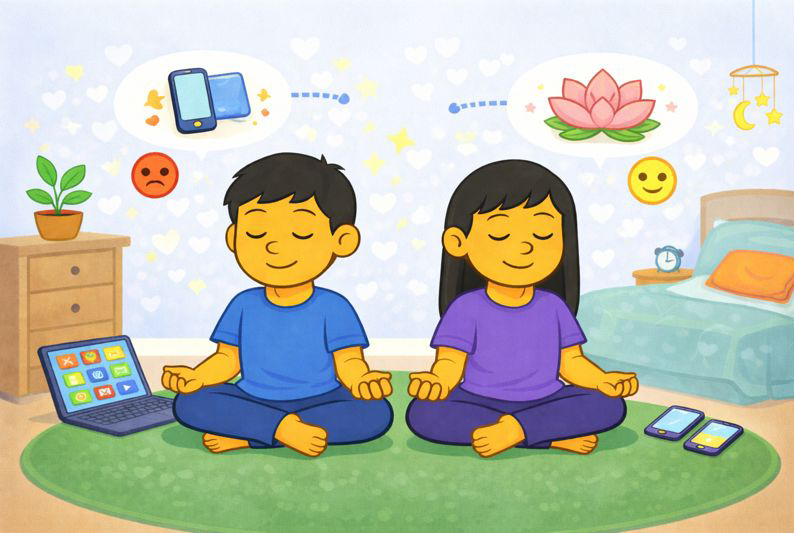
Mindfulness doesn’t mean meditation cushions or long moments of silence — especially for kids. In a digital context, mindfulness simply means awareness and choice.
Digitally mindful kids are learning to:
Notice how technology makes them feel
Recognize when they’re overstimulated or distracted
Pause before clicking, sharing, or reacting
Choose when to engage and when to step away
These small moments of awareness help children stay grounded in a world designed to pull attention outward.
Teaching Kids to Notice Their Internal Signals
One of the most important skills children can develop is the ability to notice what’s happening inside their bodies and minds while using technology.
Parents can help kids tune in by asking gentle questions like:
“How does your body feel after that?”
“Do you feel calm, excited, or tired right now?”
“Does this make it easier or harder to focus?”
This practice builds self-awareness without judgment. Over time, kids begin recognizing their own limits — a key skill for lifelong digital well-being.
Slowing Down in a Fast-Paced Digital World
Modern technology rewards speed: fast reactions, quick scrolling, instant responses. Mindfulness introduces an alternative rhythm — one that values pause and reflection.
Families can support slower digital habits by:
Choosing content with calmer pacing
Creating tech-free moments for rest
Encouraging reflection after media use
These ideas align closely with The Art of the Digital Detox: Restoring Balance as a Family, where intentional pauses help reset attention and emotion.
Slowing down isn’t about rejecting technology — it’s about creating space within it.
Helping Kids Respond Instead of React
Digital environments often provoke quick emotional reactions — excitement, frustration, comparison, or urgency. Mindfulness helps children learn the difference between reacting automatically and responding thoughtfully.
Mindful response skills include:
Pausing before replying or clicking
Taking a breath when emotions rise
Asking for help instead of escalating
These skills become especially important as kids grow older and engage with social platforms, messaging, and online communities.
Building Emotional Regulation Through Mindful Media Use
Mindfulness and emotional regulation go hand in hand. When kids learn to notice emotions early, they can manage them before they spiral.
Parents can support regulation by:
Naming emotions during media moments
Modeling calm responses to digital stress
Offering screen breaks before overwhelm hits
This emotional awareness connects naturally with Building Digital Resilience: Helping Kids Handle Online Challenges, where confidence grows through understanding and coping — not avoidance.
Modeling Mindfulness as Adults
Children don’t learn mindfulness from instructions alone. They learn it by watching how adults engage with technology in everyday life.
Mindful modeling might look like:
Putting the phone down during conversations
Naming when you’re choosing not to check notifications
Taking breaks when tech feels overwhelming
These everyday choices reinforce lessons explored in Digital Role Modeling: How Your Own Habits Shape Theirs, where children absorb habits long before they understand explanations.
Teaching Values That Guide Digital Choices
Mindfulness becomes even more powerful when it’s anchored to values. Values help kids decide why they use technology — not just how.
Families often emphasize values like:
Kindness and empathy online
Balance between digital and offline life
Respect for privacy and boundaries
Thoughtful sharing over impulse
When values are clear, kids have an internal compass that guides them through new digital spaces — even ones parents haven’t encountered yet.
Creating Mindful Digital Routines
Mindfulness grows through repetition. Predictable routines give kids structure that supports awareness rather than habit-driven use.
Mindful routines might include:
Checking in emotionally after screen time
Pairing screens with calming transitions
Ending media use with reflection or connection
These routines don’t need to be rigid. Their purpose is to create moments of awareness that slowly become second nature.
Preparing Kids for Digital Independence
As children grow, they will spend more time online without direct supervision. Mindfulness helps prepare them for that independence.
Digitally mindful kids are more likely to:
Recognize when something feels off
Pause before engaging in risky behavior
Seek support when unsure
Mindfulness builds internal boundaries — not just external rules.
Raising Grounded Kids in a Changing Digital World
The digital future will continue to evolve in ways none of us can fully predict. New platforms will emerge. Old ones will disappear. But the core challenges — attention, emotion, and balance — will remain.
Families who prioritize mindfulness often notice:
Stronger self-awareness in kids
Healthier emotional regulation
More intentional tech habits
Greater confidence navigating change
At Fuzzigram, we believe the best preparation for the digital future isn’t control or fear — it’s awareness. When children learn to pause, notice, and choose, they carry those skills into every digital space they enter.
Mindfulness doesn’t limit kids in a digital world. It equips them to thrive in it — with clarity, compassion, and confidence.
This content is for educational purposes and is not a substitute for professional medical or psychological advice.