Teaching Kids to Pause Before They Click
Teaching Kids to Pause Before They Click
Why Pausing Is One of the Most Important Digital Skills
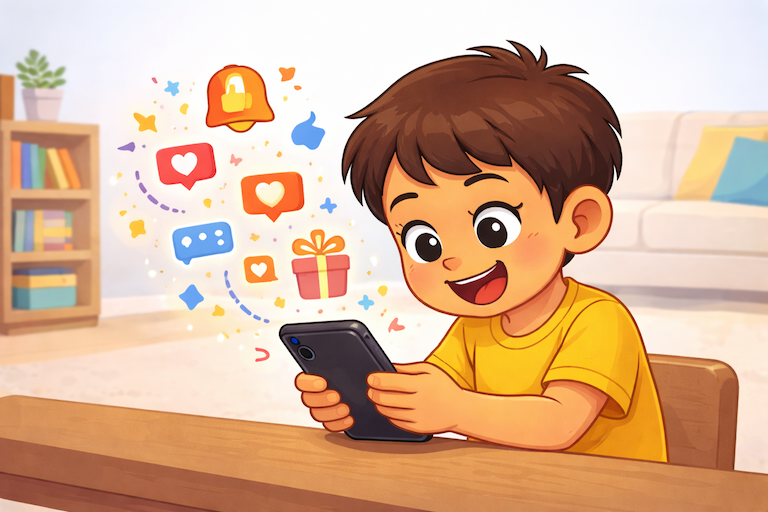
Modern technology is built for speed. Videos autoplay, links glow, notifications buzz — and everything encourages instant action. For kids, whose brains are still developing impulse control and foresight, this environment can make clicking feel automatic.
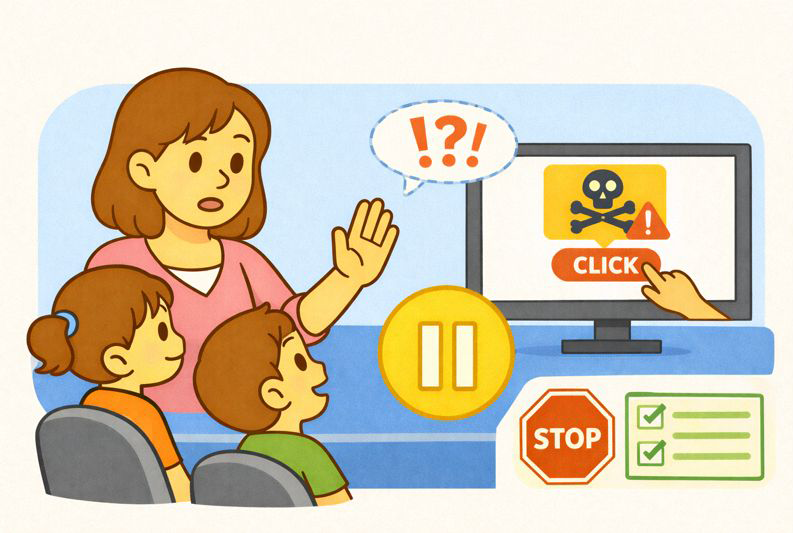
Teaching kids to pause before they click isn’t about restriction or fear. It’s about helping them insert a moment of awareness between impulse and action. That pause creates space for choice — and choice is what turns technology from something that happens to kids into something they can use intentionally.
This single skill supports safety, focus, emotional regulation, and long-term digital confidence.


How Digital Platforms Are Designed to Skip the Pause
Most digital platforms intentionally remove friction. The easier it is to click, the longer users stay engaged. Kids aren’t weak for falling into this — they’re responding exactly as these systems are designed to encourage.
Features that reduce pausing include:
Autoplay and infinite scroll
Bright buttons and sound cues
Time-limited prompts
Emotional hooks like excitement or urgency
Understanding this design helps parents teach pausing as a protective skill, not a moral lesson.
Why Kids Click Before Thinking
Impulse control develops gradually. Younger kids rely on external structure, while older kids are still building internal brakes — especially in emotionally stimulating environments.
Online spaces make impulse control harder because:
Rewards are immediate
Consequences are delayed
Emotional reactions are amplified
Kids aren’t ignoring guidance. Their brains are still learning how to slow down in fast systems.
Teaching Pausing as a Skill — Not a Rule
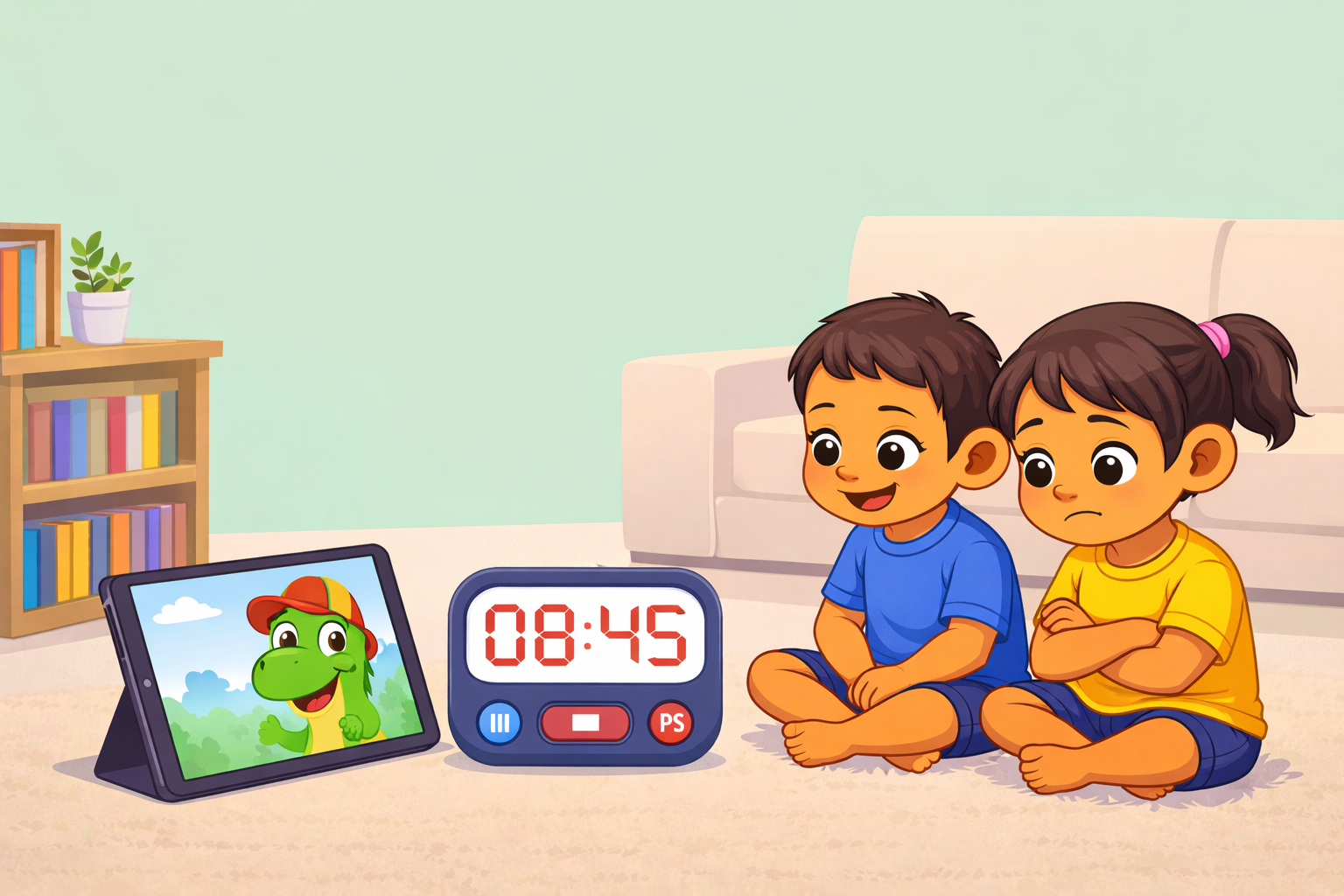
Pausing works best when it’s taught as a skill kids practice, not a rule they’re expected to obey perfectly.
Simple pausing tools include:
Taking one breath before clicking
Looking away from the screen briefly
Asking, “Do I actually want this?”
These micro-pauses help kids regain agency. Even a few seconds of awareness can interrupt automatic behavior.
This approach fits naturally alongside Teaching Kids About Online Ads and Influencers, where noticing intent matters more than avoidance.
Helping Kids Notice the Feelings That Drive Clicking
Clicks are often emotional, not logical. Curiosity, boredom, excitement, frustration, or fear of missing out can all drive impulsive decisions.
Parents can help kids build awareness by asking:
“What are you feeling right now?”
“Does this feel calm or rushed?”
“What made you want to click?”
This emotional check-in helps kids understand why they’re clicking — a key step toward self-regulation.
Practicing Pauses During Everyday Screen Use
Pausing is most effective when practiced during real, low-stakes moments — not just discussed afterward.
Good practice moments include:
When a video ends and another begins
Before opening a new app
When a pop-up or ad appears
These small interruptions teach kids that clicking is a choice, not a reflex.
This pairs well with When Screens Help: The Upside of Digital Storytime, where intentional engagement replaces passive consumption.
Teaching Kids to Recognize “Urgency Traps”
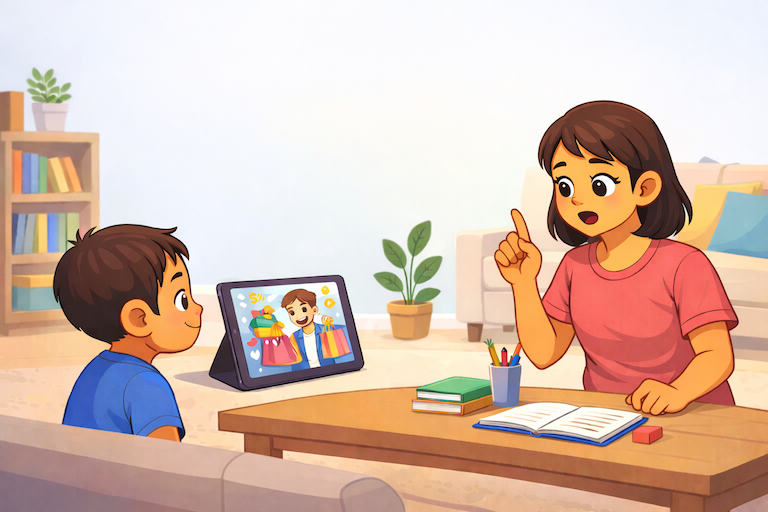
Many online prompts are designed to feel urgent: countdowns, “limited time” offers, or notifications that imply immediate action is required.
Kids benefit from learning to spot:
Messages that rush decisions
Promises of instant rewards
Language that creates pressure
Naming these patterns reduces their power without making kids anxious or distrustful.
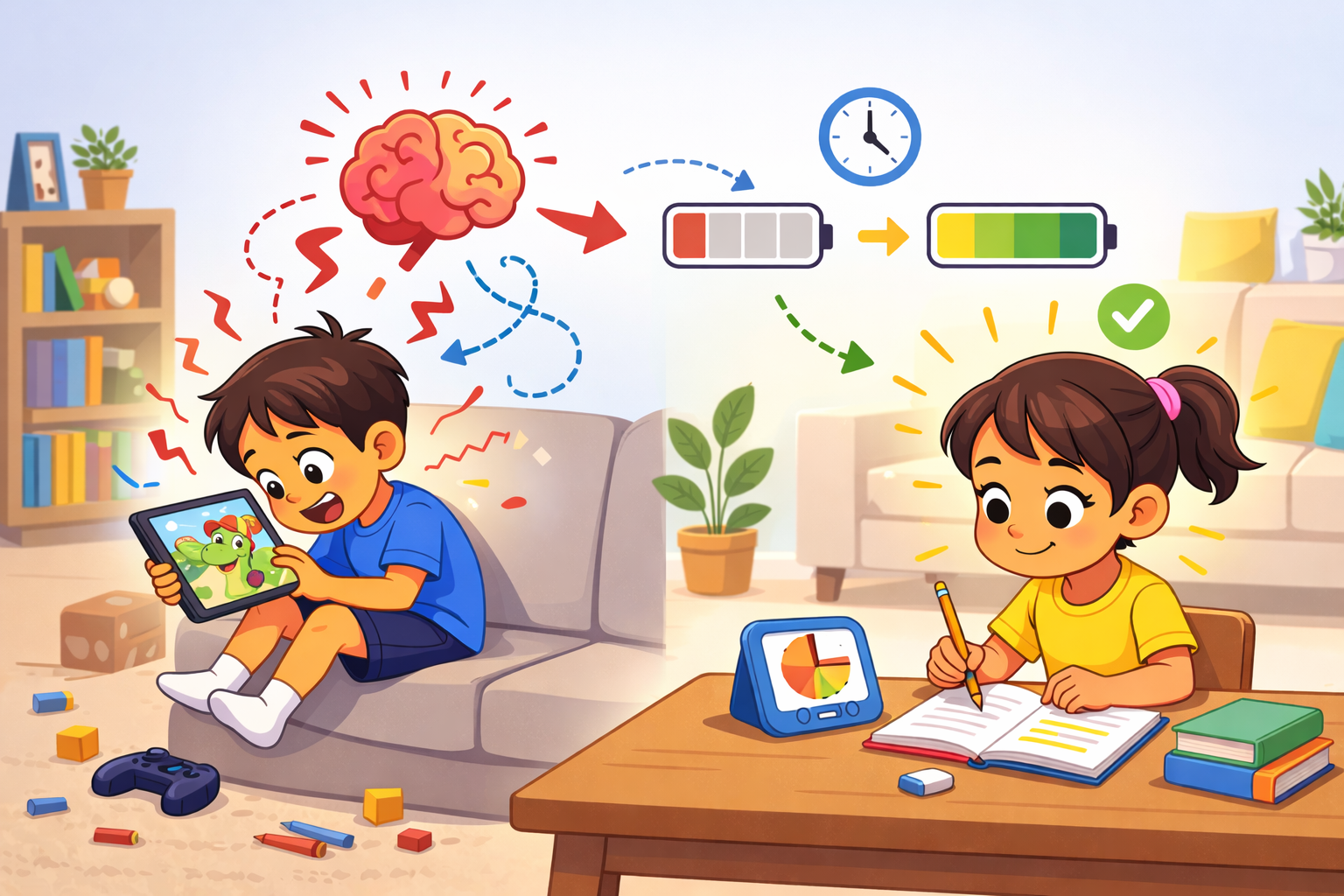
This awareness complements ideas in The Psychology of Screen Overstimulation, where intensity — not time alone — drives dysregulation.
Modeling Pausing as an Adult
Children learn pausing by watching adults do it. When parents slow down their own digital behavior, kids absorb that rhythm.
Helpful modeling might sound like:
“I’m going to pause before clicking that.”
“I don’t need to respond right away.”
“I’ll think about that later.”
These small moments teach that immediacy isn’t required — and that waiting is safe.
How Pausing Supports Online Safety
Many online risks rely on impulsive clicks. Teaching kids to pause creates a natural safety buffer without constant monitoring.
A pause helps kids:
Avoid accidental purchases
Think before sharing information
Notice when something feels off
This approach supports independence while still keeping safety at the center.
Reinforcing Pausing Without Hovering
Pausing won’t be perfect — and it doesn’t need to be. Overcorrecting or monitoring every click can undermine trust and confidence.
Supportive reinforcement includes:
Praising moments of awareness
Naming effort, not perfection
Keeping feedback brief and calm
This aligns naturally with Using Parental Controls Without Constant Monitoring, where structure supports autonomy instead of replacing it.
Helping Pausing Become a Lifelong Habit
The goal isn’t flawless digital behavior — it’s awareness. Kids who learn to pause before they click carry that skill into every online space they enter.
Over time, families often notice:
Fewer impulsive choices
Better emotional regulation
Increased critical thinking
More confidence navigating digital spaces
At Fuzzigram, we believe the most powerful digital skills are quiet ones. Teaching kids to pause doesn’t slow them down — it helps them move through the digital world with intention, clarity, and confidence.
In a world that constantly says “click now,” the ability to pause is a lifelong advantage.
This content is for educational purposes and is not a substitute for professional medical or psychological advice.