Managing Sibling Conflicts Over Devices
Managing Sibling Conflicts Over Devices
Why Devices Trigger So Many Sibling Conflicts
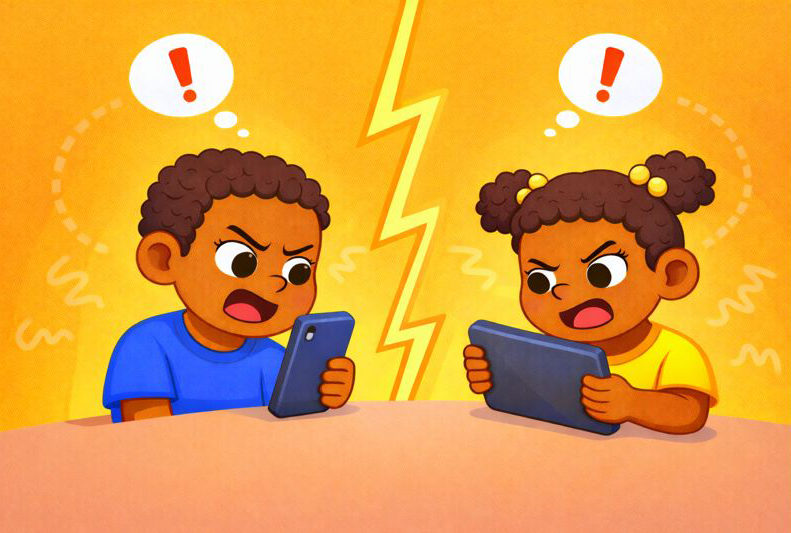
Few things spark sibling conflict faster than devices. Screens are limited, highly desirable, and emotionally charged. When one child has access and another doesn’t, it can feel deeply unfair — even if the rules technically make sense.
These conflicts aren’t really about the device itself. They’re about power, comparison, timing, and belonging. One sibling may feel overlooked. Another may feel rushed or interrupted. Technology simply amplifies those feelings because it’s visible, engaging, and hard to share.
Managing sibling conflict over devices isn’t about eliminating arguments entirely. It’s about creating systems that feel predictable, fair, and emotionally safe — so conflicts don’t escalate into daily battles.


Common Ways Sibling Device Conflicts Show Up
Sibling conflict around devices takes many forms, especially when kids are close in age or share spaces.
Parents often see:
Arguments over whose turn it is
Accusations of unfairness
Hovering or interrupting during use
Meltdowns when devices are turned off
Recognizing these patterns helps parents respond proactively instead of reactively.
Why “Just Share” Rarely Works
Telling siblings to “just share” sounds reasonable — but it ignores developmental reality. Screens aren’t easily divisible, and kids’ sense of time and fairness is still developing.
“Just share” often fails because:
Screens are immersive and hard to pause
Kids perceive interruptions as losses
Younger children struggle with waiting
Older kids feel entitled to uninterrupted time
Without structure, sharing becomes a setup for conflict rather than cooperation.
The Role of Fairness vs. Equality
One of the biggest sources of sibling conflict is the difference between fair and equal. Equal means the same. Fair means appropriate.
Fair device use might involve:
Different time limits by age
Different content expectations
Different schedules based on needs
When parents explain fairness clearly, kids are more likely to accept differences — even if they don’t love them.
Creating Clear, Predictable Systems
Most sibling device conflicts escalate because expectations are unclear. Predictability lowers emotional intensity.
Helpful systems include:
Visual schedules for device use
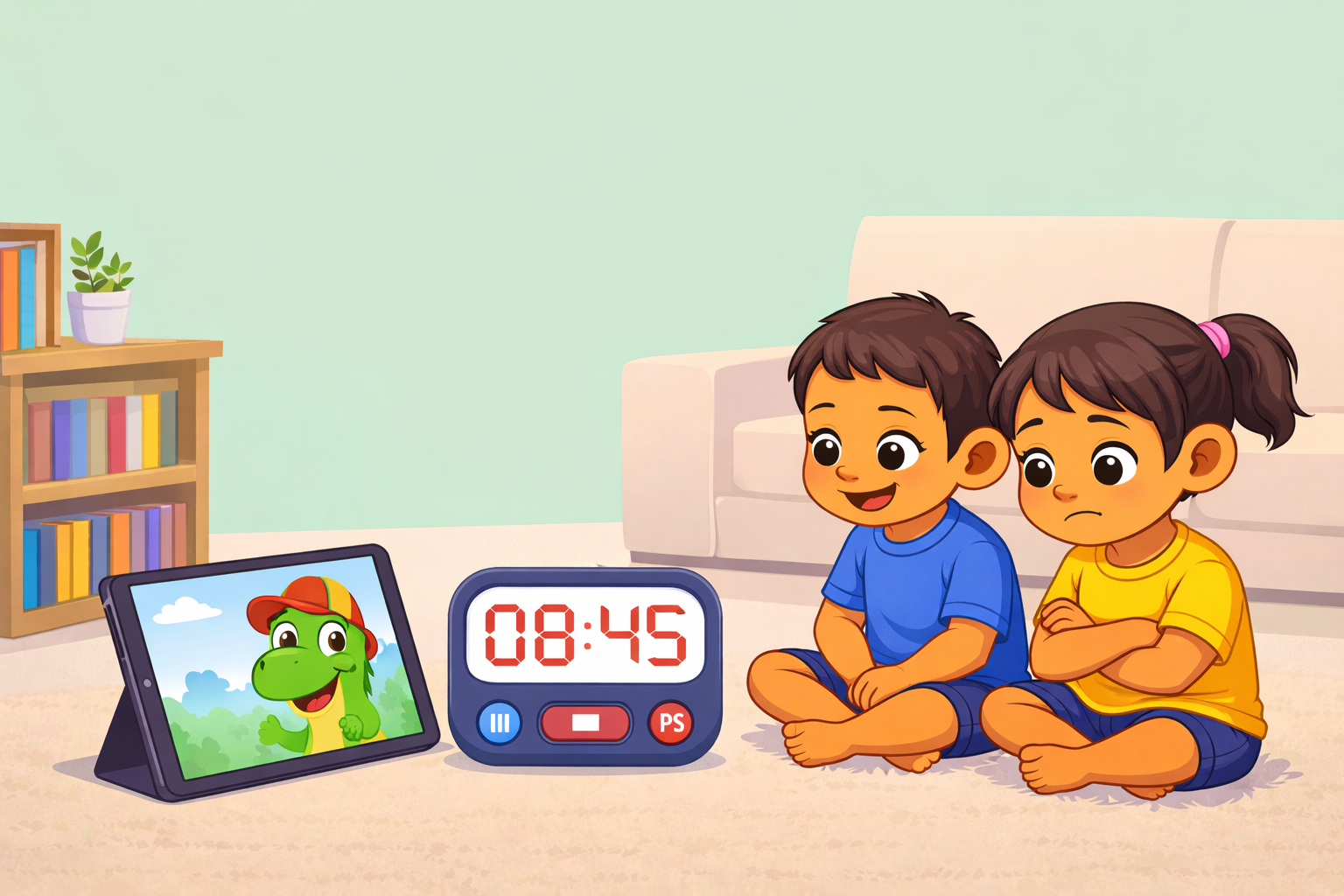
Timers that signal turn changes
Rotating access days or times
These systems support principles in Tech Boundaries That Stick: Setting Limits Without Meltdowns, where clarity reduces power struggles before they start.
Separating Turns From Transitions
Many conflicts happen not during device use — but when it’s time to stop or switch. Transitions are emotionally hard, especially when another sibling is waiting.
Parents can reduce conflict by:
Giving advance warnings
Allowing natural stopping points
Pairing turn changes with next activities
These strategies align closely with Helping Kids Transition Away from Screens Peacefully, where pacing matters more than enforcement.
Avoiding the Trap of Constant Refereeing
When parents step in as referees for every device dispute, siblings learn to compete for adult attention instead of learning to problem-solve.
Instead of solving every conflict, parents can:
Name the issue calmly
Restate the system
Step back once emotions settle
Over time, kids internalize the structure and rely less on adult intervention.
Teaching Siblings to Advocate Without Attacking
Device conflicts are opportunities to teach communication skills — especially when emotions are high.
Parents can coach kids to:
Name what they want calmly
Express frustration without insults
Ask for help appropriately
These skills transfer far beyond screens and support healthier sibling relationships overall.
Reducing Competition Through Balance
When devices become the most exciting part of the day, competition intensifies. Reducing the emotional “weight” of screens lowers conflict naturally.
Families often see less fighting when they:
Balance screen time with shared play
Offer appealing non-screen options
Schedule device use intentionally
This balance reflects ideas in Encouraging Balance Between Tech and Real-World Play, where variety reduces fixation.
Modeling Calm and Consistency as Parents
Children watch how adults handle frustration, fairness, and conflict. Parental modeling matters — especially during device disputes.
Helpful modeling includes:
Staying neutral instead of siding emotionally
Enforcing rules consistently
Avoiding device use as a bargaining chip
Turning Device Conflict Into Skill-Building
Sibling conflict over devices doesn’t mean something is wrong. It means kids are learning how to navigate limits, desire, and fairness — all important life skills.
Families who manage device conflict well often notice:
Fewer repeated arguments
Faster emotional recovery
Improved sibling communication
Less tension around screens overall
Screens don’t have to divide siblings. With the right structure, they can become just one small part of a much bigger family rhythm.
This content is for educational purposes and is not a substitute for professional medical or psychological advice.