How to Model Mindful Tech Behavior as Parents
How to Model Mindful Tech Behavior as Parents
Why What Kids See Matters More Than What We Say
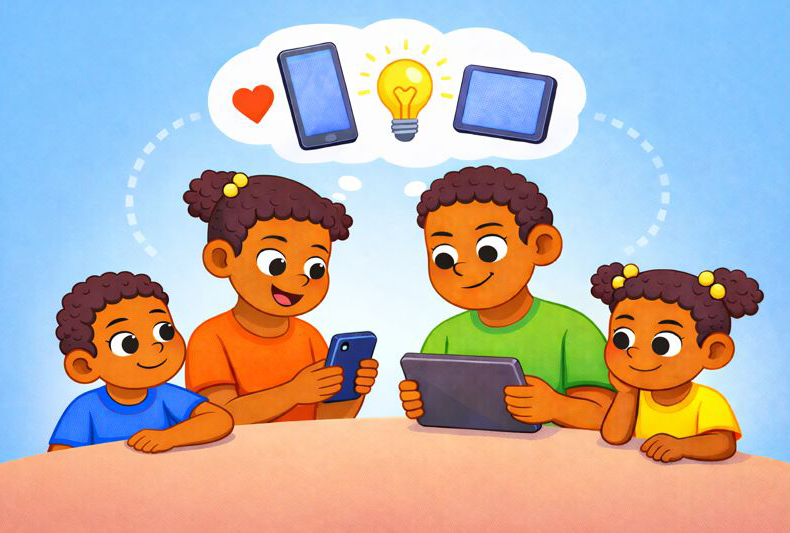
Most parents spend a lot of energy explaining screen rules to kids — when to use devices, how long, and what’s allowed. But long before children understand rules, they’re already learning something far more powerful: how adults actually use technology.
Kids don’t just listen to guidance. They watch behavior. They notice when phones come out at the dinner table, when notifications interrupt conversations, and when screens fill every quiet moment. These patterns quietly shape what children believe is normal, expected, and acceptable.
Modeling mindful tech behavior isn’t about perfection or unplugging entirely. It’s about showing kids — through everyday actions — that technology can be used with intention, boundaries, and balance.


What “Mindful Tech Use” Looks Like in Real Life
Mindful tech use doesn’t mean avoiding devices. It means using them with awareness, purpose, and restraint.
Mindful tech habits often include:
Knowing why you’re picking up a device
Using screens intentionally rather than automatically
Stopping when the purpose is complete
Being present with people when it matters
These habits show kids that technology is a tool — not a reflex.
Why Kids Are Especially Attuned to Adult Tech Habits
Children are incredibly observant. They may not comment on adult tech habits, but they absorb them deeply.
Kids notice:
When screens interrupt attention
How adults respond to notifications
Whether devices replace connection or support it
How hard it is for adults to disengage
This awareness shapes kids’ expectations for their own future tech use — often more than rules ever could.
The Hidden Messages We Send Through Everyday Use
Even small, repeated behaviors communicate values. Over time, they form a child’s understanding of how technology fits into life.
Common unintentional messages include:
“Screens come before conversation.”
“Boredom should always be filled.”
“Being reachable matters more than being present.”
Mindful modeling helps replace these messages with healthier ones — without needing to say a word.
Modeling Boundaries Without Making Announcements
One of the most effective ways to teach boundaries is to demonstrate them quietly.
Parents can model boundaries by:
Putting phones away during meals
Silencing notifications during family time
Choosing not to multitask with screens
These actions reinforce ideas explored in Digital Role Modeling: How Your Own Habits Shape Theirs, where kids learn limits by watching them in action.
Showing Kids How to Pause Instead of React
Mindful tech use includes pausing — especially when something feels urgent or emotionally charged.
Parents can model pausing by:
Taking a breath before responding to messages
Saying “I’ll check that later”
Choosing not to engage immediately
This behavior mirrors principles in Teaching Kids to Pause Before They Click, where awareness interrupts impulsive digital habits.
Being Honest About Our Own Struggles With Tech
Kids don’t need parents to be perfect — they need parents to be real. Acknowledging difficulty with tech models self-awareness rather than hypocrisy.
Saying things like “I’m putting my phone down because it’s distracting me” shows kids that mindful tech use is a practice, not a fixed trait. It normalizes effort, reflection, and adjustment.
When kids see adults working on their habits, they learn that growth is ongoing — and allowed.
Using Family Rituals to Reinforce Mindful Habits
Family routines create predictable moments where screens naturally fade into the background.
Helpful rituals include:
Screen-free meals
Device-free bedtime routines
Shared offline activities
These practices align well with How to Create Digital “Downtime” Routines That Stick, where consistency reduces reliance on willpower.
Modeling Balance Instead of Extremes
Mindful modeling isn’t about being anti-tech. It’s about showing kids how technology fits alongside other parts of life.
Balanced modeling includes:
Enjoying screens openly and responsibly
Stepping away without frustration
Valuing offline time equally
This balanced approach supports ideas in The Role of Technology in Early Learning: Finding the Sweet Spot, where moderation fosters trust and flexibility.
Letting Kids See You Choose Connection Over Convenience
Some of the most powerful modeling moments happen when parents choose connection even when technology would be easier.
Examples include:
Listening fully instead of checking a phone
Playing together instead of scrolling
Sitting with boredom instead of escaping it
These moments teach kids that presence is a choice — and a priority.
Raising Kids Who Learn Balance by Watching It
Modeling mindful tech behavior isn’t about teaching kids what not to do. It’s about showing them what is possible.
Children who grow up seeing thoughtful tech use often:
Feel less pulled by devices
Transition more easily away from screens
Develop internal limits naturally
Trust their own ability to choose
Screens don’t need to disappear for mindfulness to grow. Sometimes, kids just need to see how it’s done.
This content is for educational purposes and is not a substitute for professional medical or psychological advice.