Managing Kids’ Expectations About Screen Time
Managing Kids’ Expectations About Screen Time

Why Expectations Matter More Than Minutes
Many screen conflicts aren’t really about how long kids use devices — they’re about what kids thought would happen. A child who expects more time feels frustrated even if they had plenty. A child who expected a short turn often transitions easily.
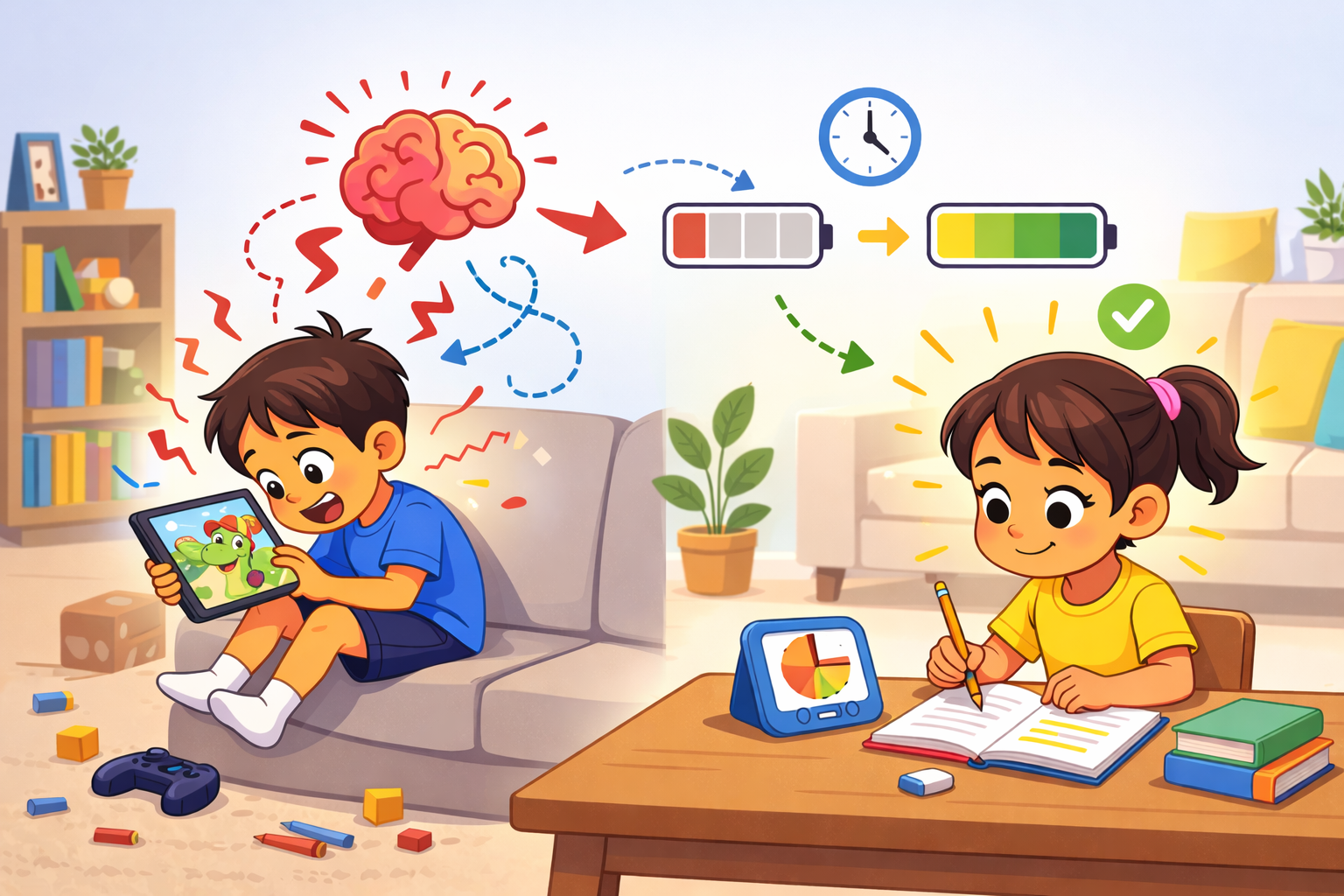
Expectations shape emotional reactions. When children can predict when screens start, how long they last, and what comes next, their brains prepare for the transition before it happens. Without that preparation, the ending feels sudden and unfair.
Managing expectations isn’t about lowering enjoyment. It’s about replacing uncertainty with clarity so children can cooperate before the moment arrives.


Why Kids Assume Screen Time Is Endless
Digital media rarely signals natural stopping points. From a child’s perspective, content simply continues.
Kids often expect unlimited time because:
Autoplay keeps going
Progress feels unfinished
Peers may play longer
No clear ending was discussed
Without defined boundaries, the brain fills in its own — usually larger — expectation.
Setting Expectations Before Screens Begin
The best moment to prevent conflict is before a device turns on.
Helpful pre-screen statements include:
When it will end
What activity follows
Whether extensions are possible
Clarity ahead of time reduces emotional negotiation later.
Using Visual and Time Cues
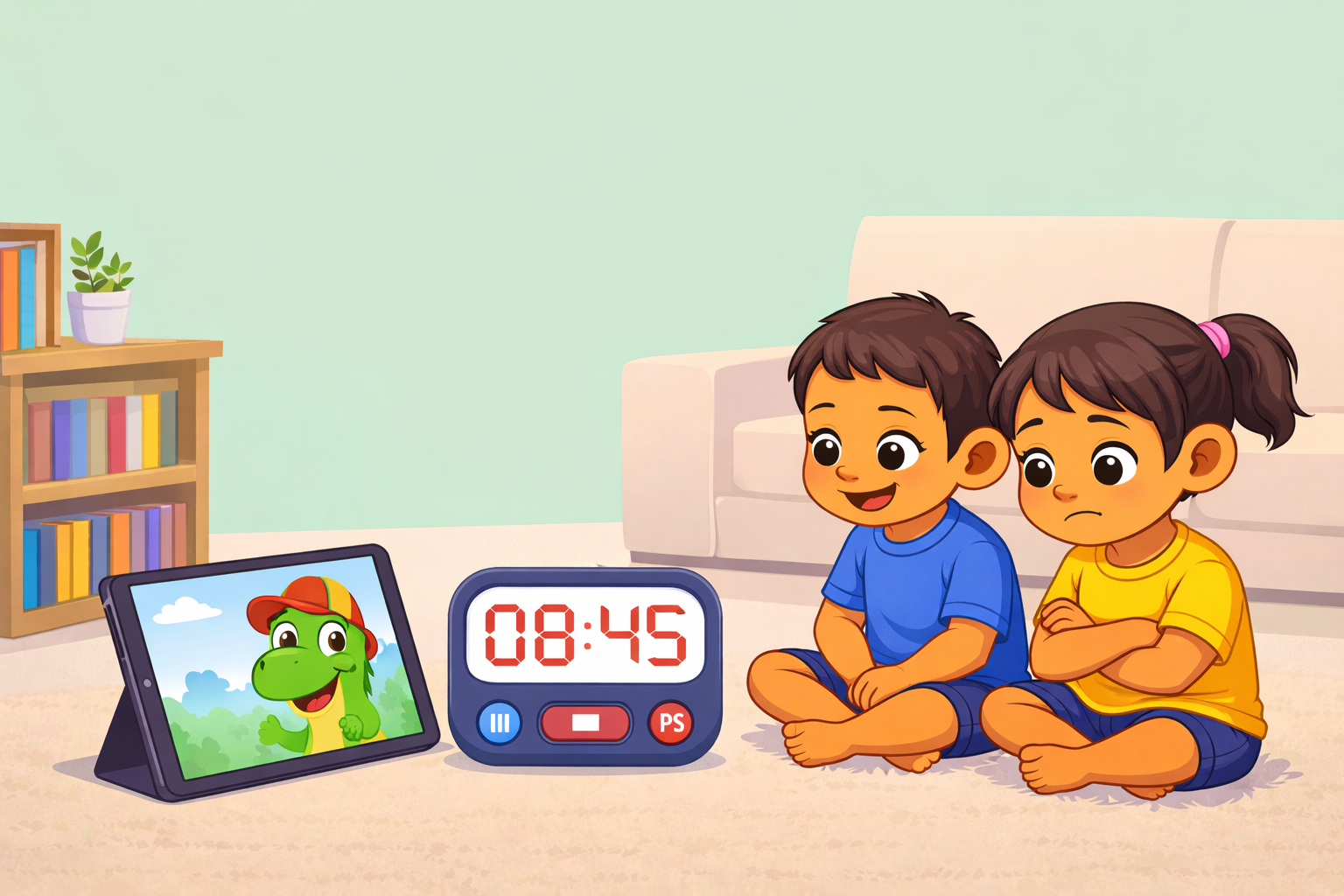
Abstract time is difficult for young children to understand. Concrete cues help.
Families often use:
Timers or clocks
Episode counts
Routine anchors (before dinner, after homework)
These supports align with Teaching Kids to Take Screen Breaks Naturally, where predictability builds cooperation.
Avoiding Accidental Extensions
Inconsistent endings create the biggest expectation problems. One unexpected extension can reset future assumptions.
Parents can protect expectations by:
Avoiding “just this once” endings
Explaining changes ahead of time
Ending at the same point daily
Consistency matters more than strictness.
Teaching Kids to Plan Their Time
When kids feel ownership over their screen window, they manage it differently.
Children can practice:
Choosing content ahead of time
Deciding which level to stop on
Saving favorite parts for later
This supports independence and echoes Managing Screen Time for Multiple Ages at Once, where structure reduces comparison and conflict.
Helping Kids Handle Disappointment Calmly
Even clear expectations won’t eliminate disappointment. The goal is helping kids move through it safely.
When parents stay steady and empathetic, children learn endings are manageable. Over time, the emotional reaction shrinks because the pattern stays dependable.
Using Language That Signals Predictability
Certain phrases communicate stability better than others.
Helpful language includes:
“Screens end after this episode.”
“You can play again tomorrow.”
“That was today’s turn.”
Predictable wording builds trust in the boundary.
Connecting Expectations to Daily Rhythm
Screen limits feel fairer when tied to the day rather than adult mood.
Families often connect screens to:
After-school downtime
Weekend mornings
Finished responsibilities
This complements How to Limit Screen Time Without Power Struggles, where rhythm replaces negotiation.
Modeling Your Own Expectations Around Devices
Kids learn expectations by observing adult behavior.
Parents can model by:
Announcing their own stopping points
Ending scrolling intentionally
Following through calmly
This reinforces How to Model Mindful Tech Behavior as Parents, where actions communicate stability.
Turning Screen Time Into Something Predictable
The long-term goal isn’t perfect compliance — it’s emotional security. Children cooperate when they trust what will happen next.
Families who manage expectations consistently often notice:
Faster transitions
Less bargaining
Reduced emotional spikes
This content is for educational purposes and is not a substitute for professional medical or psychological advice.