Teaching Kids to Take Screen Breaks Naturally
Teaching Kids to Take Screen Breaks Naturally
Why Natural Screen Breaks Matter More Than Forced Ones
Many screen time struggles don’t come from kids wanting screens — they come from kids not wanting to stop. Forced breaks often feel abrupt and unfair, especially when children are deeply engaged. This can lead to resistance, meltdowns, and power struggles that make screen time feel emotionally charged.
Natural screen breaks work differently. They help kids notice their own limits, respond to internal cues, and step away before frustration builds. Instead of relying on constant adult enforcement, children gradually learn how to pause, reset, and return with intention.
Teaching kids to take screen breaks naturally isn’t about reducing screen time at all costs. It’s about building awareness, flexibility, and self-regulation — skills that support healthier media habits for life.


What a “Natural” Screen Break Actually Looks Like
A natural screen break isn’t random or imposed — it’s responsive. It happens because a child’s body or attention needs a pause.
Natural breaks often show up as:
Standing up or shifting position
Losing interest or focus
Feeling restless or irritable
Wanting to switch activities
When adults help kids recognize these cues, breaks feel logical instead of punitive.
Why Kids Struggle to Notice When They Need a Break
Children aren’t ignoring their limits — they’re still learning how to detect them. Screens are immersive, which makes internal signals harder to notice.
Kids miss break cues because:
Games and videos suppress boredom
Autoplay removes stopping points
Emotional engagement overrides body signals
Young brains struggle with self-monitoring
This is why skill-building matters more than strict rules.
Teaching Kids to Tune Into Body and Brain Signals
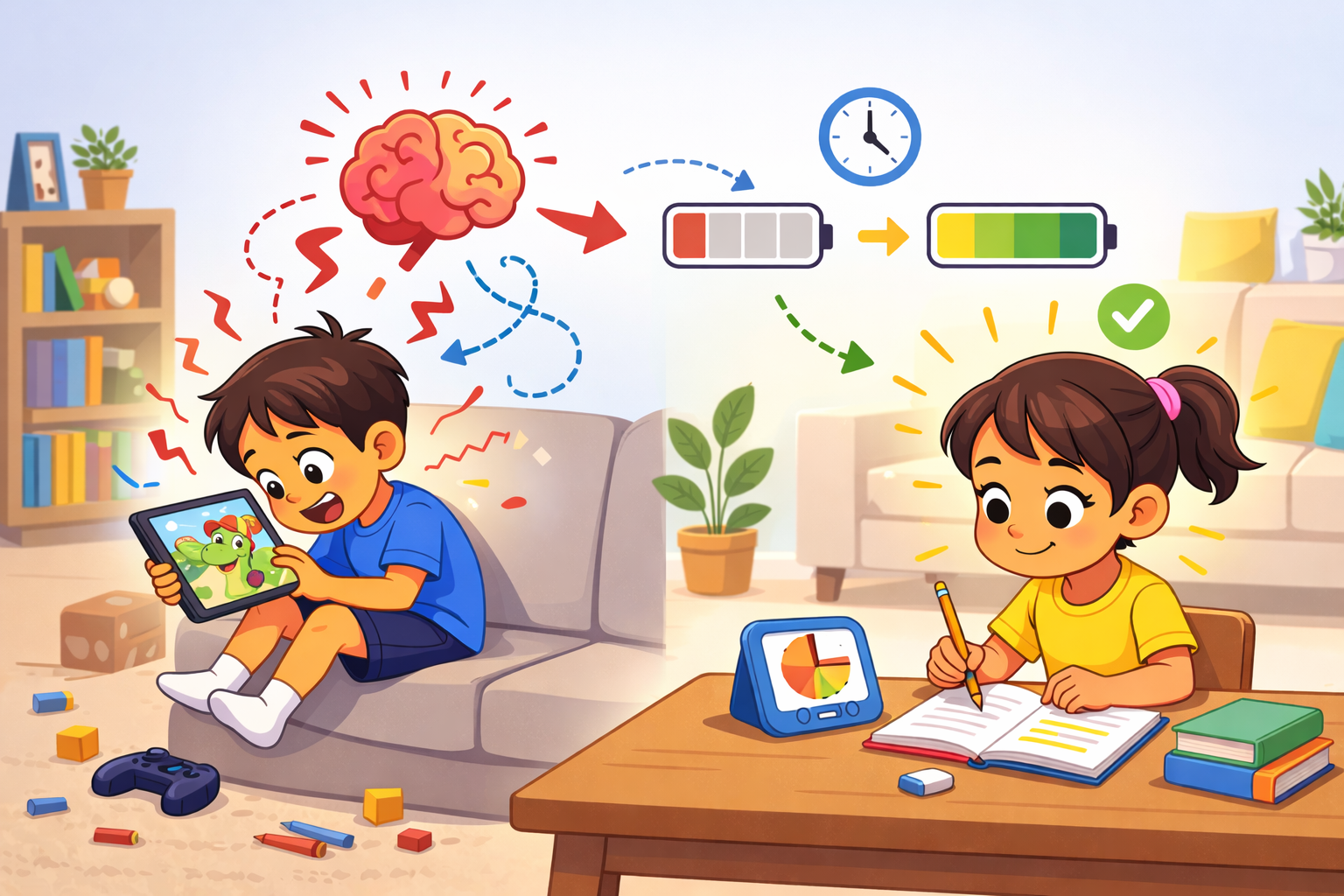
Helping kids recognize physical and mental cues empowers them to step away before overwhelm sets in.
Parents can help kids notice:
Eye strain or headaches
Fidgeting or slouching
Feeling cranky or tired
Difficulty focusing
Naming these cues builds self-awareness — the foundation of natural breaks.
Using Content Design to Support Breaks
Some content makes breaks easier than others. Choosing media with natural stopping points reduces resistance.
Break-friendly content tends to:
Have clear episode endings
Allow pausing or saving progress
Avoid constant autoplay
Offer predictable pacing
These choices align with Managing Screen Time and Selecting Age-Appropriate Content, where structure supports regulation.
Building Gentle Pauses Into Screen Routines
Natural breaks don’t have to be spontaneous — they can be quietly built into routines.
Helpful pause practices include:
Stretching between episodes
Getting water after a level ends
Standing up before choosing the next activity
These small rituals normalize pausing without making it a “rule.”
Letting Kids Practice Stopping Without Pressure
Learning to take breaks is a skill — and skills require practice. Kids need opportunities to stop screens successfully, even if it’s just for a minute or two.
When parents stay calm and supportive, kids learn that stopping doesn’t mean losing access forever. Over time, confidence grows — and breaks become easier.
This practice-based approach helps kids internalize limits rather than resist them.
Using Environment to Invite Breaks
The physical environment can quietly encourage breaks without verbal reminders.
Helpful environmental supports include:
Keeping screens out of bedrooms
Watching in shared spaces
Having break activities visible and accessible
These strategies reflect ideas in Creating Screen-Free Zones at Home, where space guides behavior naturally.
Pairing Breaks With Appealing Alternatives
Kids are more willing to pause when something inviting is waiting on the other side.
Natural break alternatives might include:
A favorite snack
Outdoor play
Music or audiobooks
Creative materials
This balance echoes Screen-Free Alternatives That Still Feel Fun, where breaks feel like choices, not losses.
Modeling Natural Breaks as Adults
Kids learn when to pause by watching adults pause. Modeling matters — especially during moments of temptation.
Parents can model natural breaks by:
Putting phones down when attention drifts
Saying “I need a quick break” out loud
Choosing rest over scrolling
This modeling reinforces awareness without lectures.
Helping Breaks Become a Habit, Not a Battle
When kids learn to take screen breaks naturally, screen time stops feeling like a tug-of-war. Breaks become part of the rhythm instead of a disruption.
Families who focus on natural breaks often notice:
Fewer meltdowns at stopping points
More flexible screen use
Improved mood and focus
Kids who self-regulate over time
This content is for educational purposes and is not a substitute for professional medical or psychological advice.