Tech-Free Mornings for Better Starts
Tech-Free Mornings for Better Starts

Why Mornings Set the Tone for the Entire Day
Mornings are a fragile transition. Kids move from sleep into wakefulness, from rest into demands, and from comfort into structure. The way this transition unfolds often determines how the rest of the day feels — emotionally, behaviorally, and even physically.
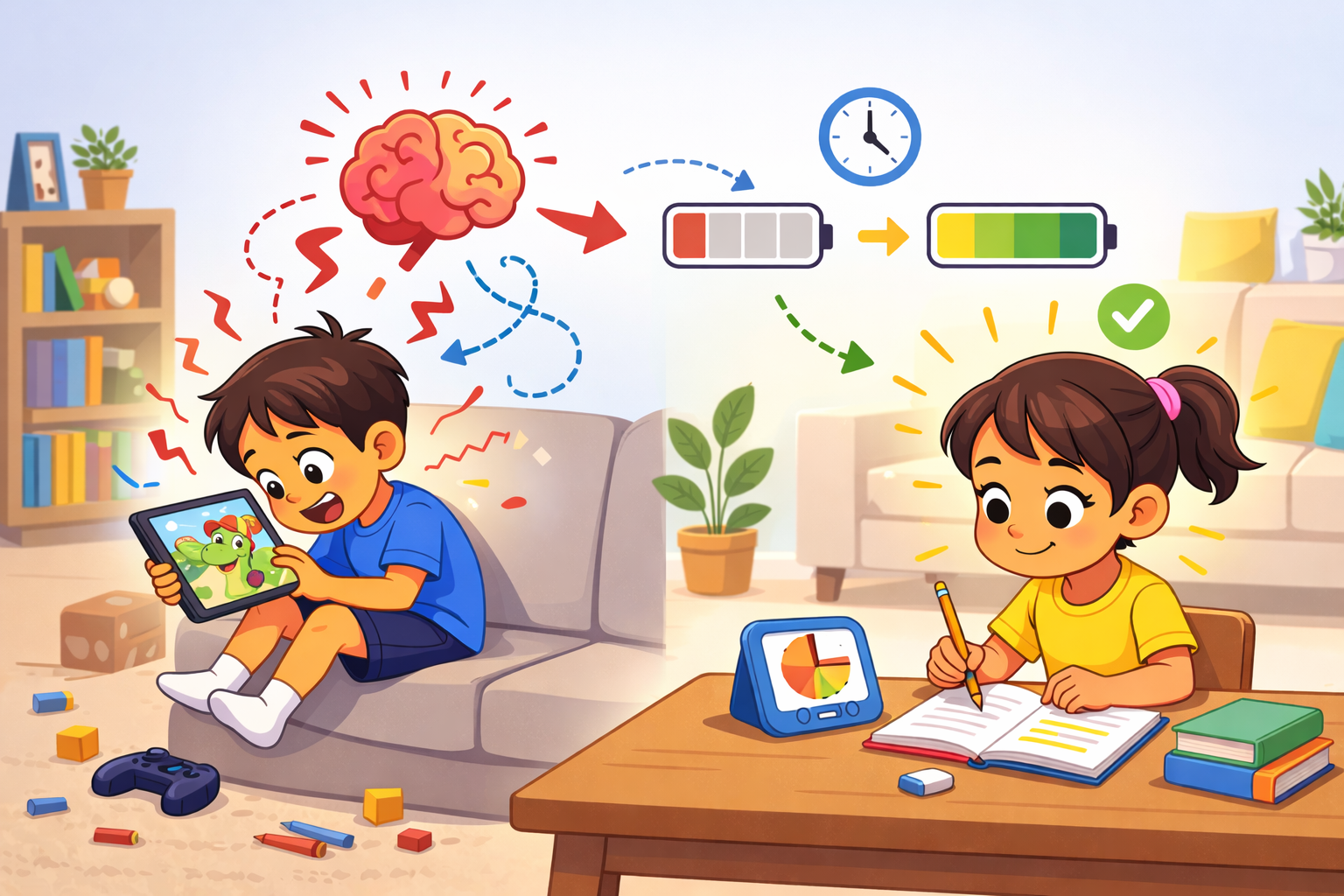
When screens enter early in the morning, they can short-circuit this transition. Bright visuals, fast pacing, and instant stimulation pull attention outward before kids have a chance to orient themselves internally. Tech-free mornings aren’t about avoiding convenience; they’re about protecting a moment when kids’ nervous systems are still finding their footing.
A calmer start doesn’t guarantee a perfect day — but it dramatically improves the odds.


What Screens Do to the Morning Brain
The brain isn’t fully alert the moment kids wake up. It needs time to shift from sleep rhythms into focused attention. Screens push that shift too fast.
Early screen use can:
Spike alertness abruptly
Reduce patience and flexibility
Make transitions harder later
Increase irritability before school even starts
This doesn’t mean screens are “bad.” It means timing matters. What feels manageable in the afternoon can feel overwhelming first thing in the morning.
Why Morning Screen Habits Stick So Strongly
Morning habits form quickly because they’re tied to routine and predictability. When screens become part of the wake-up sequence, kids’ brains begin expecting that stimulation as a starting point.
Over time, this can lead to:
Difficulty getting started without a screen
Increased resistance when screens are removed
Strong emotional reactions early in the day
Changing morning habits can feel harder than changing evening ones — but the payoff is often faster and more noticeable.
Redefining “Calm” in the Morning
Many families rely on screens in the morning because they appear to keep kids calm and contained. But calm on the outside doesn’t always mean regulated on the inside.
True morning calm often includes:
Gradual wake-up
Predictable rhythm
Low sensory input
Emotional connection
This reframing helps families see tech-free mornings not as removing something — but as replacing stimulation with regulation.
Creating Gentle Morning Routines Without Screens
Tech-free mornings work best when they’re supported by routine, not willpower. Predictable steps help kids move forward without needing constant reminders.
Helpful screen-free morning elements include:
Soft music instead of TV
Simple, repeatable breakfast routines
Visual schedules or checklists
Calm verbal cues instead of rush
These rhythms pair naturally with ideas in Sleep and Screens: What Parents Need to Know, where protecting the brain’s transition from rest improves regulation throughout the day.
Supporting Kids Who Wake Up Slowly
Not all kids wake up the same way. Some are alert immediately; others need time and support to fully engage.
For slower wake-ups, it helps to:
Allow extra transition time
Keep lights and noise low
Offer movement or stretching
Stay nearby for connection
Screens often mask slow transitions rather than supporting them. Gentle alternatives build independence and emotional resilience over time.
Making Mornings Easier for Parents Too
Tech-free mornings aren’t just for kids. Parents benefit too — especially when mornings feel rushed or stressful.
Parents often notice:
Less conflict before school
Fewer power struggles
More connection in small moments
Setting Clear Morning Tech Boundaries
Boundaries work best when they’re simple and consistent. Instead of debating screens each morning, many families decide ahead of time when screens begin.
Helpful boundary examples:
Screens start after school
No screens before breakfast
Devices stay in charging spots until later
These environmental cues align with Creating Screen-Free Zones at Home, where space — not constant enforcement — shapes habits.
Handling Pushback Without Escalation
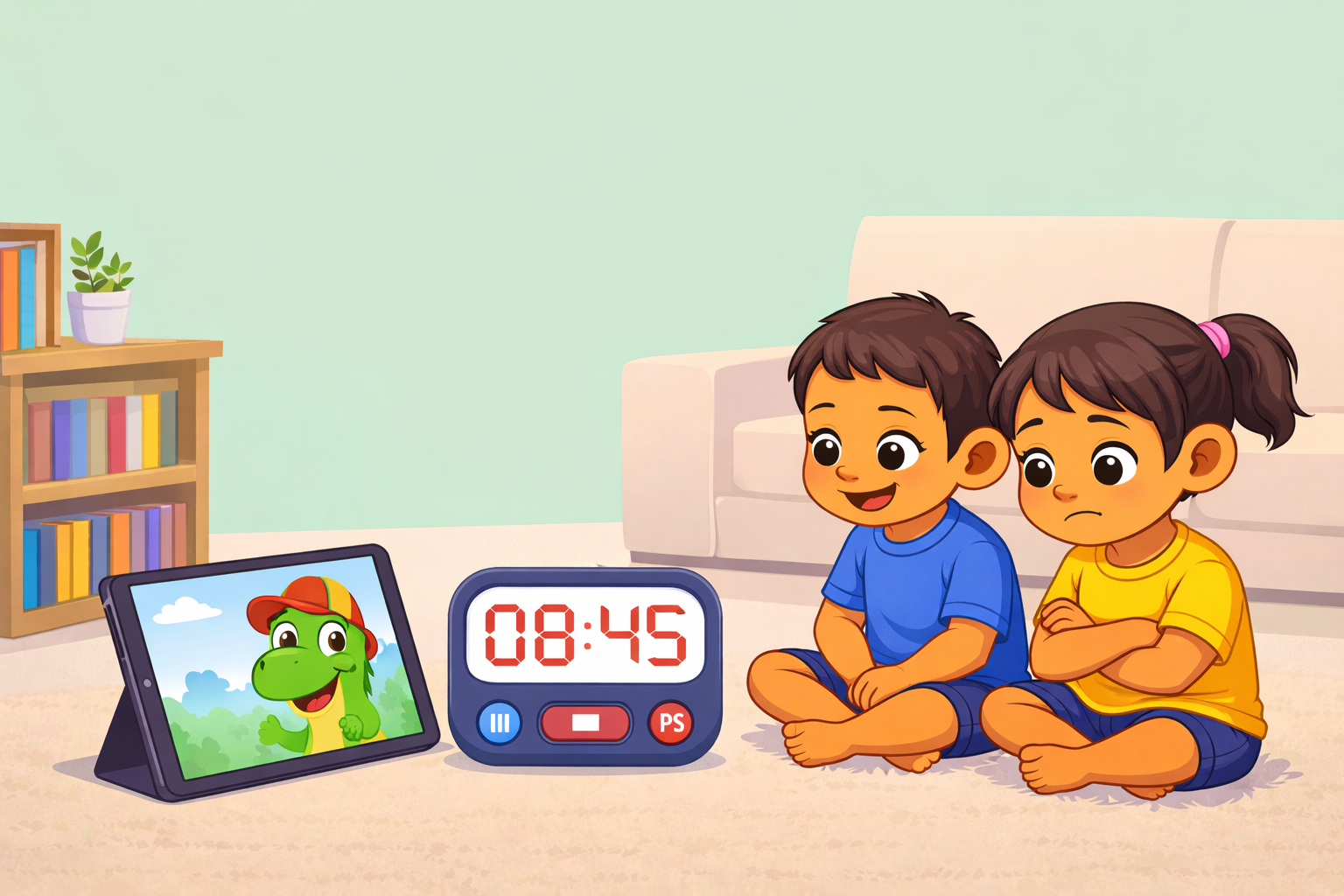
Resistance is normal, especially if screens were previously part of the routine. Pushback doesn’t mean the boundary is wrong — it means change is happening.
Supportive responses include:
Acknowledging frustration without changing the rule
Staying calm and predictable
Redirecting to the next step
These strategies echo approaches in Helping Kids Transition Away from Screens Peacefully, where emotional support matters as much as consistency.
Noticing the Ripple Effects During the Day
One of the most compelling reasons families stick with tech-free mornings is what happens after the morning ends.
Parents often notice:
Easier school drop-offs
Improved focus at school
Fewer emotional crashes
Better transitions later in the day
These changes aren’t instant every day — but they accumulate quickly.
Starting the Day With Presence, Not Pressure
Tech-free mornings aren’t about adding one more rule to an already busy schedule. They’re about protecting a small window when kids are most sensitive to input.
Families who prioritize tech-free mornings often discover:
More cooperation
Greater emotional stability
Stronger connection
A calmer household rhythm
This content is for educational purposes and is not a substitute for professional medical or psychological advice.