The Hidden Impact of Background Screens on Focus
The Hidden Impact of Background Screens on Focus
Why Background Screens Often Go Unnoticed
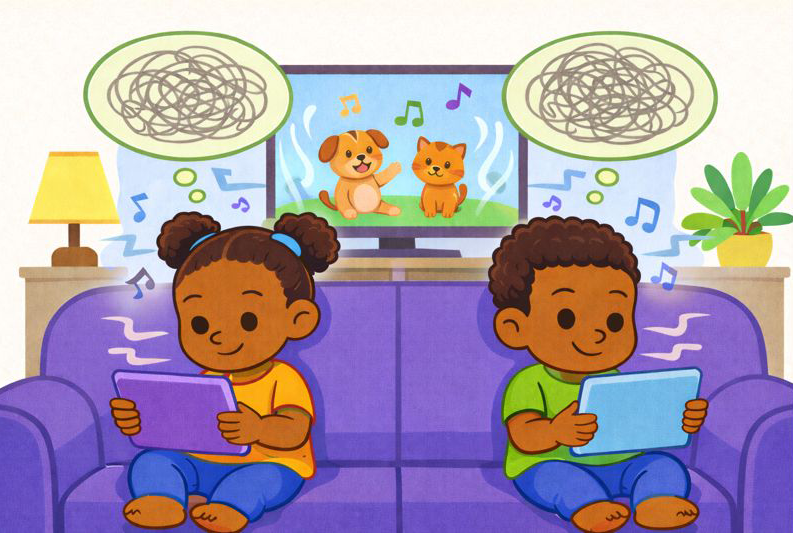
Background screens are easy to dismiss. A TV playing quietly, a tablet left on, or a video looping in the background can feel harmless — especially if no one is actively watching. For many families, background media becomes part of the atmosphere, like background music or white noise.
But screens aren’t neutral background elements. Even when children aren’t paying attention directly, their brains are still processing movement, sound, and visual changes. This subtle stimulation often goes unnoticed — yet it can quietly shape focus, behavior, and emotional regulation throughout the day.
Understanding the hidden impact of background screens helps families make small changes that support focus without banning technology outright.


How the Brain Responds to Passive Visual Stimulation
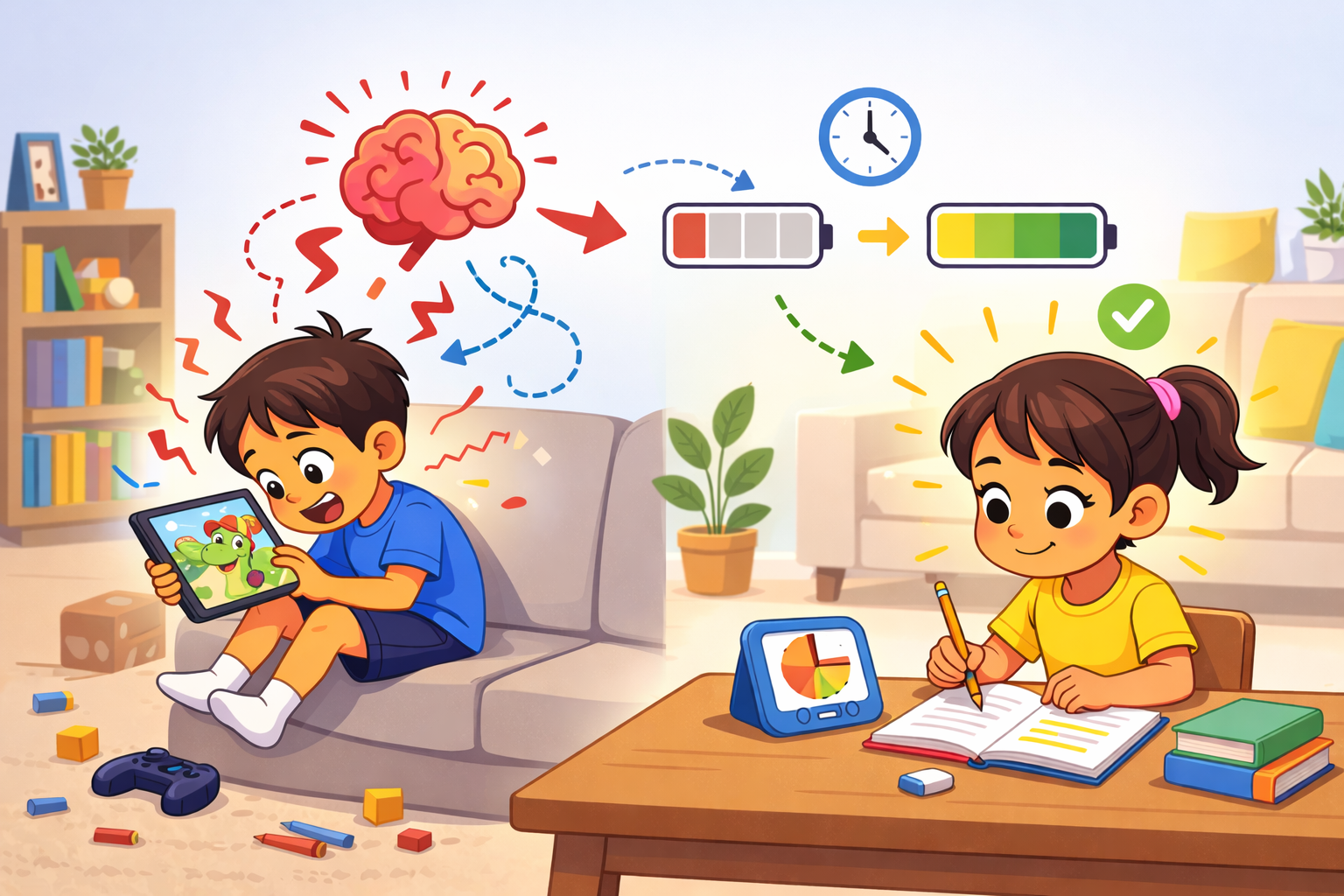
The human brain is wired to notice movement and sound. Background screens constantly trigger this system, even when children seem focused on something else.
Passive screen exposure can:
Pull attention away from tasks without kids realizing it
Interrupt deep concentration
Increase cognitive load
Reduce the brain’s ability to filter distractions
Because this stimulation is ongoing, children rarely get a full mental break — even during play or homework.
Why Children Are Especially Vulnerable
Children’s brains are still developing the ability to sustain attention and ignore distractions. Background screens compete directly with these skills.
Kids may:
Shift attention more frequently
Take longer to complete tasks
Appear unfocused or restless
Struggle to return to play after interruptions
These effects are not signs of laziness or defiance. They reflect brains working overtime to manage competing inputs.
The Impact on Play and Creativity
Unstructured play is where many focus and creativity skills develop. Background screens can subtly interfere with this process.
When screens are on during play, children may:
Play for shorter periods
Switch activities more often
Engage less deeply with toys or imagination
This connection is closely related to ideas in Screen-Free Alternatives That Still Feel Fun, where uninterrupted play supports sustained attention and creativity.
Removing background screens often leads to longer, richer play — without parents needing to intervene.
Background Screens and Homework Focus
Homework requires sustained attention, working memory, and mental flexibility. Background screens quietly drain all three.
Even when kids insist the TV “helps,” background screens can:
Increase errors
Slow processing speed
Raise frustration levels
A quieter visual environment often leads to faster, calmer homework sessions.
Emotional Regulation and Background Media
Focus and emotional regulation are closely linked. When attention is constantly pulled in different directions, emotional balance becomes harder to maintain.
Background screens can contribute to:
Irritability or emotional fatigue
Difficulty settling after activity
Heightened reactivity
Children may not appear overstimulated — but their nervous systems rarely fully reset when screens are always present.
Why Background Screens Feel Comforting
Many families rely on background screens for comfort or familiarity. The noise can feel reassuring, especially during busy or stressful times.
Screens may serve as:
A predictable presence
A distraction during transitions
A way to fill silence
Recognizing why background screens are used makes it easier to adjust them without guilt or resistance.
Audio as a Less Disruptive Alternative
Not all background media affects focus equally. Audio-only content is often far less distracting than visual screens.
Many families successfully replace background screens with:
Music playlists
Audiobooks or podcasts
White noise or nature sounds
This shift aligns closely with Replacing Background TV with Intentional Family Soundscapes, where sound supports calm instead of fragmenting attention.
Creating Screen-Free Focus Zones
Instead of removing screens everywhere, many families find success by creating specific screen-free zones or times.
Helpful focus zones include:
Homework areas
Play spaces
Mealtimes
These boundaries support attention naturally and reflect principles in Creating Screen-Free Zones at Home, where environment — not enforcement — shapes behavior.
Watching for Positive Changes After Reducing Background Screens
Families often notice changes quickly after reducing background media — sometimes within days.
Common improvements include:
Longer attention spans
Calmer play
Easier transitions
Reduced irritability
These shifts often surprise parents because no additional rules or structure were added — only environmental changes.
Small Adjustments With Big Impact
Background screens don’t need to disappear entirely to make a difference. Even small reductions can significantly improve focus and emotional balance.
Families who become more intentional often notice:
Greater presence
Deeper engagement
More peaceful routines
At Fuzzigram, we believe the most powerful changes are often the quietest ones. Turning off background screens doesn’t limit children — it gives their brains space to concentrate, imagine, and rest.
When visual noise fades, focus has room to grow.
This content is for educational purposes and is not a substitute for professional medical or psychological advice.