How to Balance Educational and Entertainment Screen Time
How to Balance Educational and Entertainment Screen Time
Why This Balance Feels So Confusing for Parents
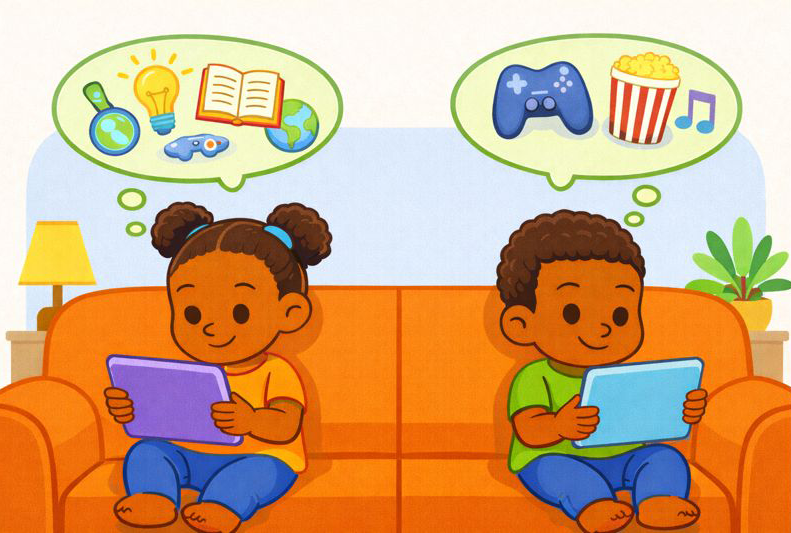
Few parenting topics feel as murky as screen time. Educational apps promise learning. Shows promise relaxation. Kids enjoy both — and parents are left wondering how to strike the “right” balance.
The challenge is that educational and entertainment screen time aren’t opposites. Entertainment can support rest and creativity. Educational content can become overstimulating or rigid if overused. Balance isn’t about choosing one over the other — it’s about understanding what kids need in a given moment.
When families stop trying to label screens as “good” or “bad,” balance becomes far easier to find.


Understanding What Educational Screen Time Really Is
Educational screen time doesn’t just mean flashcards, quizzes, or learning apps. Learning happens in many forms — including storytelling, problem-solving, and creative exploration.
Educational screen time often:
Encourages thinking or reflection
Builds language, logic, or emotional skills
Connects to real-world learning
Invites interaction rather than passive watching
If kids are engaged, curious, and thinking — learning is likely happening.
Recognizing the Value of Entertainment Screen Time
Entertainment screen time serves a purpose too. Kids need moments of rest, enjoyment, and lightness — especially after demanding days.
Entertainment screens can:
Provide mental breaks
Support emotional regulation
Offer shared enjoyment
Inspire creativity and imagination
The problem isn’t entertainment itself — it’s when entertainment becomes the only form of screen use or replaces other essential experiences.
Why “More Educational” Isn’t Always Better
It’s tempting to assume that replacing entertainment with educational content automatically improves screen habits. In practice, this often backfires.
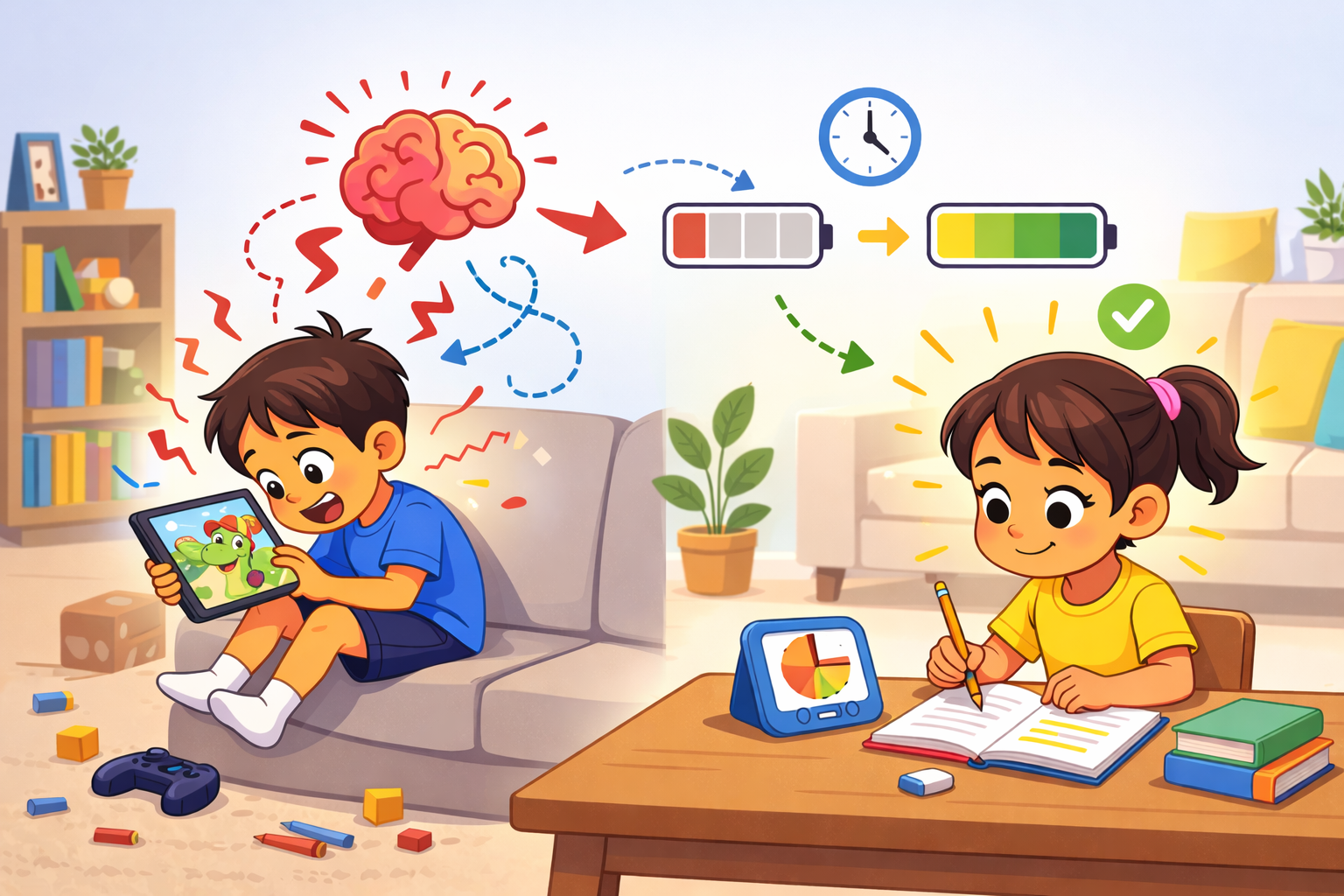
Too much educational screen time can:
Feel like pressure or obligation
Reduce intrinsic motivation
Increase overstimulation
Lead to burnout or resistance
These patterns align closely with The Role of Technology in Early Learning: Finding the Sweet Spot, where balance matters more than maximizing learning minutes.
Screens support learning best when they leave room for enjoyment and rest.
Matching Screen Type to the Moment
One of the most effective balancing strategies is matching the type of screen time to the child’s state — not the clock.
Parents often choose:
Educational content when kids are alert and curious
Entertainment content when kids are tired or winding down
This responsiveness helps screens support regulation rather than fight against it.
Creating a Simple Screen Mix Instead of Categories
Instead of labeling every screen minute as “educational” or “entertainment,” many families find success thinking in terms of a weekly mix.
A healthy mix might include:
Creative or learning-based content
Light entertainment for rest
Shared family screen experiences
Screen-free time for play and connection
This approach mirrors ideas in How to Create a Family Media Plan That Actually Works, where flexibility beats rigid formulas.
Watching How Kids Act After Different Screen Types
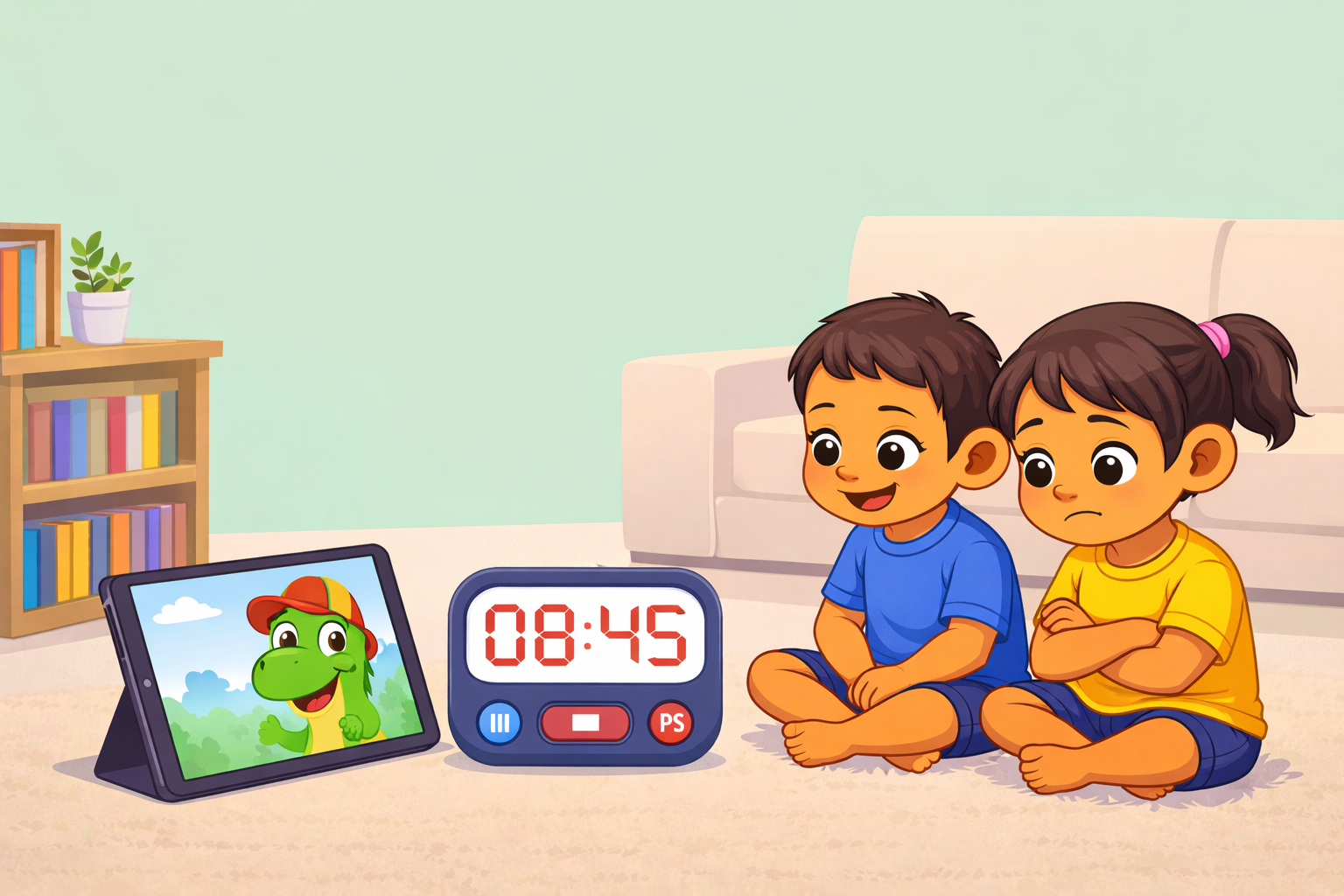
The most reliable indicator of balance isn’t content labels — it’s behavior afterward.
Parents can learn a lot by noticing:
Mood after screens end
Ease of transitions
Willingness to engage offline
Emotional regulation
If kids feel calm, connected, and flexible afterward, the balance is likely working.
This observation-based approach pairs naturally with How to Recognize When Screen Time Becomes Overstimulation, where cues matter more than minutes.
Blending Educational and Entertainment Content
Some of the most effective screen experiences don’t fit neatly into one category. They blend learning and enjoyment seamlessly.
Examples include:
Story-based learning games
Educational shows with humor
Creative apps that feel playful
These blended experiences often lead to deeper engagement than content that tries too hard to teach.
Using Co-Viewing to Balance Screen Experiences
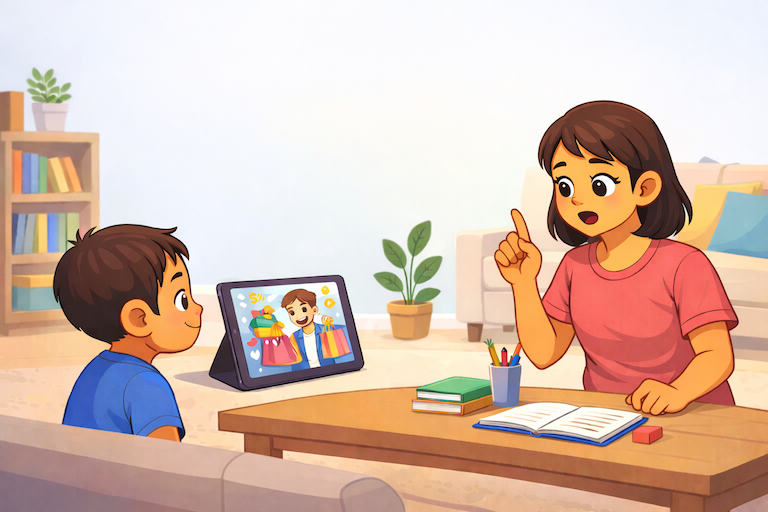
Co-viewing helps parents guide balance without controlling it. Shared screen time allows adults to add context, ask questions, and support reflection.
Through co-viewing, parents can:
Extend learning from entertainment
Add emotional insight to educational content
Model balanced media habits
This approach aligns closely with Why Co-Viewing Is Better Than Screen Policing, where connection replaces constant enforcement.
Adjusting Balance as Kids Grow
What feels balanced at one age may not work at another. Attention span, emotional needs, and interests all change over time.
Families often adjust balance when:
School demands increase
New devices are introduced
Kids show signs of fatigue or disinterest
Revisiting balance regularly keeps screen habits responsive rather than reactive.
Focusing on Balance Over Labels
The healthiest screen habits don’t come from perfectly categorized content. They come from awareness, flexibility, and trust.
Families who focus on balance often notice:
Less screen-related guilt
Fewer power struggles
More intentional choices
Happier, more regulated kids
Balancing educational and entertainment screen time isn’t about getting it “right.” It’s about staying tuned in, adjusting as needed, and remembering that childhood learning happens everywhere — not just on screens.
This content is for educational purposes and is not a substitute for professional medical or psychological advice.