The Psychology of Screen Overstimulation
The Psychology of Screen Overstimulation

Why Screen Overstimulation Feels So Intense
Many parents sense it immediately: after certain screen experiences, kids seem wired, irritable, or unable to settle. Screen overstimulation isn’t about screens being “bad” — it’s about how the brain responds to rapid input, novelty, and intensity.
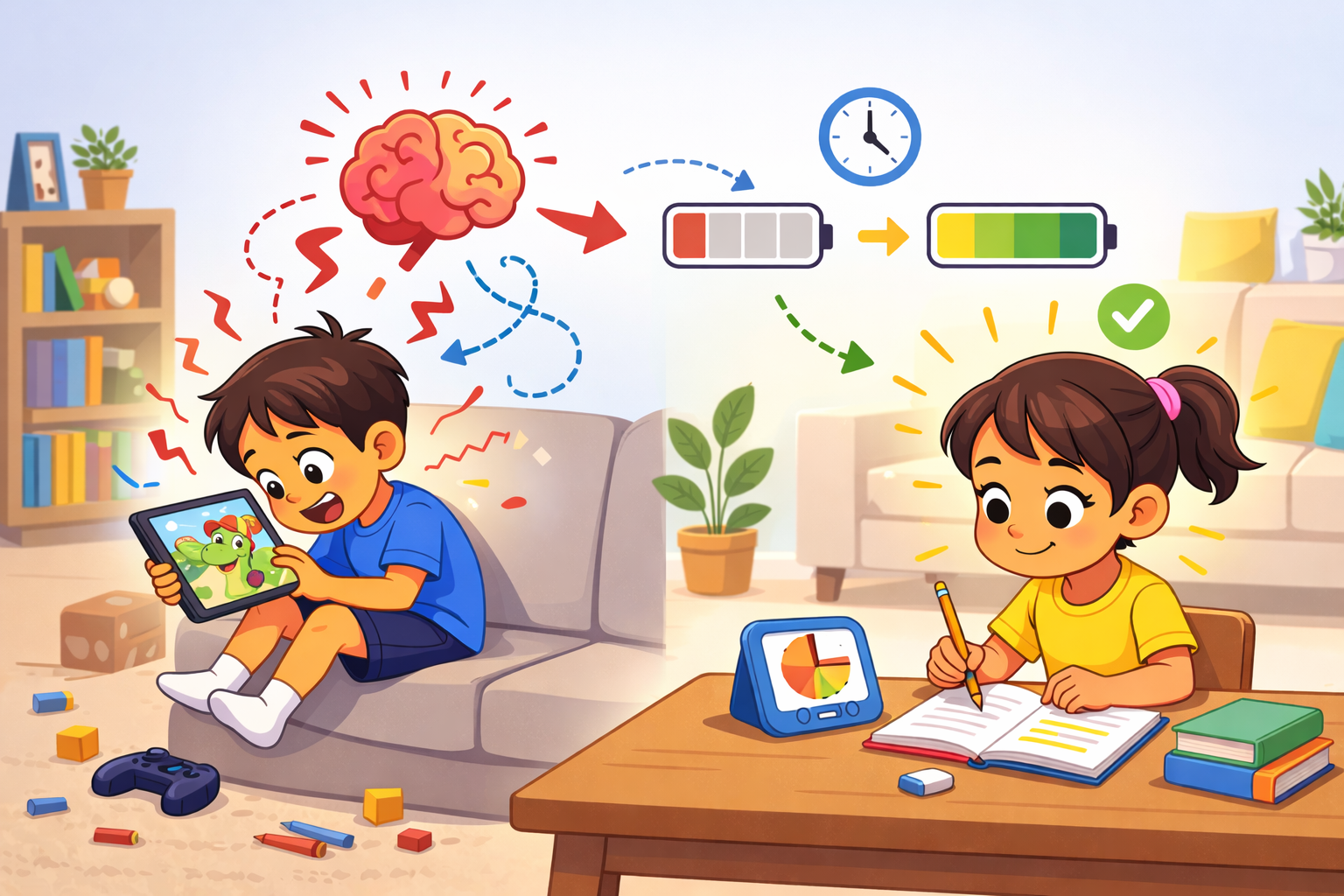
Children’s brains are especially sensitive to stimulation. Bright colors, fast pacing, sound effects, and constant scene changes activate attention systems designed for survival and learning. When these systems are triggered too often or too intensely, the brain has trouble shifting back into a calm state.
Understanding overstimulation helps families respond with clarity rather than guilt. The behavior that follows isn’t misbehavior — it’s biology.


How the Brain Responds to Rapid Digital Input
Screens are uniquely effective at holding attention. They combine visual motion, sound, and novelty in ways real life rarely does.
When children engage with highly stimulating content, their brains may experience:
Elevated dopamine release
Heightened alertness and arousal
Reduced tolerance for slower-paced activities
Difficulty transitioning away
This response is temporary — but when repeated often, it can make everyday moments feel “boring” by comparison. Recognizing this pattern is the first step toward balance.
Why Some Kids Are More Sensitive Than Others
Not all children react to screens in the same way. Temperament, age, and developmental stage all play a role in how stimulation is processed.
Children who are more sensitive may:
Become dysregulated quickly
Struggle with transitions
React strongly to sound or visuals
Have difficulty calming afterward
These differences don’t mean something is wrong. They simply mean some children need gentler pacing and more recovery time after screen use.
The Role of Novelty and Constant Switching
One of the most overstimulating aspects of modern media is constant novelty. Algorithms are designed to keep attention engaged by offering something new every few seconds.
This pattern can:
Train the brain to expect constant input
Reduce patience for single-focus tasks
Increase frustration during quiet moments
These effects are closely connected to ideas explored in How to Recognize When Screen Time Becomes Overstimulation, where patterns matter more than total minutes.
Reducing novelty — not eliminating screens — is often the most effective adjustment.
Emotional Spillover After Screen Use
Overstimulation doesn’t always show up during screen time. Often, it appears afterward — when the brain is trying to downshift.
Common signs of emotional spillover include:
Irritability or tearfulness
Resistance to transitions
Hyperactivity or restlessness
Difficulty engaging in play
This spillover isn’t intentional behavior. It’s a nervous system recalibrating after heightened input.
Why Transitions Are the Hardest Part
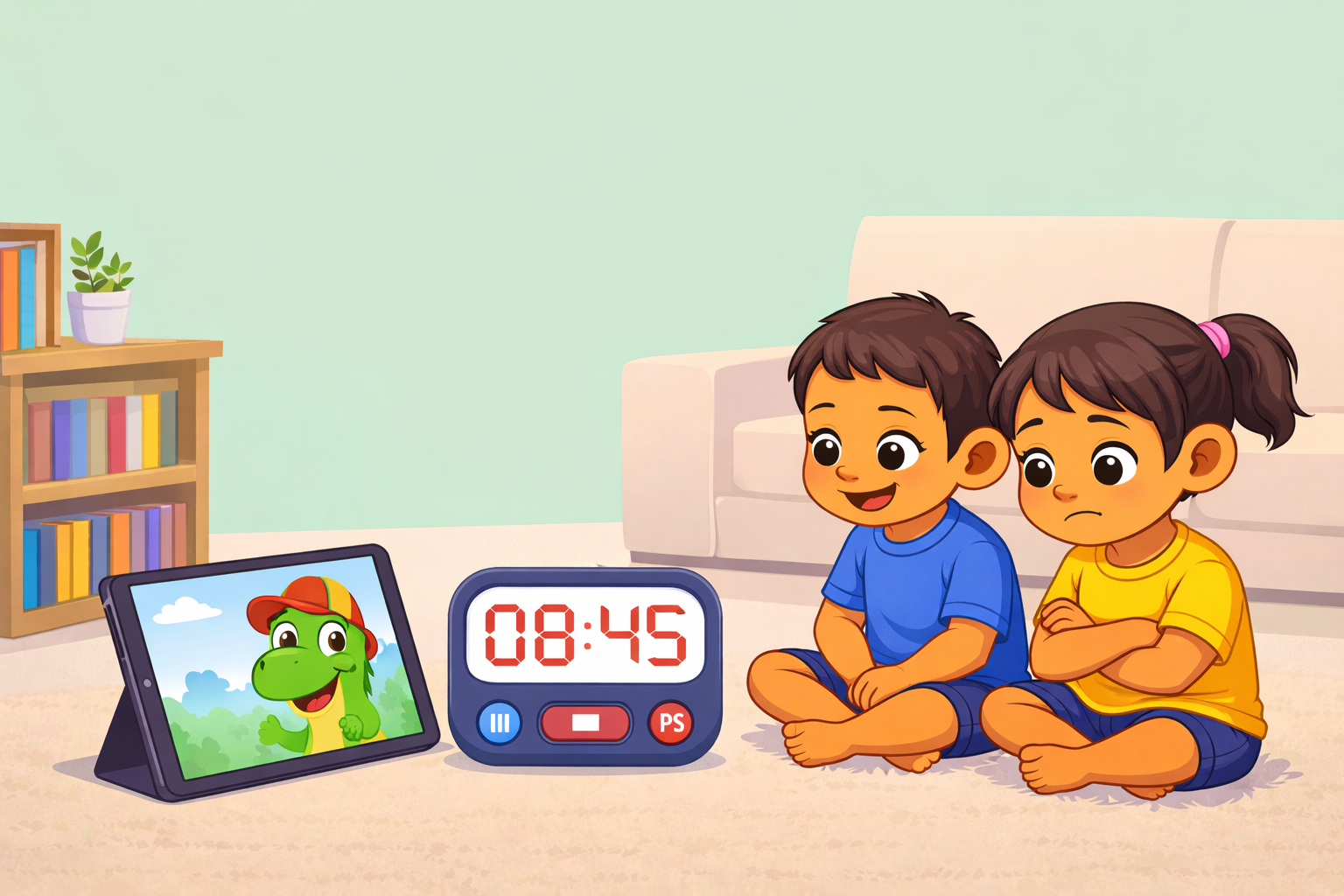
Transitions away from screens are often where overstimulation becomes most visible. The brain moves abruptly from high input to lower stimulation — a challenging shift for kids.
Supporting transitions helps by:
Giving advance warnings
Pairing screen time with calming follow-ups
Keeping end points predictable
These strategies align naturally with Helping Kids Transition Away from Screens Peacefully, where structure reduces stress for both kids and parents.
The Cumulative Effect of Daily Stimulation
Overstimulation isn’t always caused by a single long screen session. Often, it’s cumulative — building up across the day.
Multiple short bursts of:
Fast-paced videos
Noisy games
Background screens
…can add up, leaving children with little time to reset. This pattern connects closely with The Science of Screen Time: How Devices Affect Kids’ Brains, where frequency matters as much as duration.
Balancing stimulation throughout the day helps protect emotional regulation.
Helping the Nervous System Reset
The antidote to overstimulation isn’t punishment or restriction — it’s regulation. Children need opportunities to bring their nervous systems back to baseline.
Effective reset activities include:
Outdoor movement
Quiet play
Music or gentle audio
Deep breathing or stretching
These moments don’t need to be long. Even short resets can make a meaningful difference.
Designing Media Use That Supports Regulation
Families can reduce overstimulation by adjusting how screens are used, not just how much.
Supportive media habits often include:
Choosing slower-paced content
Avoiding screens during high-stress times
Limiting background media
Creating clear start-and-end points
These practices reflect ideas in Encouraging Balance Between Tech and Real-World Play, where screens complement — rather than dominate — daily life.
Responding With Empathy Instead of Control
When overstimulation shows up as challenging behavior, it’s tempting to clamp down harder on screens. While boundaries matter, empathy matters more in the moment.
Helpful responses include:
Naming what you’re noticing
Offering calm connection
Supporting regulation before problem-solving
When children feel understood, they recover more quickly — and learn to recognize their own limits over time.
Building Awareness Without Fear
The psychology of screen overstimulation isn’t about warning families away from technology. It’s about helping them understand how the brain works — so they can make thoughtful choices.
Over time, families who approach overstimulation with awareness often notice:
Fewer power struggles
Smoother transitions
Better emotional regulation
More balanced media habits
At Fuzzigram, we believe knowledge builds confidence. When parents understand the psychology behind screen overstimulation, they’re empowered to adjust environments, routines, and expectations — creating calmer days without fear or guilt.
Screens don’t need to disappear. They just need space — and balance — within a child’s developing nervous system.
This content is for educational purposes and is not a substitute for professional medical or psychological advice.