Using Technology to Teach Empathy and Inclusion
Using Technology to Teach Empathy and Inclusion
Why Empathy and Inclusion Matter More Than Ever
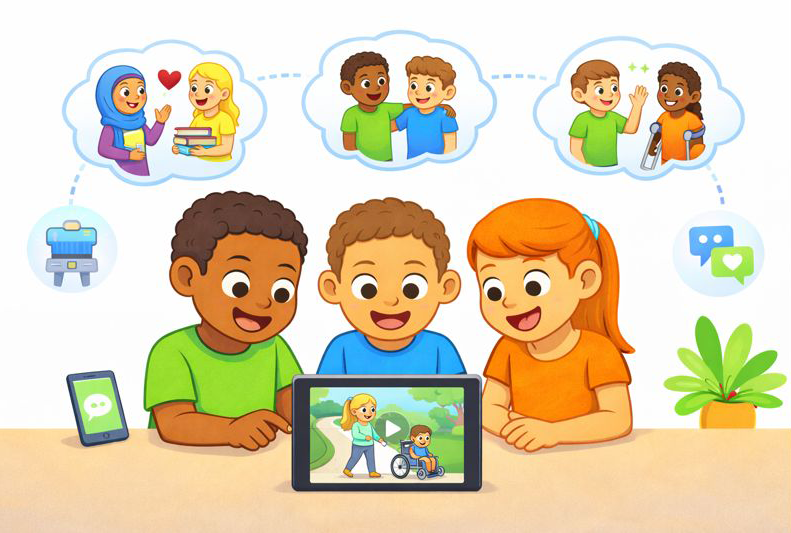
Children are growing up in a world where technology shapes how they see others, learn about differences, and understand belonging. Screens can either narrow a child’s worldview or expand it — depending on how they’re used and guided.
Empathy and inclusion aren’t skills kids magically develop on their own. They grow through exposure, conversation, modeling, and reflection. Technology, when used intentionally, can become a powerful tool for helping kids understand experiences beyond their own and recognize the value of every voice.
The goal isn’t to use screens to “teach lessons.” It’s to use technology to open doors — to perspectives, stories, and connections that help children grow into thoughtful, inclusive humans.


How Technology Can Expand a Child’s Worldview
Technology allows children to encounter people, cultures, abilities, and family structures they may not see in their everyday lives.
When used well, tech can:
Introduce kids to diverse voices and stories
Normalize differences instead of highlighting them
Build curiosity about how others live and feel
Reduce fear of the unfamiliar
These experiences help children understand that their way of seeing the world is one of many — a foundational step toward empathy.
The Role of Stories in Building Empathy
Stories are one of the most effective ways to help children practice empathy. Through characters, kids can explore emotions and perspectives safely and without pressure.
Empathy-building stories often:
Center on characters navigating challenges
Show emotional reactions clearly
Highlight kindness, repair, and growth
Allow kids to feel with someone else
These story-driven experiences align closely with Social Skills in a Screened World: Helping Kids Stay Empathic, where media becomes a bridge to emotional understanding rather than a barrier.
Representation as a Tool for Inclusion
Seeing themselves reflected in media helps children feel valued. Seeing others represented helps children learn inclusion.
Inclusive media can:
Affirm a child’s identity
Reduce stereotypes
Normalize differences in ability, culture, or family structure
Encourage respect and openness
When representation is woven naturally into content — rather than treated as a lesson — kids absorb inclusion as part of everyday life.
Helping Kids Talk About Differences Without Awkwardness
Technology often sparks questions about differences children notice but don’t yet know how to name. These moments are opportunities, not problems.
Parents can support healthy conversations by:
Welcoming questions calmly
Using simple, respectful language
Avoiding overcorrection or embarrassment
These conversations help children learn that curiosity is allowed and that differences are something to understand, not avoid.
Teaching Empathy Through Digital Interaction
As kids begin interacting with others online — through games, comments, or shared platforms — empathy becomes a lived skill rather than a concept.
Technology can help kids practice empathy by:
Reading tone without facial cues
Considering how words affect others
Navigating disagreement respectfully
These skills are reinforced in Gaming and Growth: How to Balance Fun with Limits, where social interaction becomes a space for learning cooperation and respect.
Avoiding Performative or Forced Inclusion
Empathy and inclusion can’t be forced — and kids are quick to sense when messages feel artificial. Overly didactic content or constant commentary can shut down engagement.
True inclusion works best when it’s:
Naturally embedded in stories
Shown through everyday interactions
Discussed only when curiosity arises
When children feel invited — not instructed — empathy grows more authentically.
Co-Viewing as an Empathy Builder
Watching or engaging with content together allows parents to gently guide attention toward emotions, choices, and perspectives without turning screen time into a lecture.
Co-viewing supports empathy by:
Highlighting emotional moments
Creating space for reflection
Modeling respectful curiosity
This approach connects naturally with Family Movie Nights That Spark Conversations (Not Just Screen Time), where shared viewing deepens connection and understanding.
Addressing Bias and Influence Thoughtfully
Technology also exposes kids to stereotypes, influencers, and biased messaging. Teaching empathy includes helping kids notice when content feels exclusionary or misleading.
Parents can help kids learn to:
Question portrayals respectfully
Notice who is included — and who isn’t
Understand how influence shapes perception
These skills align with How to Talk to Kids About Online Ads and Influencers, where awareness builds critical thinking without fear.
Modeling Empathy and Inclusion Online
Children learn how to treat others digitally by watching how adults behave online. Modeling inclusive behavior matters as much as the content kids consume.
Inclusive modeling might include:
Speaking respectfully about others online
Avoiding dismissive or judgmental language
Showing curiosity instead of ridicule
These small actions teach kids that empathy doesn’t stop at the screen.
Using Technology to Support Belonging, Not Divide
Technology alone doesn’t teach empathy — people do. But when guided thoughtfully, digital tools can support connection, understanding, and inclusion in ways previous generations never experienced.
Families who use technology intentionally for empathy often notice:
More thoughtful conversations
Increased curiosity about others
Greater emotional awareness
Stronger inclusion-centered values
Empathy grows when kids are given space to see, feel, and understand others — and technology, used well, can help open that space.
This content is for educational purposes and is not a substitute for professional medical or psychological advice.