Crafting Seasonal Play Invitations (Spring, Summer, Fall, Winter)
Crafting Seasonal Play Invitations (Spring, Summer, Fall, Winter)
What Play Invitations Are—and Why They Matter
A play invitation is a simple setup that sparks curiosity and encourages children to begin playing on their own. It’s not a toy dump or an activity that needs instructions. Instead, it’s a thoughtfully arranged scene—just enough to nudge imagination forward. Seasonal play invitations help children connect with the world around them and make meaning out of what nature is doing all year long.
A play invitation tells children: “Here’s a starting point. The rest is yours.” They support creative confidence, self-regulation, storytelling, and focus. During busy holiday seasons, they also offer predictable calm—a way for kids to “land” without pressure or overstimulation.


The Power of Seasonal Themes in Learning
Children naturally notice changes around them—weather shifts, light patterns, clothing choices, nature’s cycles. These observations become meaningful when play reflects them. Seasonal themes:
Help kids understand time and rhythm
Encourage emotional awareness (“Fall feels cozy”)
Build vocabulary (brisk, muddy, breezy, frosty)
Strengthen creativity through pretend play
Support gentle transitions between seasons
Invitations don’t need to be elaborate. They simply need to be intentional—just one nudge to open up a whole world of play.
Setting Up the Environment
Choose a space that feels calm and contained. Play invitations work best when:
Materials are clearly visible
The area isn’t cluttered
Children feel they have control
Movement is optional—not required
The space says “There’s something interesting here…”
Use shallow trays, baskets, muffin tins, cardboard boxes, or nature outdoors. You might even pair play invitations with cozy routines, like reading nooks featured in Cozy Winter Reading Nooks for Family Storytime, to help children settle into the rhythm of imaginative play.
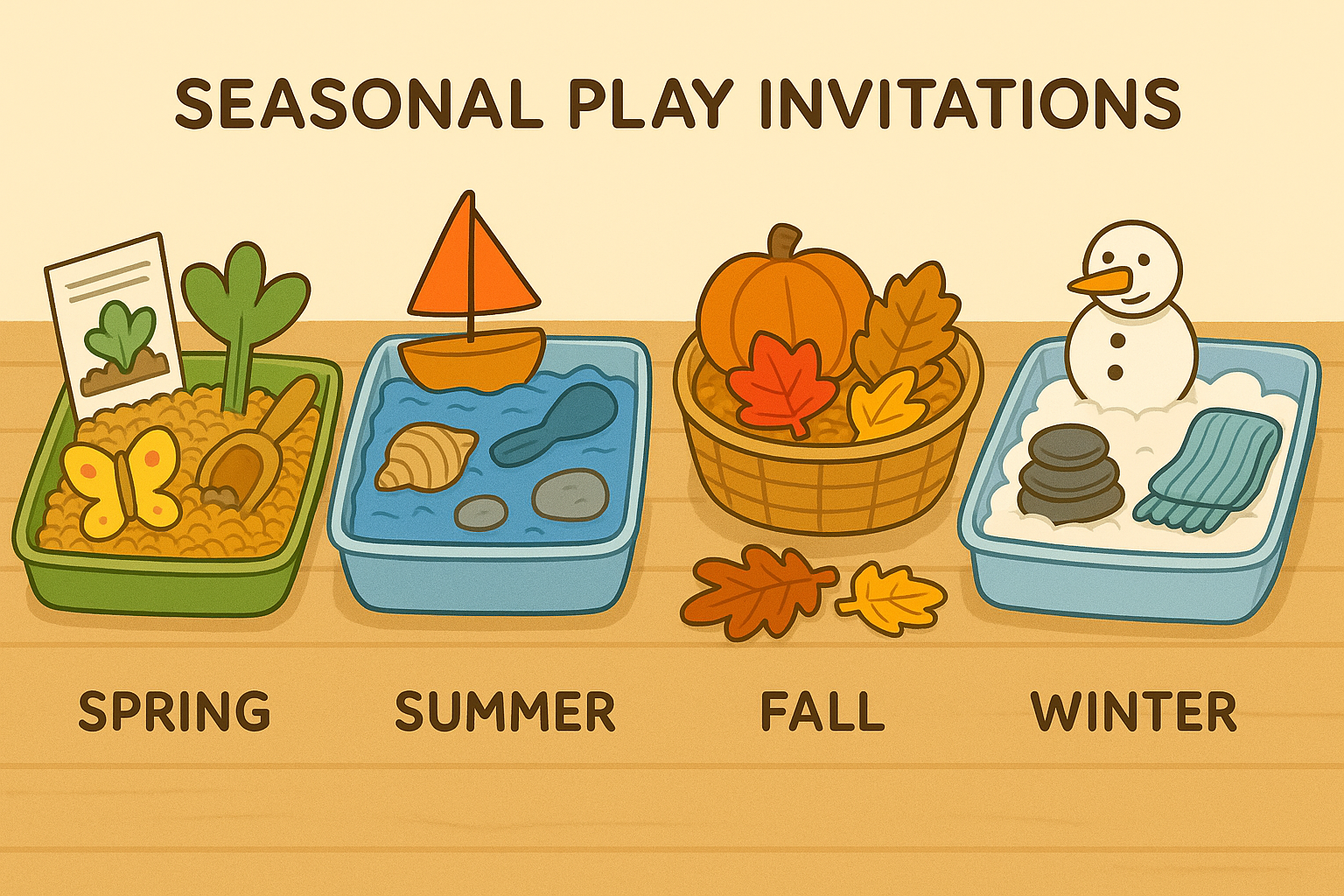
Spring Play Invitations: Growth and Wonder
Spring is about new beginnings—so setup should feel fresh, green, and full of possibility. Try:
Flower-cutting tray with paper blooms and scissors
Mini garden with beans, soil, and empty pots
Nature tray with sticks, buds, and magnifying glass
Water droppers for “rain clouds” on cotton balls
Butterflies cut from cardboard to decorate with markers
Prompt ideas:
“What is waking up after winter?”
“Can you help something grow?”
“Where does your butterfly want to fly?”
This type of play is closely tied to the ideas in Fall Nature Walks: Teaching Change Through Seasons, where nature becomes a doorway to learning and reflection.
Summer Play Invitations: Adventure and Energy
Summer brings warmth, movement, and brightness. Try:
Water play with toy boats or natural items
Seashell sorting trays
“Ice rescue” activity with frozen toys in bowls
Sand or rice bin with scoops and shovels
Toy picnic scene with pretend foods
Encourage role play: lifeguards, explorers, gardeners, meteorologists, beachgoers. Kids can even use puppets—just like the ideas found in Hosting a Puppet Parade for Kids’ Birthdays, where imagination drives the experience.
Fall Play Invitations: Colors and Transformation
Fall is a season of change and reflection. Use materials with real texture and warmth:
Leaf rubbings with crayons
Felt leaves and tiny woodland animals
Fabric scraps, acorns, and scoops
Cinnamon-scented sensory bin
Playdough in earthy colors + nature stamps
Prompt ideas:
“What does fall feel like?”
“Can you make a cozy home for an animal?”
“What happens after leaves fall?”
These scenarios connect beautifully with the emotional reflections encouraged in Helping Kids Learn Accountability Without Shame, which helps children process change gently.
Winter Play Invitations: Calm and Imagination
Winter brings stillness. Children often need cozy places to rest into their imagination. Use materials like:
Cotton balls, rice, or salt for “snow”
Scarves and mittens for dress-up scenes
Battery candles for soft lighting
White playdough with buttons or foil
Puppets having a winter “campfire talk”
Using Play Invitations to Support Emotional Regulation
Play invitations naturally slow a child’s nervous system. To support regulation:
Keep the space calm and predictable
Avoid loud toys or blinking lights
Offer fewer materials—not more
Let children choose how long to play
Avoid asking them to “show” or “perform”
The best play is felt—not forced. The invitation is only a doorway. Once they step through, play becomes their language.
Encouraging Storytelling and Language Through Play
Play invitations often evolve into storytelling without being prompted. To help:
Add a single puppet or figurine
Provide blank speech bubbles on sticky notes
Offer mini drawing pads for “sign making”
Ask: “Does your character need help?”
Ask: “Can your character teach someone something?”
Narrative play supports language, empathy, and emotional intelligence. The story doesn’t have to make sense—it just needs room to grow.
Keeping Play Invitations Fresh and Simple
Rotate invitations every week or two rather than constantly. Children need repetition to build depth in play. A few tips:
Store materials by season in zip bags
Hide some items and return them later
Alternate between sensory and imaginative setups
Introduce one new material at a time
Let children create their own invitations, once ready
When children design their own play scenes, they are building identity, confidence, and agency with every choice.
A Year of Play That Follows the Heart
Seasonal play invitations offer rhythm, imagination, and emotional safety. They help kids connect to the world around them—and the world inside them. When play aligns with nature and time, it becomes a daily reminder: we are always growing, learning, and changing.
Children don’t need elaborate themes or complex toys. They need just enough to begin. A tray, some materials, a few minutes of setup. And suddenly—you’ll find they build whole worlds from what was once just a suggestion.
That’s the beauty of a play invitation. It starts small—and opens the door to endless possibilities.
This content is for educational purposes and is not a substitute for professional medical or psychological advice.