Baking Traditions That Teach Math and Cooperation
Baking Traditions That Teach Math and Cooperation
Why Baking Matters During the Holidays
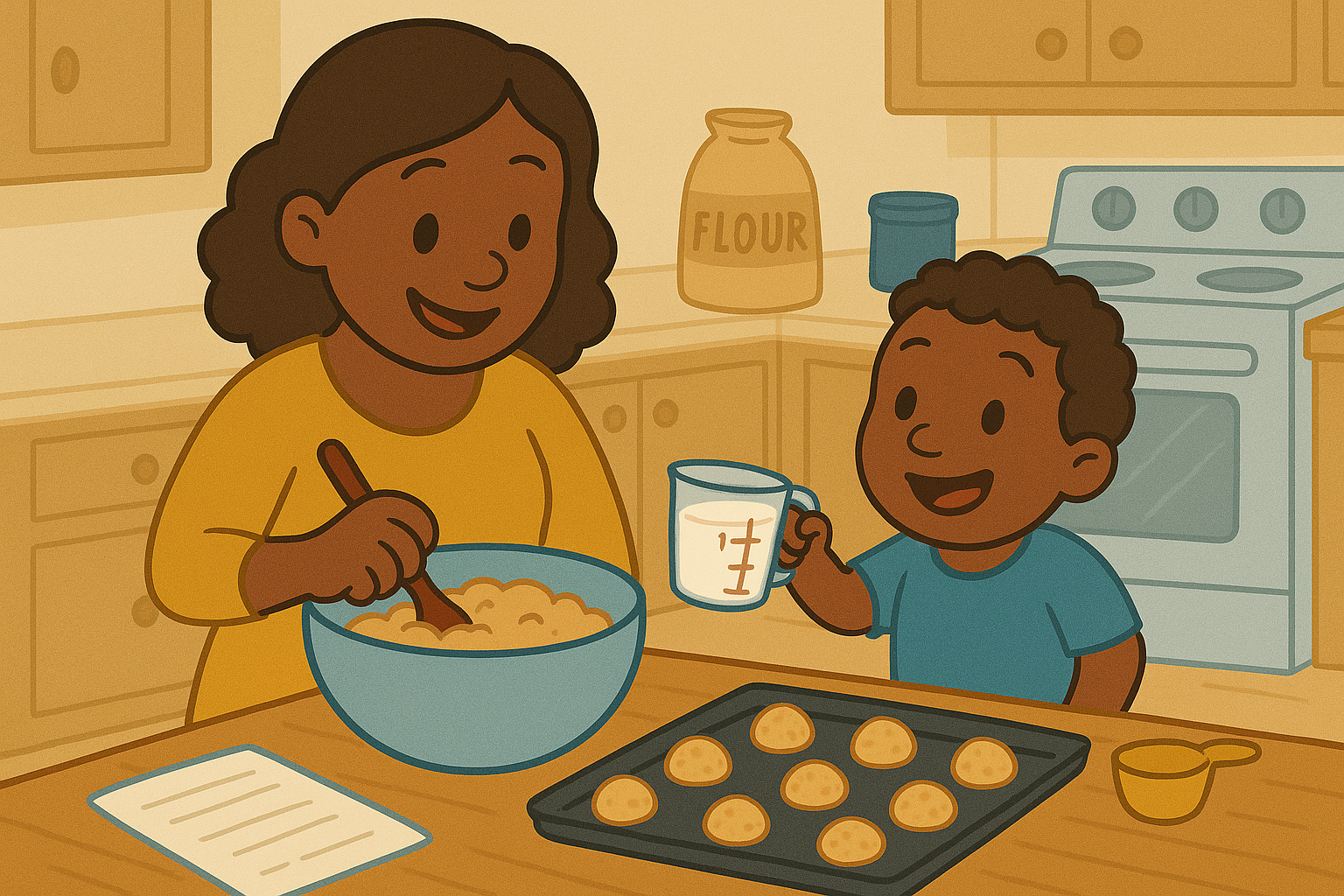
Holiday baking isn’t just about cookies and treats—it’s about connection, rhythm, and learning through real-life experience. When children enter the kitchen, they step into a world filled with math, patience, teamwork, and creativity. Baking traditions help children slow down, collaborate, and participate in family rituals that build confidence and belonging.
Through mixing, measuring, and preparing food together, children learn far more than how to follow directions. They learn how numbers behave. How teamwork works. How traditions pass down from one generation to the next. And most importantly—they learn that family moments can be both fun and meaningful.


The Hidden Learning Power of Baking
When kids bake, they naturally practice skills that support development:
Math: fractions, timing, temperature, counting, ordering
Science: cause and effect, texture changes, melting/freezing
Language: following instructions, sequencing, vocabulary
Social skills: turn-taking, patience, communication, problem-solving
Emotional skills: regulating frustration, waiting, coping with mistakes
The kitchen becomes a hands-on classroom, but also a caring space where learning feels joyful and safe.
Setting Up the Right Environment
For children to participate, the environment must feel welcoming and calm:
Keep instructions simple and spoken slowly
Lay out ingredients before beginning
Provide one tool per child if possible
Lower expectations to reduce pressure
Allow room for mess—learning often looks messy
A “calm kitchen corner” can be especially helpful for children to regulate before starting. Pairing baking with seasonal reflection—like ideas from Cozy Winter Reading Nooks for Family Storytime—can help families ease into a peaceful rhythm before the baking begins.
Baking and Math: Learning by Doing
Math becomes meaningful when children experience it. Try using gentle language as you work:
“We need half a cup—how could we show that?”
“What happens if we add two more?”
“This takes 10 minutes—can we set a timer?”
“How many cookies do we have now? What if we share them?”
Children can count chocolate chips, divide dough into equal pieces, or compare sizes. If mistakes happen, they become learning moments. Baking is full of opportunities to explore math creatively—much like seasonal play invitations from Crafting Seasonal Play Invitations (Spring, Summer, Fall, Winter).
Cooperation Through Baking Traditions
Shared rituals build cooperation naturally. Ways to encourage teamwork:
“You stir while I pour.”
“Let’s take turns adding ingredients.”
“Can someone read the next step?”
“Who wants to be timer keeper?”
“Let’s make a team decision on cookie shapes.”
Children learn that teamwork doesn’t mean doing everything perfectly—it means working together toward something meaningful.
Sensory Play in the Kitchen
Children explore the world through touch, scent, and movement. Use sensory-rich language:
“The dough feels squishy and stretchy.”
“Smell this spice—what does it remind you of?”
“Listen to the sound when we stir.”
“Watch what happens when heat touches the batter.”
This kind of language supports emotional expression and vocabulary. Much like sensory bins from Creating DIY Seasonal Sensory Bins for Learning, food textures can create space for regulation and creativity.
Family Recipes as Memory Keepers
Baking often connects children to heritage and family identities. Encourage traditions such as:
Storytelling while measuring ingredients
Passing down handwritten recipes
Letting children decorate based on memories
Creating a “family flavor book” together
Recording voice notes from relatives about past traditions
For multicultural families, themes from Celebrating Diversity: Teaching Kids About Global Holidays can help families explore food traditions from around the world.
Turning Challenges Into Teachable Moments
Not every recipe goes as planned—and that’s okay. Use mishaps to build resilience:
“The dough is too dry. What could help?”
“Our cookies burned. How could we adjust next time?”
“It didn’t work—but we’ll try a new plan.”
When children see adults respond calmly, they learn that mistakes are part of learning—not something to fear.
Baking as Emotional Connection
After baking, try following up with heart-centered reflection:
“How did we work together as a team?”
“Was there a moment that felt tricky?”
“What did you learn about yourself today?”
“What do you love about this tradition?”
Baking becomes more than just food—it becomes emotional nourishment.
Extending the Learning Beyond the Kitchen
After baking, children can:
Create recipe cards
Draw the steps in order
Make bakery signs and prices
Write stories about ingredients that come to life
Host a “mini bakery” puppet show
Creative play bridges learning and imagination—just as seen in Hosting a Puppet Parade for Kids’ Birthdays, where storytelling turns life into joyful theater.
A Tradition That Grows With Your Family
Baking doesn’t need to be spectacular—or perfect. What matters is connection, presence, and participation. Year after year, children will remember not just the treats, but the warmth of teamwork, the comfort of trying again, and the joy of being included.
Baking teaches what numbers sometimes cannot. That people rise like dough. That mistakes can be mixed in and still taste sweet. That growth takes time.
And that love—like recipes—can be passed down, shared, and made together.
This content is for educational purposes and is not a substitute for professional medical or psychological advice.