Creating DIY Seasonal Sensory Bins for Learning
Creating DIY Seasonal Sensory Bins for Learning
Why Sensory Bins Are Powerful Learning Tools
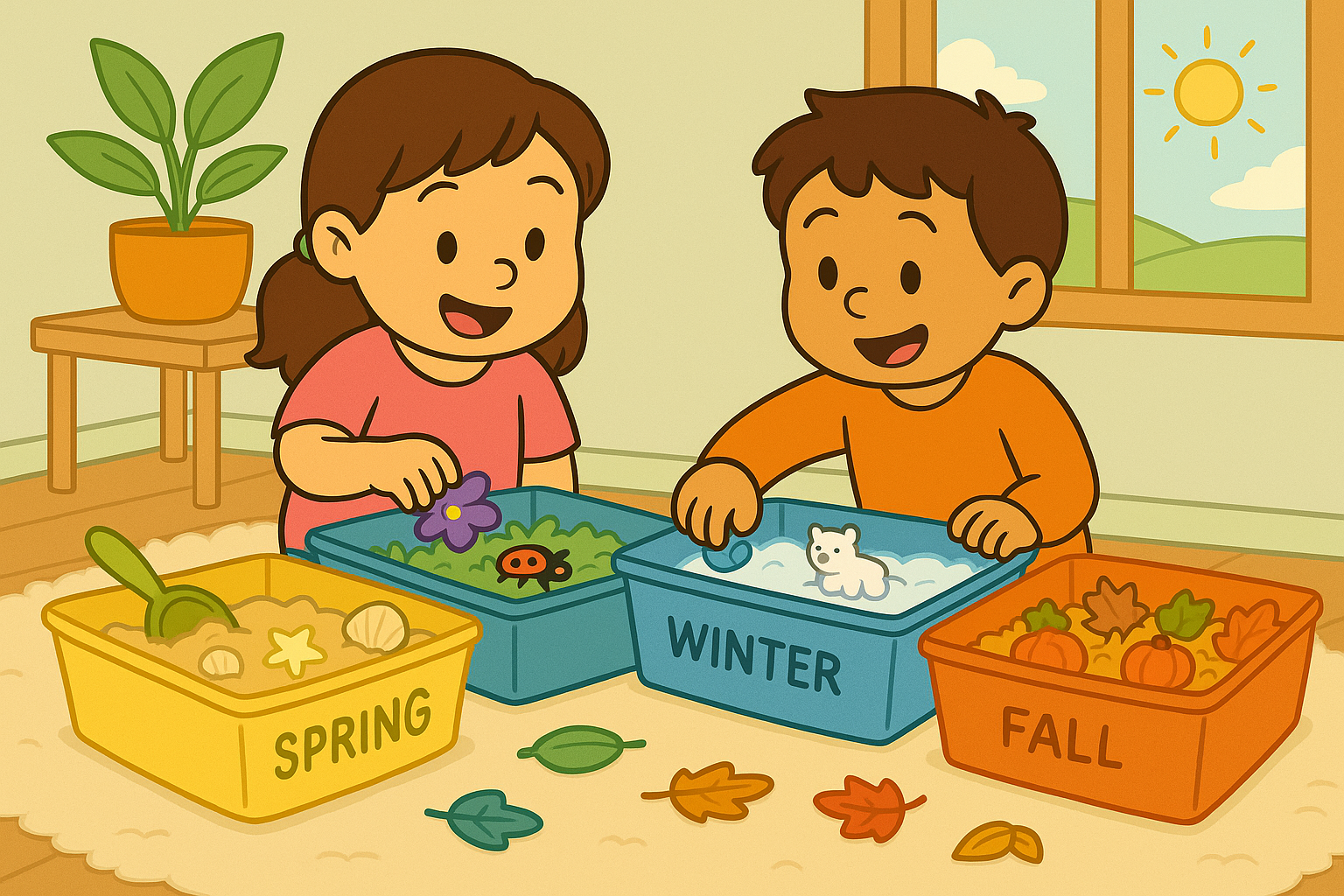
Children learn with their hands, senses, and curiosity. Sensory bins are simple containers filled with themed materials that invite kids to explore through touch, sound, smell, movement, and imagination. They support fine motor skills, language development, emotional regulation, and creativity—all while being playful and calming. When tied to seasons or holidays, sensory bins also help kids connect to time, change, and rhythm in a meaningful way.
Because sensory play provides a sense of control and predictability, bins are especially powerful during busy seasons like holidays. They give children a place to slow down, regulate, and express feelings safely. And best of all—they can be made with everyday items already at home.


The Benefits of Seasonal Sensory Play
Seasonal bins help children:
Connect to nature and time of year
Build vocabulary (“crisp,” “melting,” “golden,” “frosty,” etc.)
Express big feelings through play
Practice fine motor skills
Engage in pretend storytelling
Explore science and sorting
A sensory bin is not just a toy—it’s a space for children to experiment, process emotions, and learn through hands-on discovery.
Basic Materials You Can Use Year-Round
Any small container or tray works. Fill it with:
Dried rice, beans, or pasta
Recycled paper shred
Cotton balls
Sand or soil
Buttons, pebbles, or felt shapes
Mini figurines or animals
Scoops, spoons, and cups
Containers don’t need to be fancy. Clear plastic bins, baking trays, or cardboard boxes work beautifully. For calming sensory activities during cooler months, Winter Sensory Play Ideas for Indoors pairs perfectly with seasonal bin setups.
Spring Sensory Bins: Growth & Discovery
Themes: nature waking up, colors returning, gentle change. Fill with:
Dry green lentils or paper “grass”
Plastic insects or flower shapes
Pebbles, eggs, toy birds
Small gardening tools
Seed packets (to open and explore)
Muffin tins for sorting items
Prompts to spark play:
“Where will your seeds grow?”
“Can your insect family find a home?”
“What does spring smell like?”
Summer Sensory Bins: Sunshine & Adventure
Themes: energetic movement, water exploration, outdoor fun.
Possible fillers:
Kinetic sand or rice dyed blue
Seashells, rocks, or model boats
Spray bottle or water droppers (outside play!)
Sunglasses or tiny beach towels
Plastic ice cubes
Bottle caps or buttons to sort by size
Children love mixing wet and dry textures—but model safe water play and always supervise. For ideas on playful summer family rhythms, Fun Ways to Celebrate Family Birthdays Year-Round offers seasonal connection activities that fit naturally with sensory play.
Fall Sensory Bins: Color & Change
Themes: transformation, harvesting, gentle movement.
Fill with:
Dried corn kernels or orange/brown rice
Mini pumpkins or acorns
Paper leaves or nature cutouts
Pinecones or cinnamon sticks
Measuring spoons for scooping and pouring
Create a “leaf pile” in one corner of the bin and let children add tiny felt animals. This invites cozy storytelling—similar to activities found in Fall Nature Walks: Teaching Change Through Seasons, which can guide nature-inspired conversations during sensory play.
Winter Sensory Bins: Calm & Reflection
Themes: soft textures, cool colors, stillness, imagination.
Use materials like:
White rice, salt, or cotton balls
Foil pieces as “ice”
Bottle caps as stepping stones
Mini polar animals
Felt scarves or mittens
Bells and soft sensory pieces
Children can create quiet scenes—like “hibernation zones” or “snowy trails.” Winter-themed sensory play pairs well with reading rituals from Cozy Winter Reading Nooks for Family Storytime, especially for kids who regulate through storytelling and quiet imaginative scenes.
Creating Emotional Learning Through Sensory Bins
Sensory bins are ideal for emotional regulation. A few emotional prompts to include:
“Where does your animal go when it feels worried?”
“What helps your character feel brave?”
“Can you sort the items that feel happy vs. calm?”
“Does anything in your bin feel like today’s mood?”
Children don’t need to explain emotions—they can process them through play. Puppets, figurines, or animals often act as emotional voice.
Sensory Bin Safety and Sensory Needs
Keep play safe and comforting by:
Always supervising, especially with small parts
Removing items if overstimulation appears
Providing a slower bin nearby (like cotton balls or soft fabric)
Keeping bins low to the ground for stability
Offering headphones or a quiet corner if needed
The goal is not excitement—it’s agency. Children should control the pace of their sensory experience.
Making Bins Manageable for Busy Families
Seasonal bins should be easy to reset and store. Try:
Zip-top bags for each season’s materials
One small clear bin per child
A “bin menu” on paper where kids choose which to use
A rule: one bin at a time to avoid overwhelm
You can even rotate bins monthly—like toy libraries—for novelty without clutter or cost.
The Power of Seasonal Sensory Traditions
As seasons change, sensory bins help children observe time, nature, emotions, and growth. A child may soon say, “Is it time for our winter bin yet?” This shows that the rhythm has become a gentle anchor—a steady way to connect with the world.
When sensory play follows the seasons, children feel grounded. Change becomes less confusing. Nature becomes familiar. And learning becomes joyful, one scoop, pour, squish, and discovery at a time.
This content is for educational purposes and is not a substitute for professional medical or psychological advice.